Oklahoma Ethics Commission Begins Rulemaking for AI in Campaigns
State agency explores disclosure requirements and guardrails following controversy over deepfake political ads.
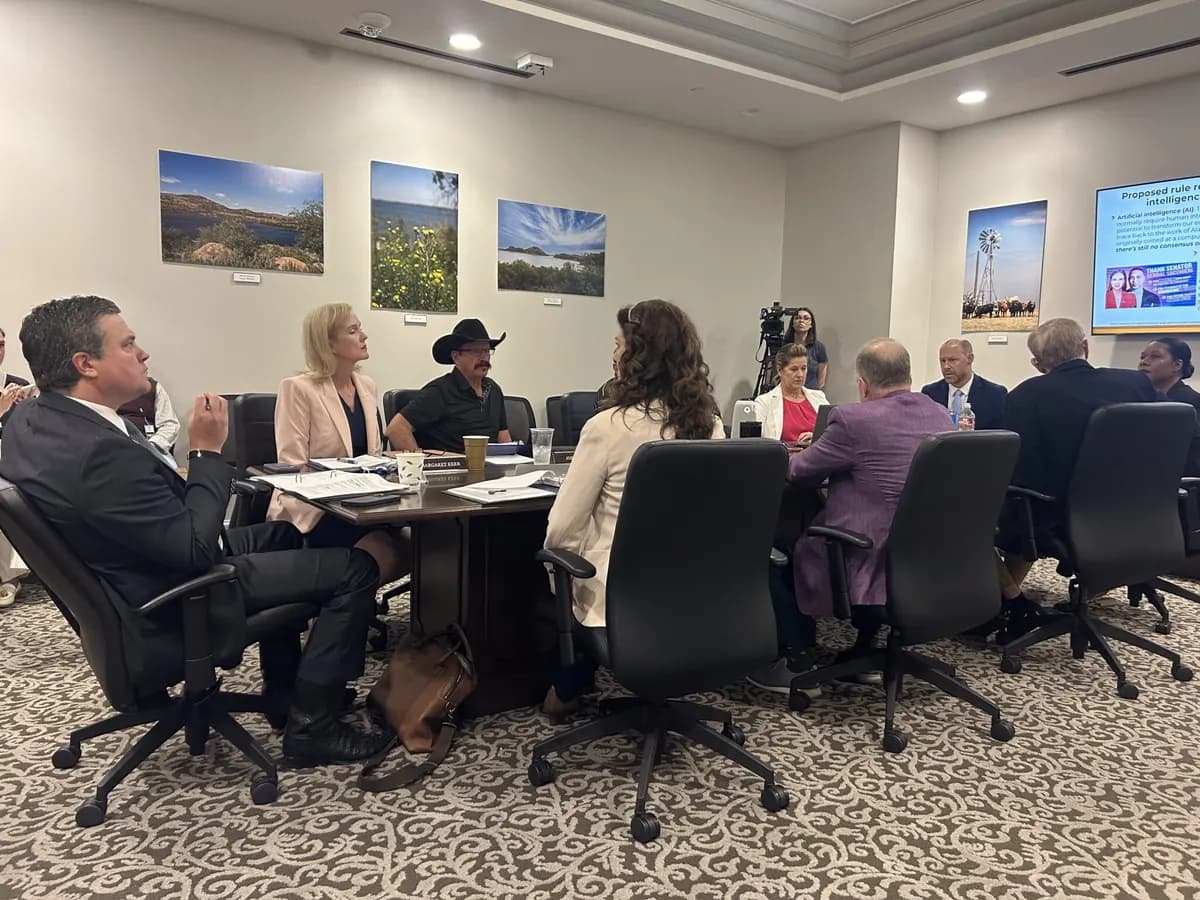
Oklahoma's Ethics Commission has formally begun developing rules to govern the use of artificial intelligence in political campaigns, marking the state's response to recent controversies involving AI-generated content in elections.
The commission initiated its rulemaking process on Friday, focusing on potential requirements for disclosure when AI tools are deployed in political messaging. The agency is examining several regulatory approaches, including establishing a definition for AI, mandating disclaimers on synthetic content, creating exemptions for parody and satire, and addressing First Amendment concerns.
Recent Controversies Drive Action
The move follows heightened scrutiny of generative AI in Oklahoma politics. Last month, Governor Kevin Stitt threatened to convene a special legislative session after an AI-generated advertisement falsely depicted Republican gubernatorial candidate Mike Mazzei embracing former Democratic presidential candidate Hillary Clinton.
Executive Director Lee Anne Bruce Boone indicated the commission would work alongside state lawmakers, acknowledging that certain aspects of AI regulation fall outside the agency's authority and require statutory changes.
Proposed Disclosure Requirements
Sample language presented at Friday's meeting outlined several scenarios that could trigger disclosure mandates:
- Political content containing synthetic media
- Deceptive media published within 90 days of an election intended to harm candidates or mislead voters
- Synthetic media designed to influence election outcomes or solicit campaign contributions
- Deepfakes impersonating candidates
Commissioners emphasized the importance of specific disclosure standards, including text size, display duration, and audio speed requirements.
Commission Sentiment and Legal Landscape
Commission Chair Justin Meek expressed support for stringent limitations, while Commissioner Adam Weintraub said he sees nothing positive from generative AI in political campaigning, calling recent Oklahoma examples "malicious."
Thirty-six states have already enacted laws regulating deepfakes in political messaging, according to materials presented at the meeting. However, legal challenges have emerged in several jurisdictions. Federal judges have struck down restrictions in Hawaii and California, citing free speech concerns.
The commission noted that disclosure-based approaches face fewer constitutional challenges than outright bans, as they raise less concern about free speech violations. Maryland's year-round restrictions on election misinformation, including deepfakes, drew particular interest from commissioners.
Why it matters
As generative AI becomes more sophisticated and accessible, the line between legitimate political messaging and deceptive manipulation grows increasingly blurred. Oklahoma's regulatory effort reflects a broader challenge facing election officials nationwide: protecting electoral integrity while respecting First Amendment protections. The commission's focus on disclosure rather than prohibition may offer a more legally defensible path forward as courts continue to scrutinize outright bans on AI-generated political content.
These details were first reported by Oklahoma Voice.
This is an original analysis by the Omega editorial team. Source reporting: AI Watch.
Want systems like this working for your business?
Book a Call
