NYC and LA School Districts Reimpose AI Restrictions
The nation's two largest public school systems are pulling back on generative AI access after earlier experiments with permissive policies.
New York City and Los Angeles Unified School District have both implemented significant new restrictions on artificial intelligence tools in classrooms, marking a reversal from their more permissive stances adopted in 2023.
NYC announced Wednesday that it will ban student-facing AI in all K-8 classrooms for the upcoming 2026-27 school year, while allowing only a limited set of approved tools for high school students. The same day, LAUSD officials announced a one-year moratorium on generative AI use across all grade levels for its approximately 378,000 students.
The moves represent a notable shift for both districts, which had previously lifted early ChatGPT bans. NYC originally blocked ChatGPT access in January 2023, shortly after LAUSD did the same in December 2022. By mid-2023, both districts had reversed course, with NYC Chancellor David Banks saying he was ready to "embrace" the technology's potential.
Why it matters
These restrictions from the nation's two largest school districts signal that organized opposition to AI in education is gaining traction. Most school systems have avoided outright bans, making NYC and LAUSD's approach a potential template for other districts weighing how to handle generative AI. The decisions also reflect broader grassroots resistance to AI deployment that has emerged in workplaces and communities facing data center development.
From permissive to restrictive
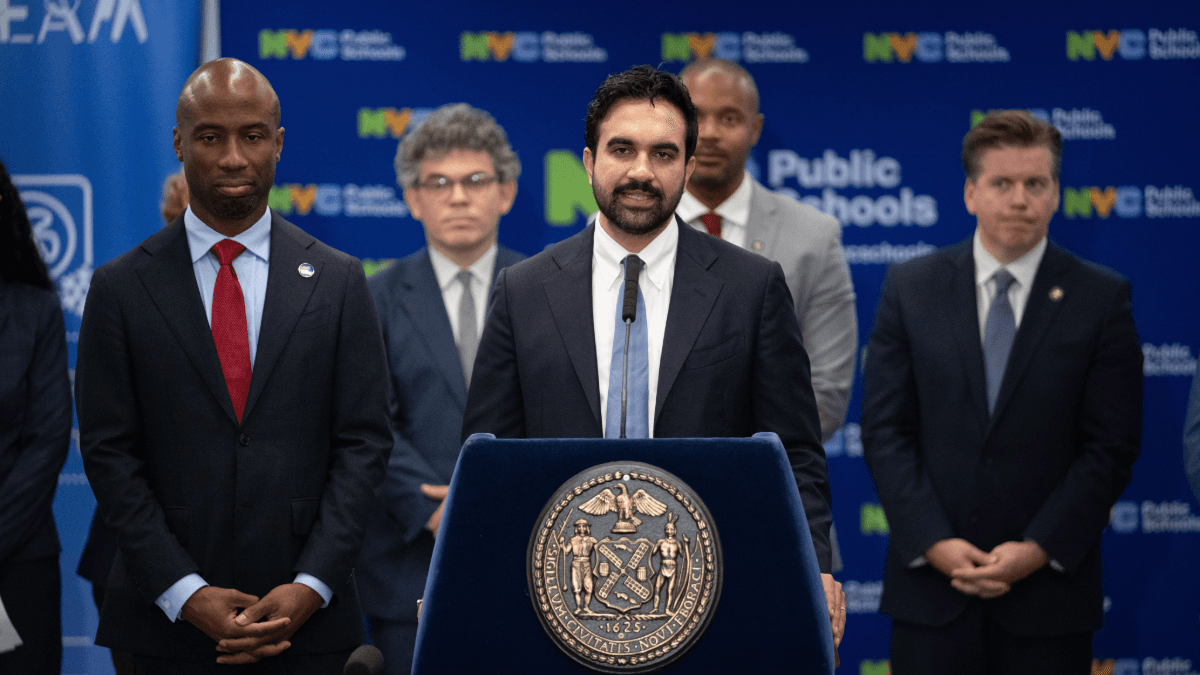
NYC's new policy is considerably tighter than guidelines proposed in March, which would have allowed most AI use at individual teachers' discretion. That draft prompted intense backlash, leading Chancellor Kamar Samuels to acknowledge it "missed the mark." The district also paused software purchases over the summer.
LAUSD's announcement caught even district officials by surprise, according to Tech Policy Press, which first reported these developments. The district had previously restricted screen time but had not issued specific AI rules.
Teacher and parent coalitions celebrate
Advocacy groups in both cities welcomed the announcements. At the LAUSD meeting where the ban was revealed, parents from Schools Beyond Screens had to revise their prepared remarks in real time to thank rather than petition the district.
The AI Moratorium Coalition in NYC, which launched last fall and includes teachers, students, and parents, called the partial pause "a step in the right direction." The coalition has been advocating for a complete two-year moratorium on classroom AI.
Kyle DeAngelis, a third-grade NYC public school teacher and coalition member, told Tech Policy Press the group remains pleased with the policy direction but wants to see additional safeguards, including more restrictions for high schoolers and democratic engagement in developing long-term policies.
Martina Meijer, a fourth-grade teacher in the same union caucus, emphasized concerns about teen mental health and the tendency for students to use chatbots as informal therapy tools. "It's really important that this policy also include high school students because they are extremely vulnerable," she said.
Both districts now have a year to develop permanent AI policies. Any attempt to roll back these restrictions will likely face organized resistance from the coalitions that successfully pushed for the current moratoriums.
DeAngelis noted the speed at which opposition has coalesced: "Over the last year, one of the things that has honestly really surprised me is just how quickly this particular movement has taken off. It's reflective of what parents and teachers are seeing in their schools."
These details were first reported by Tech Policy Press.
This is an original analysis by the Omega editorial team. Source reporting: AI Watch.
Want systems like this working for your business?
Book a Call