Nvidia Denies Kyber AI Server Delay, Affirms 2027 Timeline
The chipmaker rebuts claims of manufacturing setbacks pushing its next-generation vertical server architecture to 2028.
Nvidia has rejected claims that its next-generation Kyber AI server system faces significant delays, maintaining that its product roadmap remains on schedule for a 2027 launch.
The denial came Monday in response to a report from SemiAnalysis, which stated on X that the Kyber server had encountered "massive delays" due to design and manufacturing challenges that would push the launch to 2028. A company spokesperson told Yahoo Finance the roadmap is intact, and Nvidia's stock closed flat for the day.
A new vertical architecture
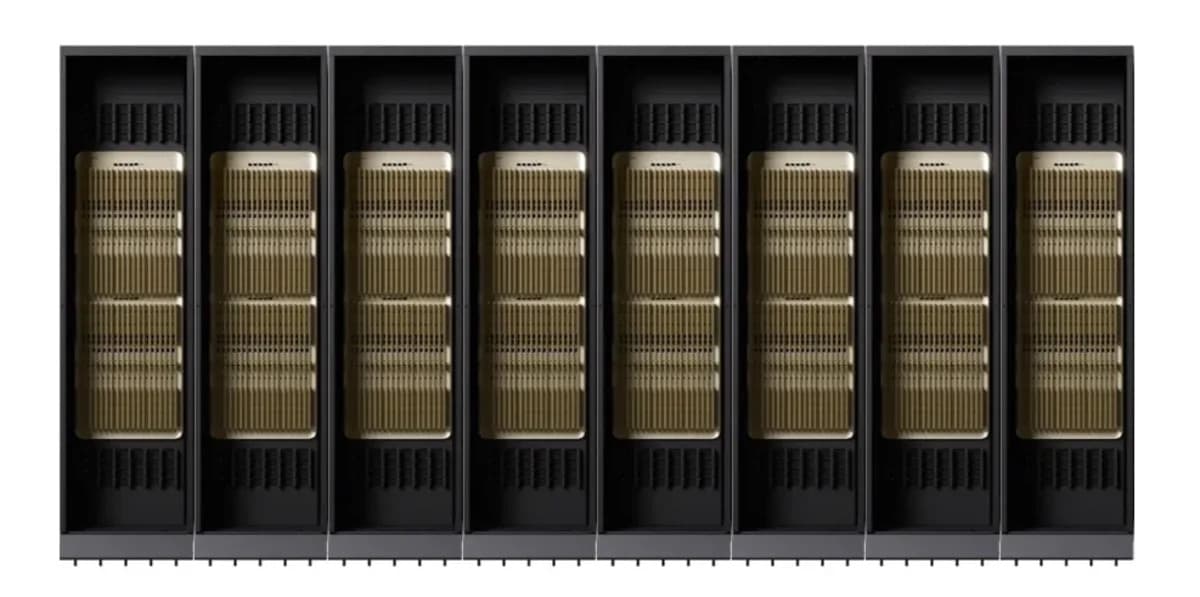
The Kyber server represents a fundamental shift in data center design. Unlike conventional horizontal server racks, Kyber orients racks vertically within the cabinet. This architectural change enables Nvidia to double the GPU density from 72 chips per server to 144 — a substantial increase in computing power per footprint.
Nvidia plans to debut Kyber alongside its Vera Rubin Ultra platform in the second half of 2027. The company follows an annual release cycle for its processors, with the standard Vera Rubin platform scheduled for the second half of this year.
Why it matters
Server architecture delays would signal more than a product hiccup for Nvidia — they could indicate scaling challenges as AI infrastructure demands intensify. With hyperscalers racing to expand capacity and competitors launching rival systems, any roadmap disruption could create openings for AMD's 72-chip server rack or custom silicon from Google and Amazon. The denial suggests Nvidia remains confident in its manufacturing partnerships and design execution at a time when data center customers are planning multi-year infrastructure investments.
Market position under pressure
Nvidia has been the primary beneficiary of the AI infrastructure boom, leveraging its early bet on using graphics processors for data center workloads. The company's stock has surged more than 840% over five years and gained 22% in the past 12 months, though growth has moderated to just 5% over the last six months as investor attention shifts to other AI infrastructure plays like memory manufacturer Micron.
Revenue growth tells a more dramatic story. Nvidia reported $215.9 billion in fiscal 2026, up from $26.9 billion in fiscal 2023 when generative AI emerged. Wall Street analysts project fiscal 2027 revenue will reach $392.7 billion.
Yet competition is mounting. AMD is developing its own 72-chip server rack, while major customers including Google and Amazon are increasingly offering their proprietary chips to third parties, potentially reducing their dependence on Nvidia hardware.
The details were first reported by Yahoo Finance.
This is an original analysis by the Omega editorial team. Source reporting: AI Watch.
Want systems like this working for your business?
Book a Call