Nvidia CEO defends billions in AI startup financing
Jensen Huang says unprecedented capital needs justify chipmaker's financial backstops, dismisses circular financing concerns.
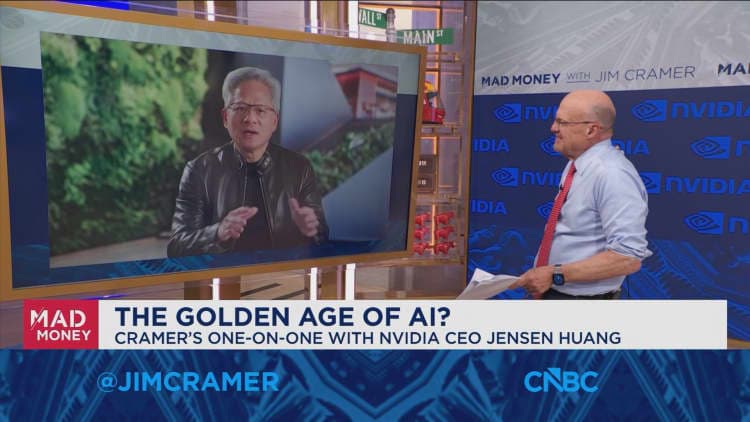
Nvidia CEO Jensen Huang pushed back against criticism that his company's expanding financial support for artificial intelligence startups amounts to circular financing designed to inflate sales, arguing the arrangements reflect the unprecedented capital requirements of building frontier AI companies.
Speaking to CNBC following Nvidia's quarterly earnings release, Huang emphasized that modern AI startups face funding needs unlike any previous generation of technology companies. "This is the first generation of startups that needed tens of billions of dollars to get funded," he said. "When was the last time anybody heard of a startup that needed billions of dollars to get off the ground and needed tens of billions of dollars to become profitable?"
The financing controversy
Nvidia has leveraged its position as the dominant supplier of AI chips to become a major investor across the AI ecosystem, backing model developers like OpenAI and Anthropic as well as cloud infrastructure providers. More recently, the company has provided financial backstops for large-scale data center projects, including $105 billion for a computing campus in Ohio where OpenAI will be the anchor tenant. Nvidia also partnered with major Wall Street firms to arrange up to $500 billion in data center financing.
Critics have drawn parallels to problematic financing structures from the dot-com era, where companies provided funding to customers who then used that capital to purchase their products—arrangements that artificially inflated demand and masked underlying business weakness.
Why it matters
The debate over Nvidia's financing role highlights a fundamental tension in the AI buildout: the infrastructure required to train and deploy frontier AI models demands capital at a scale that outstrips traditional venture funding, yet many AI companies lack the financial track record to secure conventional debt. Nvidia's willingness to bridge this gap positions it as both enabler and beneficiary of AI expansion, but also concentrates risk if the AI market fails to deliver anticipated returns. The company's dual role as chip supplier and financier creates potential conflicts that could draw regulatory scrutiny as AI infrastructure spending accelerates.
Huang's defense
The CEO argued that Nvidia's investments serve multiple strategic purposes beyond revenue generation. The company wants equity positions in what Huang called "once-in-a-generation" AI labs while helping them scale on Nvidia's platform. He noted these companies lack investment-grade credit profiles needed to secure low-cost capital independently, creating an opening for Nvidia to provide support.
Huang also dismissed concerns about Nvidia's exposure if investments sour, pointing to the flexibility of computing infrastructure. The hardware can be redeployed across different customers and workloads, he said, limiting downside risk. "The money we've invested is going to generate tremendous returns," Huang added. "I think the risk is low."
Nvidia's latest financial results appeared to validate the CEO's confidence in underlying AI demand. The company reported $96.2 billion in quarterly revenue for its fiscal 2027 second quarter, more than double the prior year, with data center revenue climbing 117% to $89 billion. Nvidia projected roughly 70% revenue growth for fiscal 2028.
These details were first reported by CNBC.
This is an original analysis by the Omega editorial team. Source reporting: AI Watch.
Want systems like this working for your business?
Book a Call