Nvidia Backstops GPU Rentals to Unlock $7T AI Debt Market
The chip giant is guaranteeing revenue for cloud providers to break the financing bottleneck and reshape who can access AI compute.
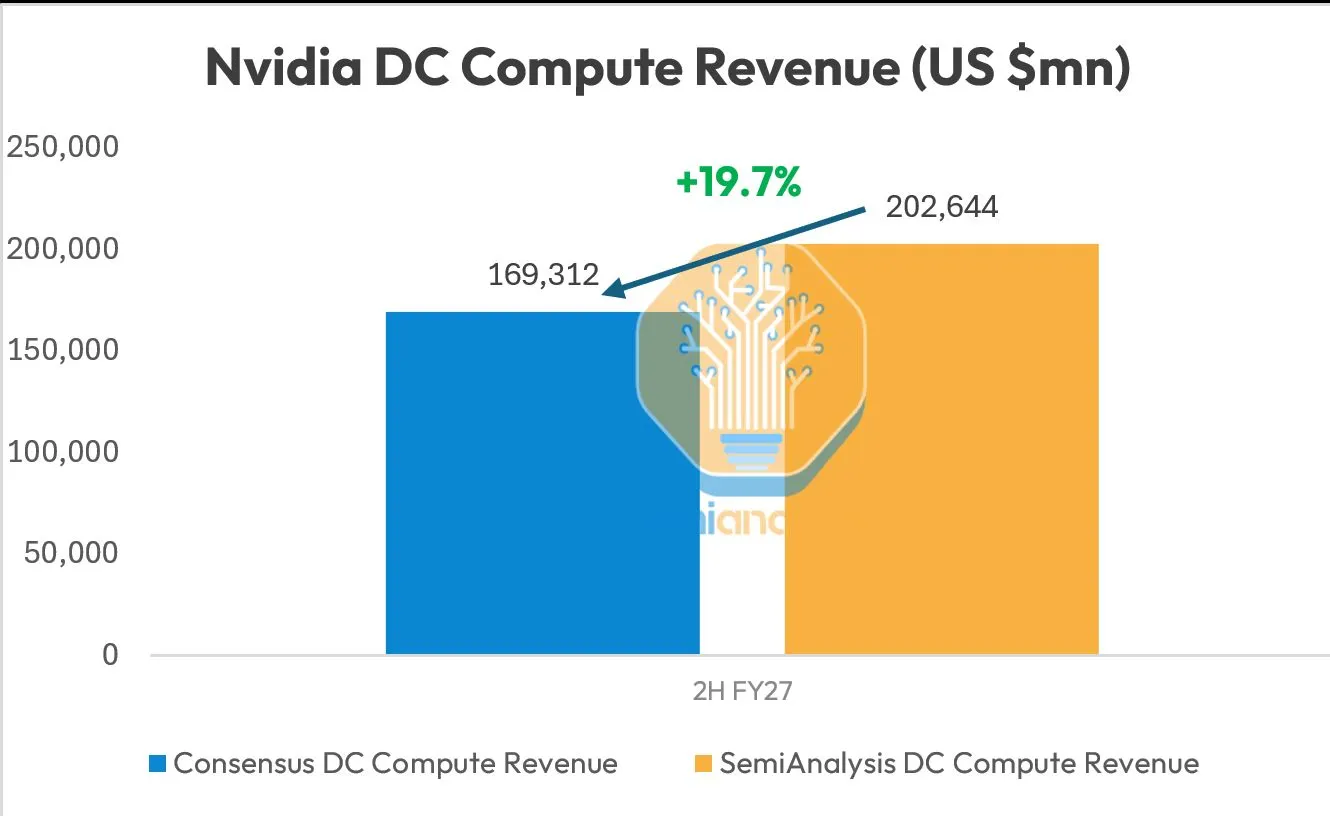
Nvidia has launched a backstop program that guarantees minimum revenue for GPU rental providers, a strategic move designed to transform AI infrastructure financing from a hyperscaler-dominated market into a multi-trillion-dollar credit ecosystem accessible to startups and mid-sized companies.
The program addresses a critical bottleneck: lenders currently require investment-grade hyperscaler guarantees before financing GPU clusters, effectively limiting compute access to a handful of large players. By offering its own AA-rated credit backing, Nvidia enables a new class of "Neocloud" providers to secure debt financing for clusters they can rent on flexible terms—including contracts under one year that venture-backed AI companies desperately need.
Why it matters
AI infrastructure buildout is projected to require $11.1 trillion in cumulative capital expenditure through 2029, with annual spending exceeding $2 trillion by 2028. Without evolving beyond the current five-year hyperscaler contract model, this growth hits a wall when those few buyers exhaust their balance sheet capacity. Nvidia's intervention aims to create a liquid, diversified market where compute is available to any creditworthy customer at any term length—expanding both its addressable market and the pace of AI adoption across the economy.
How the backstop works
Under the six-year program, Nvidia commits to purchase compute at pre-agreed prices if a Neocloud provider cannot find third-party renters. In exchange, Nvidia takes a share of revenue above the backstop threshold—typically around 40% of the excess, according to illustrative terms reported by SemiAnalysis.
For example, if a provider charges customers $6.75 per GPU-hour in year one while Nvidia's backstop sits at $3.68, the provider keeps the full backstop amount plus 60% of the $3.07 difference. Over six years, Nvidia's effective take rate averages roughly 18% of total revenue in scenarios where the market remains strong.
Crucially, the backstop pricing is set low enough that activating it yields near-zero or slightly negative returns for the provider. This ensures the guarantee functions as insurance rather than a primary business model, while still covering debt service—the key metric lenders evaluate.
Breaking the financing trinity
Building an AI cluster requires assembling three components simultaneously: capital, customer contracts (offtake), and datacenter space. Each typically requires proof of the other two, creating a circular dependency that has locked out all but the most well-capitalized players.
Nvidia's backstop breaks this cycle. With an investment-grade guarantee in hand, Neoclouds can secure debt financing, which enables them to place equipment deposits, which in turn lets them sign diverse customers on short-term contracts. Nvidia has even begun backstopping datacenter leases themselves to complete the puzzle.
The program targets a market structure problem: inference providers and AI startups want large clusters on contracts of one year or less, but most Neoclouds have focused on five-year deals because those are the only financeable structures. Many startups currently accept fewer GPUs than needed, longer commitments than wanted, or start dates months in the future.
The central bank of AI
SemiAnalysis, which first reported these details, frames Nvidia's role as analogous to a central bank—providing liquidity when private lenders remain hesitant, supporting economic activity until the broader market matures. The chip maker projects AI debt financing will reach $7.1 trillion outstanding by 2029, making it the second-largest asset-backed debt market in the U.S. after mortgages.
Beyond incremental revenue from the backstop itself, Nvidia stands to gain far more by preventing market concentration among a few hyperscalers who increasingly deploy competing custom silicon. A diverse, liquid compute rental market expands the installed base for Nvidia's architecture and accelerates the feedback loop between deployed capacity and AI application development.
These details were first reported by SemiAnalysis in their Accelerator Model research.
This is an original analysis by the Omega editorial team. Source reporting: AI Watch.
Want systems like this working for your business?
Book a Call