Nuuly Expands Fulfillment to 1M Sq Ft, Adds Automation
Urban Outfitters' rental service is investing heavily in automated sorting, picking, and storage to handle 600,000 subscribers per facility.
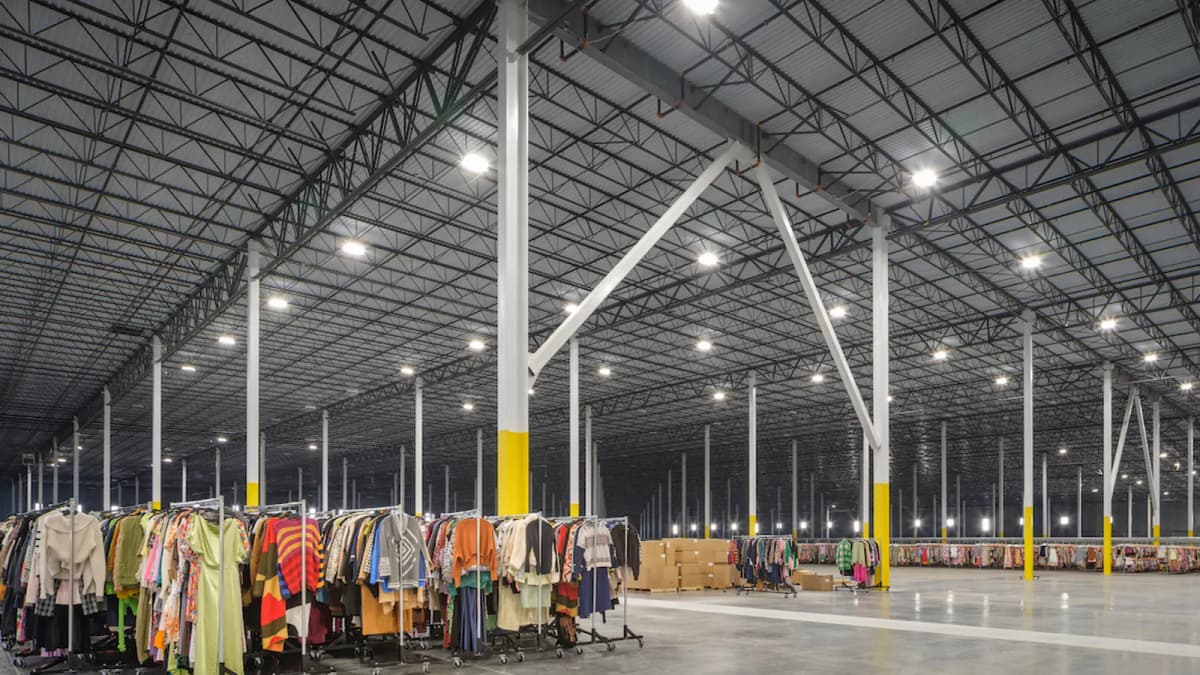
Nuuly, the clothing rental subscription service owned by Urban Outfitters Inc., is scaling its fulfillment infrastructure with a major expansion and automation push designed to handle rapid subscriber growth.
The company has expanded its Kansas City-area fulfillment center to 1 million square feet, quadrupling its capacity to support up to 600,000 subscribers. The expansion comes as Nuuly's net sales surged 28.6% year over year in the quarter ending July 31, driven by a 30.4% increase in average active subscribers.
Phased automation rollout
Nuuly President and Urban Outfitters CTO David Hayne outlined an aggressive automation timeline during an August 26 earnings call. Additional garment storage automation went live in August, with an automated order sortation system scheduled for the fourth quarter. An automated picking solution is planned for mid-2026.
The automation investments aim to reduce logistics expenses as Nuuly manages the complex reverse logistics of shipping, receiving, laundering, and inspecting wardrobes for half a million subscribers, according to Hayne.
East Coast expansion planned
Nuuly will replicate the Kansas City automation suite at a new facility outside Philadelphia, set to open in late 2028. That building will expand the company's East Coast operations from 300,000 to 1 million square feet, increasing regional capacity from 200,000 to 600,000 subscribers.
Once complete, the full Nuuly network will support approximately 1.2 million subscribers with significantly improved operational efficiency, Hayne said.
Why it matters
Rental subscription models face unique fulfillment challenges that traditional e-commerce doesn't encounter—garments must be processed, cleaned, and redistributed continuously rather than simply shipped once. Nuuly's automation strategy addresses the labor intensity and cost structure that has historically limited rental business scalability. The company's willingness to invest $475 million in capital expenditures for fiscal 2027—with roughly half dedicated to logistics—signals confidence that automation can make clothing rental economically viable at scale.
Broader logistics investment
Urban Outfitters Inc. is allocating approximately $475 million in capital expenditures for fiscal year 2027, with about 50% earmarked for logistics investments across both its retail and subscription businesses, CFO Melanie Marein-Efron said on the call. That represents an increase from the $385 million projected in February, when logistics accounted for 40% of planned spending.
Beyond warehouse automation, Nuuly has enhanced its delivery experience with estimated delivery dates at checkout, expedited delivery options, and seven-day carrier coverage enabling weekend deliveries.
These details were first reported by Supply Chain Dive.
This is an original analysis by the Omega editorial team. Source reporting: Automation Watch.
Want systems like this working for your business?
Book a Call
