Nishimatsu's LiDAR Wheel Loader Navigates Tunnels Autonomously
Japanese contractor's second-generation system eliminates pre-programmed routes, generating optimal paths in real time for muck haulage operations.
LiDAR enables real-time route generation
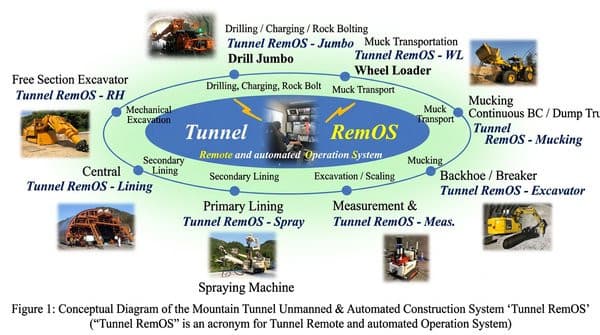
Nishimatsu Construction has unveiled a second-generation autonomous wheel loader system that generates its own driving routes inside mountain tunnels, eliminating the need for pre-programmed paths or operator route selection. The Japanese contractor announced the development on July 16 as part of its broader Tunnel RemOS initiative to achieve fully unmanned tunnel construction.
The system mounts a LiDAR sensor on the wheel loader to simultaneously track the machine's position, locate excavated rock at the tunnel face, and identify the crusher unit positioned up to 100 meters behind the working area. Using this spatial data, the system calculates an optimal route on the fly and adjusts speed through curves or around obstacles without human input.
This marks a significant evolution from Nishimatsu's first autonomous wheel loader system, which the company deployed in 2025. That earlier version automated the complete cycle of traveling to the face, scooping muck, and hauling it to the crusher—but required operators to select from multiple pre-configured driving paths. The route planning and selection process added operational overhead that the new system eliminates entirely.
Why it matters
Japan's mountain tunnel construction sector faces acute labor shortages and persistent safety risks from operating heavy equipment in confined spaces near active excavation. Autonomous systems that reduce the human presence at the tunnel face address both challenges simultaneously. Nishimatsu's move from pre-set routes to dynamic path generation represents a critical technical threshold: the machinery can now adapt to the constantly changing geometry of an advancing tunnel without repeated human programming.
Field testing and integration timeline
Nishimatsu plans to conduct field verification of the system within fiscal 2026, which runs through March 2027. The trials will assess real-world performance and surface any remaining technical issues before broader deployment.
The company has set a target of more than 30 percent labor savings by the end of fiscal 2030. By the end of fiscal 2027, Nishimatsu aims to integrate multiple remote-operation technologies under the Tunnel RemOS umbrella to enable completely unmanned operations at the tunnel face.
The contractor has already demonstrated multi-machine autonomous operation at its N-Field mountain tunnel technology development site, according to a March 21, 2025 announcement.
The new system also incorporates safety features including automatic exclusion of designated no-entry zones from generated routes, allowing site managers to cordon off hazardous areas or active work zones without manual intervention.
Details of the development were first reported by IBTimes Japan.
This is an original analysis by the Omega editorial team. Source reporting: Automation Watch.
Want systems like this working for your business?
Book a Call