Nine States Have Banned AI Personhood With No Scientific Exit
Legislators are writing permanent laws declaring AI cannot be conscious while researchers say the science remains uncertain and evolving.
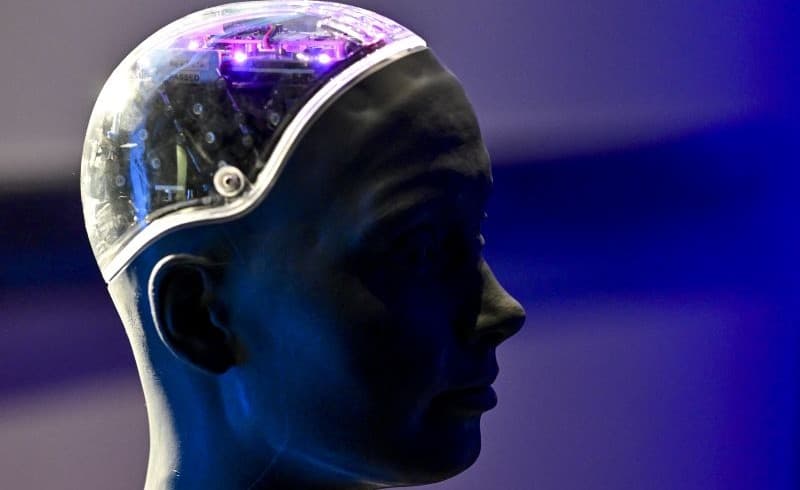
At least nine U.S. state legislatures have introduced or enacted laws declaring that artificial intelligence systems cannot possess consciousness, legal personhood, or moral status. These laws share a critical flaw: they contain no expiration dates, no provisions for scientific review, and no distinction between today's AI and future systems.
Idaho enacted such legislation in 2022, followed by North Dakota in 2023 and Utah in 2024. Oklahoma's House passed its version 94-2 in March 2026. Bills remain pending in Ohio, Tennessee, South Carolina, Washington, and Missouri. According to reporting first published in The Regulatory Review, none include sunset clauses or mechanisms to revisit the question as scientific understanding evolves.
The coordination behind the bills
Several states are working from identical language. Washington, South Carolina, and Missouri use the same enumerated list of 11 prohibited categories and statutory definitions copied from Utah's law—evidence of coordinated model legislation, a standard practice in American policymaking.
The bills emerged from different motivations. Washington State Representative Hunter Abell introduced his version as a response to what he called "a radical, anti-development agenda" after voters in Everett granted legal rights to the Snohomish River. His bill groups AI with atmospheric gases, astronomical objects, and weather. Ohio's sponsor, when asked how he could be confident AI would never develop inner experience, cited "imago dei"—the theological concept that humans bear God's image.
What the science actually says
No current AI system qualifies as a strong candidate for consciousness under leading scientific theories. But the question of future systems remains open. When surveyed, 582 AI researchers assigned a median 25-30 percent probability that AI systems will have some form of "inner experience" within a decade.
In April, Anthropic published research on emotion-like representations inside its models—structures the team says causally drive behavior. The researchers emphasized the findings don't prove language models actually feel anything. Anthropic itself has described its own model's moral status as "deeply uncertain."
The statutory language in these nine states leaves no room for such uncertainty. Ohio's House Bill 469 declares that "no AI system shall be considered to possess consciousness, self-awareness, or similar traits of living beings." Missouri's law designates AI systems as "non-sentient entities" for all purposes under state law.
Why it matters
These laws will remain in force when AI systems bear little resemblance to today's technology. If oversight bodies treat AI consciousness as legally settled, the practical consequences will affect the systems deployed in healthcare, financial markets, and military operations—precisely where questions about AI cognitive states matter most. Legal scholars have begun arguing these bills "codify non-recognition regardless of future scientific or ethical developments."
Historical precedent suggests caution. After Congress passed the Dickey Amendment in 1996—which prohibited CDC funding from being used to "advocate or promote gun control"—research funding on gun violence declined 96 percent over 24 years, even though the law didn't explicitly ban such research. Institutions read the legislative signal and acted accordingly.
Alternative approaches exist
Legislators could address liability concerns while preserving scientific flexibility. A 10-year sunset clause would prohibit AI personhood recognition today while requiring reauthorization as understanding develops—the same mechanism Congress uses for the PATRIOT Act. Alternatively, bills could include trigger provisions: if the National Academies were to publish an assessment finding that scientific understanding of AI cognitive states has materially changed, the prohibition would enter mandatory legislative review.
The United Kingdom created a standing committee to advise Parliament on animal sentience as the science evolves rather than legislating which species qualify. The Nonhuman Rights Project has already challenged Utah's law on separation-of-powers grounds; that case remains pending.
These details were first reported by The Regulatory Review.
This is an original analysis by the Omega editorial team. Source reporting: AI Watch.
Want systems like this working for your business?
Book a Call
