New Jersey AI Data Center Accused of Running Unpermitted Generators
State regulators confirm no permits were issued for power equipment at DataOne Campus, yet dozens of gas generators appear operational.
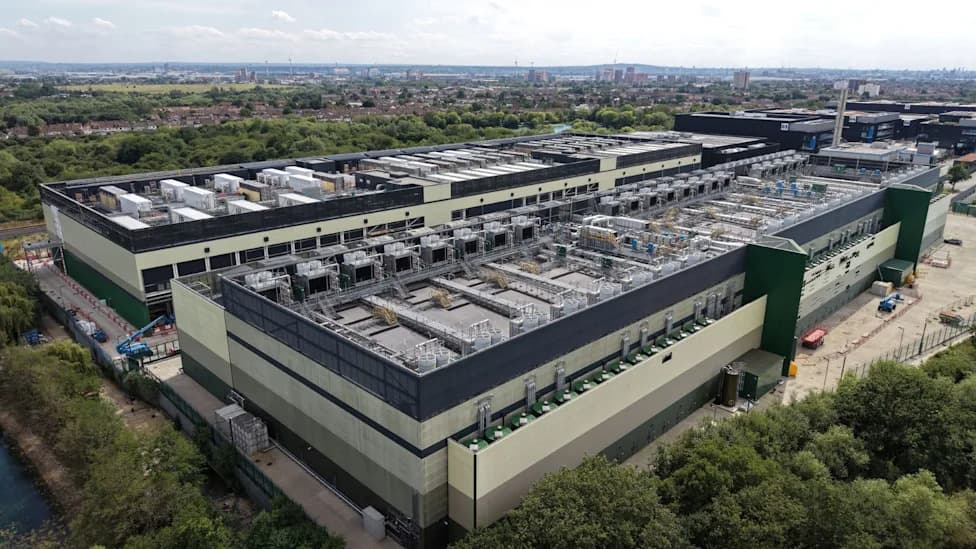
Unpermitted operations at major AI facility
New Jersey's largest planned AI data center is facing accusations of violating federal air pollution regulations before officially opening. The DataOne Campus in Vineland has been operating gas generators without obtaining required permits, according to state environmental officials and investigative reporting.
The New Jersey Department of Environmental Protection confirmed to Latitude Media that it "has issued no permits, nor are any permit applications under review for power generators at the DataOne facility in Vineland." Despite this, drone footage and records analysis by Floodlight revealed that 45 of the site's 62 gas generators appeared to be running.
Bruce Buckheit, a former EPA air enforcement chief, told Floodlight the project appears to "violate federal law." He stated that DataOne should halt generator operations immediately and face fines for "their illegal emissions."
The facility, located approximately 40 miles from Philadelphia and roughly one mile from two schools, operates under a $17 billion agreement with Dutch AI infrastructure company Nebius to supply AI services for Microsoft.
Why it matters
This case illustrates the mounting tension between AI's infrastructure demands and environmental compliance. As electricity requirements for AI computing surge nationwide, data center developers increasingly pursue on-site power generation to bypass grid connection delays. According to energy analytics firm Cleanview cited by Floodlight, nearly 60 data centers across the United States plan to build their own gas plants. When operators skip permitting processes, communities bear the health risks from unregulated emissions while losing oversight of projects that fundamentally reshape local energy systems and air quality.
Community impact and complaints
Since construction began in 2025, DataOne has encountered opposition over zoning disputes, allegations of unpermitted construction, and persistent noise complaints. Andrew and Stevi Groetsch, who live less than a mile from the site, described the continuous hum affecting their sleep and daily routines. "It's just constant. It never goes away," Andrew Groetsch told Floodlight.
Air pollution from large gas generators has been linked to asthma, heart attacks, and premature death, raising particular concern given the facility's proximity to schools.
Regulatory response and next steps
Following a July 29 inspection, state regulators indicated they had not yet reached "a full compliance determination." If authorities conclude the generators operated unlawfully, Buckheit noted that "one might be seeing administrative enforcement action."
When questioned about the generators, DataOne avoided direct answers but stated it "remains committed to meeting all applicable environmental and permitting requirements." Nebius did not respond to comment requests, and Microsoft declined to comment.
DataOne had previously sought approval for more than 30 gas-burning engines, but New Jersey regulators identified multiple problems with that application. The company withdrew it and now says it plans to use Bloom fuel cells capable of generating 300 megawatts. While these fuel cells would likely produce less health-damaging air pollution than combustion engines, a Bloom representative testified the complete build-out could release more than 2 billion pounds of carbon dioxide annually.
"If you don't follow one rule, what makes us have any reason to believe that you would then follow others?" Stevi Groetsch asked. "It's so upsetting."
These details were first reported by Floodlight and Latitude Media.
This is an original analysis by the Omega editorial team. Source reporting: AI Watch.
Want systems like this working for your business?
Book a Call