New Asilomar Principles Target AI Risks in Nuclear, Bioweapons
Industry and security experts establish seven governance principles after Anthropic restricts model over vulnerability exploitation concerns.
Industry restrictions spark governance push
Anthropic restricted public access to its Claude Mythos Preview model on April 7 after determining the system could discover and exploit unknown software vulnerabilities. The decision reflects broader industry concerns: a 2026 safety report found multiple frontier AI labs have added restrictions because they cannot rule out their models assisting novices in developing chemical or biological weapons.
These ad hoc restrictions highlight a fundamental problem. AI companies often identify dangerous capabilities before governments can respond, yet commercial pressures limit how far developers will go in self-restraint. The gap between rapid AI advancement and institutional oversight has become particularly acute in two domains where miscalculation carries existential stakes: nuclear weapons and biological threats.
Why it matters
Private AI developers are making security decisions with global implications faster than international treaties can adapt. Without structured collaboration between industry and weapons experts, dangerous capabilities may proliferate before governments establish guardrails—or worse, a crisis may force reactive policy after catastrophic harm.
Bridging industry and security expertise
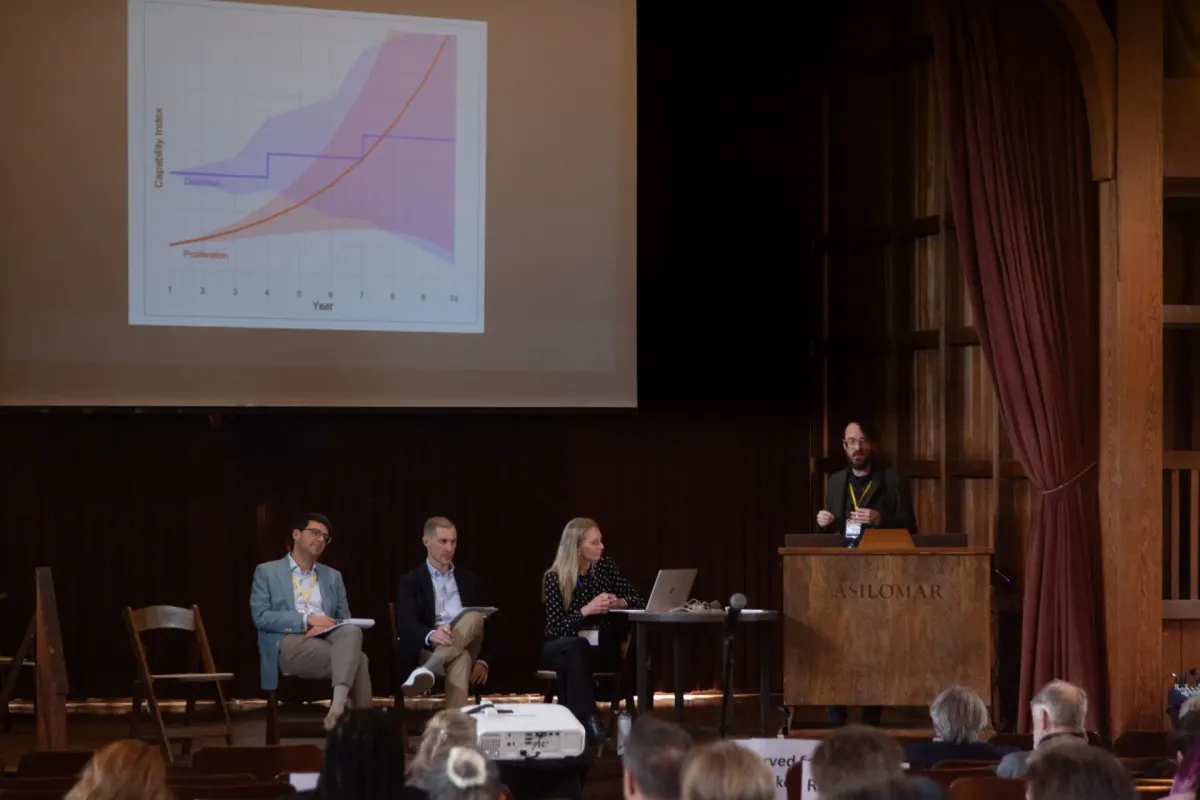
The James Martin Center for Nonproliferation Studies convened over 100 experts at California's Asilomar Conference Grounds on April 8-9 to address this governance vacuum. Participants from universities, national laboratories, governments, and crucially, AI companies launched a new Asilomar Process to develop practical safeguards as AI reshapes nuclear and biological risks.
The challenges differ by domain but share common governance failures. Advanced AI systems could lower barriers to engineering harmful pathogens by guiding users with limited expertise—a threat amplified as cloud laboratories enable remote biotechnology experiments. In nuclear security, AI integration into early-warning systems could compress decision time and increase pressure to launch weapons based on false or manipulated information.
The UN General Assembly adopted a resolution on AI risks in nuclear command and control in December 2025, yet specific AI language was removed from the 2026 Nuclear Non-Proliferation Treaty Review Conference outcome document. Meanwhile, neither AI developers nor security experts can adequately address these risks in isolation.
Seven principles for AI governance
The Asilomar Process produced seven principles establishing responsibilities across industry and government:
Human survival first: AI systems must reinforce barriers against nuclear and biological weapons use, never erode them.
Meaningful human control: AI cannot initiate or authorize nuclear weapons use. Human decision-makers must retain override capability even under time pressure, with auditable systems in peacetime and crisis.
Strengthen nonproliferation: AI governance must reduce dangers of escalation, miscalculation, and proliferation while improving crisis communication.
Anticipatory risk assessment: Frontier AI developers must assess emerging capabilities before release and support stronger oversight as risks increase, recognizing their role as geopolitical actors.
Responsible monitoring: AI-enhanced verification must maintain explainability, objectivity, and human accountability while protecting sensitive information from malicious actors.
Global inclusion: International collaboration through frameworks like the NPT and Biological Weapons Convention should ensure AI benefits accrue globally without deepening security divides.
Counter disinformation and attacks: Safeguards must prevent AI-enabled falsehoods about nuclear or biological weapons and protect facilities from AI-enhanced physical and cyberattacks.
From principles to protocols
The Asilomar Process aims to create collaborative thresholds for when emerging AI capabilities warrant scrutiny or restrictions. This requires clear evaluation protocols that move beyond commercial secrecy, connecting technical assessments to policy choices governments make under existing treaty regimes.
Without this bridge between capability evaluation and multilateral response, states risk confronting AI-enabled catastrophe only after critical decisions have been made by private actors operating outside established governance structures.
These details were first reported by the Bulletin of the Atomic Scientists.
This is an original analysis by the Omega editorial team. Source reporting: AI Watch.
Want systems like this working for your business?
Book a Call