Music Industry Lawsuits Expose AI Training Data Disputes
Copyright battles between labels, musicians, and AI companies reveal fundamental questions about who profits when algorithms learn from human creativity.
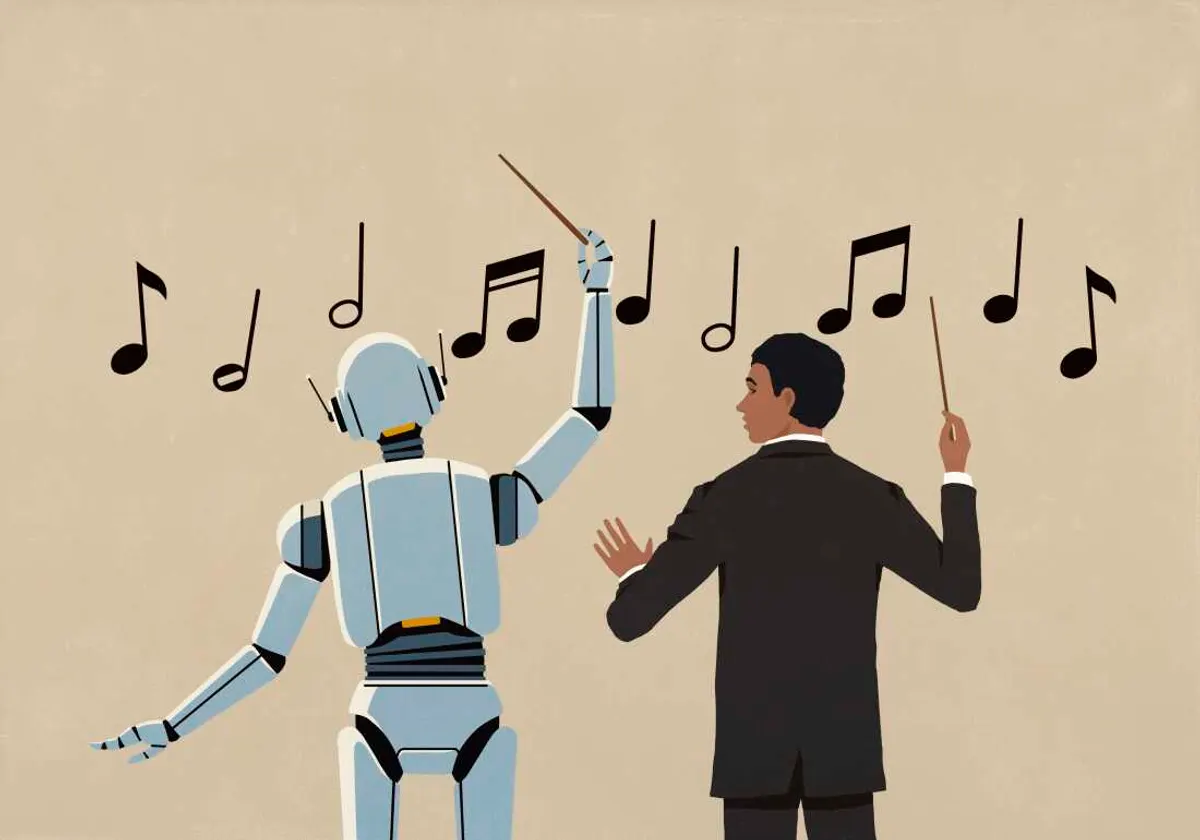
The music industry's confrontation with generative AI has moved beyond questions of whether machines can create compelling songs to a more fundamental dispute: when AI systems train on millions of copyrighted recordings, who deserves payment?
AI music platforms Suno and Udio can generate complete tracks—vocals, lyrics, instrumentation—from text prompts. Suno reported surpassing two million paid subscribers in February, according to CEO Mikey Shulman. The company has acknowledged in court filings that its training data included "essentially all music files of reasonable quality that are accessible on the open Internet."
That admission has triggered a cascade of legal actions that reveal deep fractures over how value should flow in an AI-augmented creative economy.
The copyright battleground
In June 2024, the Recording Industry Association of America filed copyright infringement suits against both companies on behalf of Sony Music Entertainment, Universal Music Group, and Warner Music Group. The labels alleged the platforms trained their models on copyrighted recordings without permission.
Universal settled with Udio in October 2025, and Warner settled with both companies the following month. The agreements generally require licenses for training data, with Universal offering artists opt-in or opt-out choices. Sony's lawsuits continue.
Both AI companies have invoked fair use protections, arguing their training methods fall within legal doctrines that permit limited use of copyrighted material for purposes including research and commentary. Entertainment lawyer and independent artist Krystle Delgado, who is co-leading a class action lawsuit against the platforms, disputes this characterization: "What they did was absolutely piracy at mass scale."
Musicians challenge their own labels
A separate legal front opened in June when the American Federation of Musicians sued Universal and Warner, alleging the labels licensed recordings for AI training without compensating the performing musicians. Both labels moved to dismiss, arguing AI compensation falls outside existing labor agreements.
The dispute illustrates how AI training creates competing claims even among parties traditionally aligned. Grammy-winning songwriter Tiffany Red, founder of advocacy organization the 100 Percenters, framed the concern bluntly: "Where's the money going, if they stole all of our music?"
Red questioned whether individual creators whose work contributed to training datasets would see any portion of settlement funds, comparing the situation to a class action where line-item accounting should determine individual payouts.
The streaming economics problem
Beyond training data disputes, AI-generated music threatens to flood streaming platforms with content that dilutes payments to human creators. Streaming services pool subscription revenue and divide it proportionally by play counts across their entire catalog.
Delgado noted tens of thousands of AI tracks already appear on these services: "Everyone's music, the AI music, the human-made music, goes into the same place, and then it's divided up. At some point the AI music is just gonna drown out the human-made music."
Ron Gubitz, executive director of the Music Artists Coalition, said many artists don't oppose AI technology itself but want meaningful control over their work's use. His organization advocates for a framework centered on informed consent, fair compensation, and transparency in how AI uses are authorized and monetized.
Why it matters
The music industry's AI disputes establish precedents that will likely extend across every creative sector where machine learning systems train on human-generated content. Journalist Alex Reisner, whose AI Watchdog project helps artists identify their work in training datasets, observed: "What's happening in the music industry now is something that could happen in pretty much any industry."
The legal outcomes will help determine whether AI development operates under traditional licensing frameworks or establishes new economic models for compensating creators whose work feeds algorithmic systems.
These details were first reported by NPR's Planet Money.
This is an original analysis by the Omega editorial team. Source reporting: AI Watch.
Want systems like this working for your business?
Book a Call
