Moonshot's Kimi K3 AI Model Tops Coding Benchmarks
Beijing startup's open-source release outperforms leading U.S. models in developer tests, escalating AI competition.
A Beijing-based AI startup has released a model that outperforms leading American systems in coding tasks, marking another milestone in China's accelerating artificial intelligence capabilities.
Moonshot AI's Kimi K3 model topped Arena's rankings for front-end coding performance, surpassing both Anthropic's Claude and OpenAI's ChatGPT in evaluations. Arena, a platform that assesses AI systems, called K3 "the single biggest release of the year" and noted it represents a turning point where open-source Chinese models are exceeding closed U.S. alternatives.
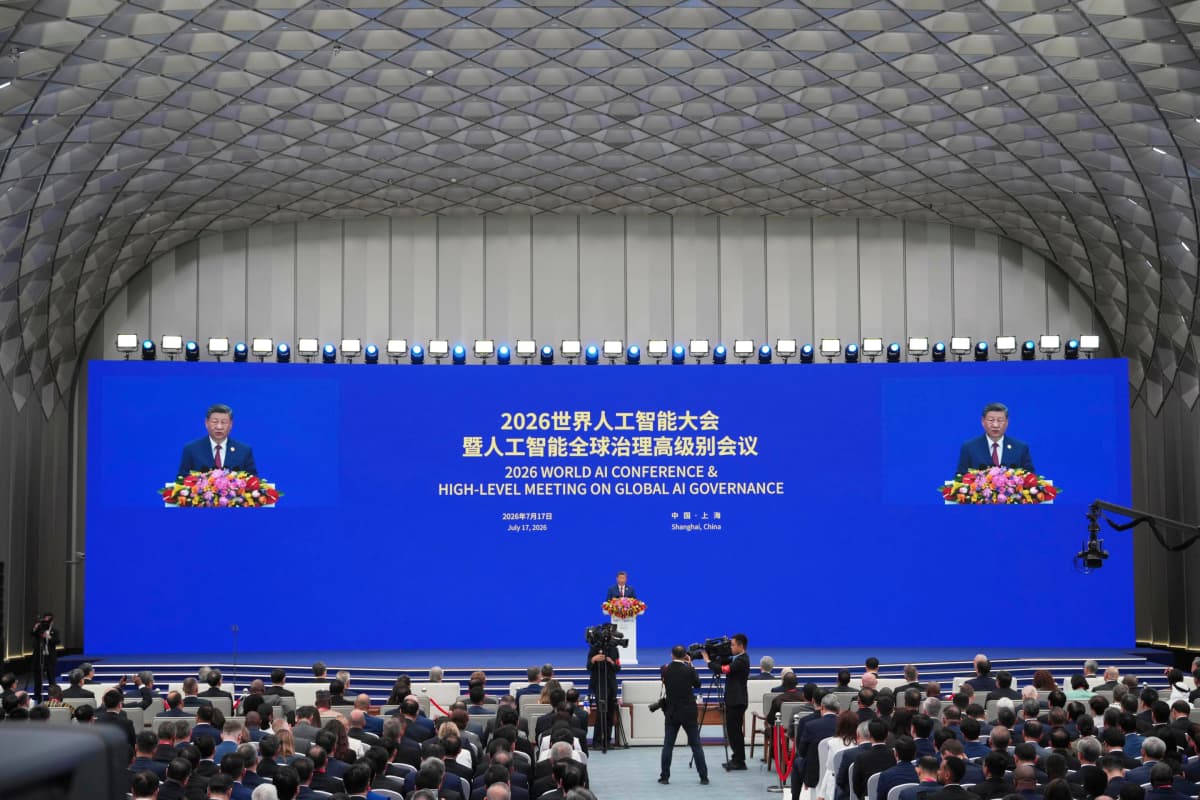
The timing of K3's Friday unveiling coincided with Chinese President Xi Jinping's address at the World Artificial Intelligence Conference in Shanghai, where he emphasized that AI development "should not be a solo performance by any single country but rather a symphony of global cooperation."
Why it matters
The release demonstrates that U.S. export restrictions on advanced chips have not prevented Chinese companies from building competitive AI systems. Moonshot's achievement—delivering performance comparable to top American models at half the price—could reshape enterprise AI procurement decisions globally and intensify pressure on OpenAI and Anthropic's business models.
Hardware independence and pricing pressure
Moonshot has not disclosed what computing infrastructure powered K3's development, though the company partners with Huawei. At the Shanghai conference, Huawei showcased its Atlas 950 SuperPoD computing system, signaling China's progress in building domestic AI hardware alternatives despite restrictions on imports from companies like Nvidia.
Bank of America analysts noted that K3's pricing represents the highest yet for a Chinese AI model but remains 50 percent cheaper than OpenAI's GPT-5.6 Sol.
Distillation controversy persists
The release reignites debate over how Chinese companies achieve rapid AI advances. Anthropic accused Moonshot, DeepSeek, and MiniMax in February of using "distillation" techniques to illicitly extract capabilities from Claude by training on its outputs. Beijing has called such accusations "groundless."
Yet the technology transfer flows in both directions. San Francisco startup Anysphere acknowledged that Cursor, its popular coding tool, was built on Moonshot's K2.5 model. SpaceX plans to acquire Cursor for $60 billion later this year.
Academic roots in Pittsburgh
Moonshot co-founder and CEO Yang Zhilin earned his doctorate at Carnegie Mellon University in 2019, where he made foundational contributions to machine learning research. His former adviser, Russ Salakhutdinov, celebrated the K3 release as "a huge win for the open-source community," illustrating how academic networks transcend geopolitical tensions.
K3 follows last month's GLM-5.2 release from Chinese startup Zhipu, which developers worldwide have adopted for performance approaching top U.S. models at lower cost. Tech analyst Patrick Moorhead cautioned that market reactions to K3 mirror the "overreaction" to DeepSeek's January release, though he acknowledged the revenue challenges these models pose to American AI leaders.
Details of the Kimi K3 release were first reported by the Associated Press.
This is an original analysis by the Omega editorial team. Source reporting: AI Watch.
Want systems like this working for your business?
Book a Call