Montana AI Political Content Law Faces First Amendment Challenge
A federal judge is weighing whether the state's disclosure requirement for AI-generated campaign materials violates free speech protections.
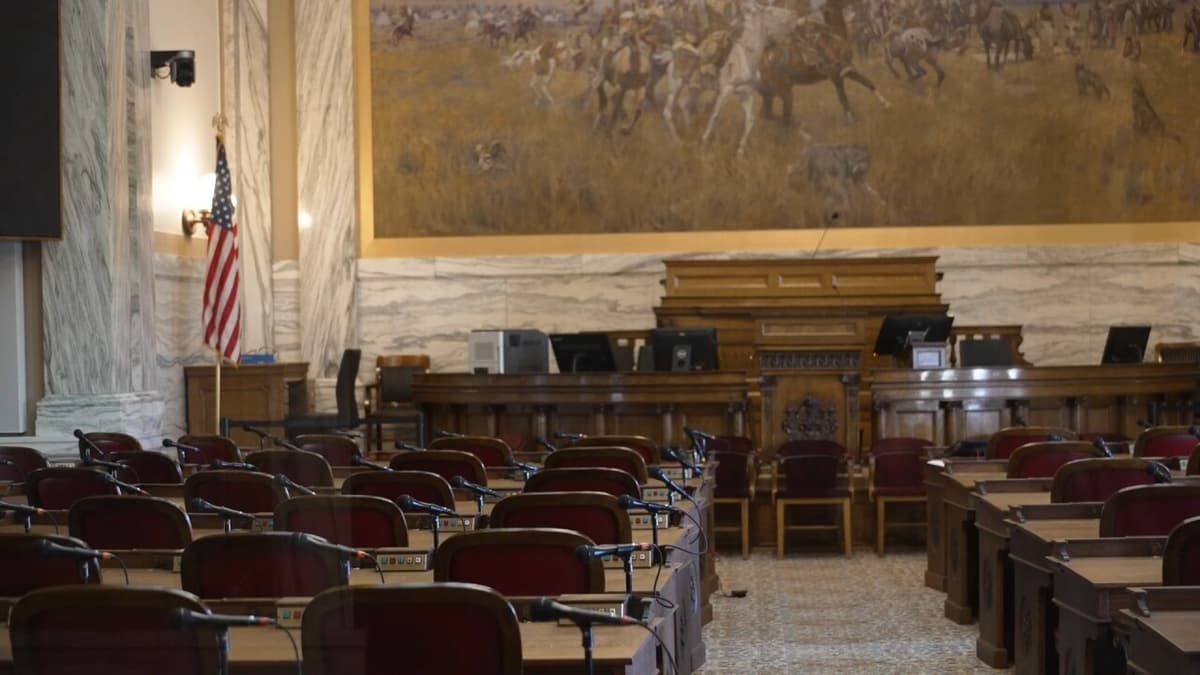
Montana's AI Disclosure Law Under Constitutional Scrutiny
A federal judge in Billings is considering whether Montana's first-of-its-kind law regulating AI-generated political content violates constitutional free speech protections, following a case involving manipulated campaign images distributed during recent elections.
The law, Senate Bill 25, passed by the Montana Legislature in 2025, requires disclosure labels on AI-generated deepfake content in election communications distributed within 60 days of an election. The statute does not ban such content outright—it mandates transparency when artificial intelligence is used to create or alter political material meant to influence voters.
The Case at Hand
Former state Senator Dan Bartel of Lewistown distributed campaign mailers depicting three political candidates holding pride flags and wearing preferred pronoun buttons. The images were digitally altered from real photographs of the candidates, according to testimony in U.S. District Court.
The targeted candidates filed complaints with Montana's Commissioner of Political Practices, alleging Bartel violated the disclosure requirement. However, Commissioner Chris Gallus announced plans to dismiss those complaints, determining the mailers constituted political satire rather than deepfakes requiring disclosure under the law.
Constitutional Arguments
Adam Schulman, representing Bartel and his organization Accountability In State Government, argues that Senate Bill 25 overreaches and violates both free speech and due process rights. His central contention is that the state should not position itself as an arbiter of truth in political discourse.
"The problem is when a state comes in and views that its mission to arbitrate the truth and for the sake of free and fair elections, we need to limit the amount of speech," Schulman told the court.
State Senator Janet Ellis, the bill's primary sponsor, counters that the law imposes minimal burden on political speech. "It doesn't prohibit that from going up. It just requires disclosure," Ellis said.
Why It Matters
This case represents one of the first federal court tests of state-level AI disclosure laws for political content. As generative AI tools become more accessible and sophisticated, states are grappling with how to balance transparency in elections against First Amendment protections. The outcome could influence how other states craft similar legislation and establish precedent for what constitutes permissible regulation of AI-generated political speech versus unconstitutional prior restraint.
Bartel has indicated plans to continue distributing AI-generated campaign materials while the case remains pending. U.S. District Judge Susan Waters is expected to issue a ruling by early September.
These details were first reported by KTVQ.
This is an original analysis by the Omega editorial team. Source reporting: AI Watch.
Want systems like this working for your business?
Book a Call
