Monarch Tractor Shuts Down After Autonomous Vineyard Tech Fails
The $500M-valued startup promised to revolutionize wine farming with AI-powered electric tractors, but lawsuits over defective products and technical failures led to its collapse.
Ambitious AgTech Startup Collapses After Product Failures
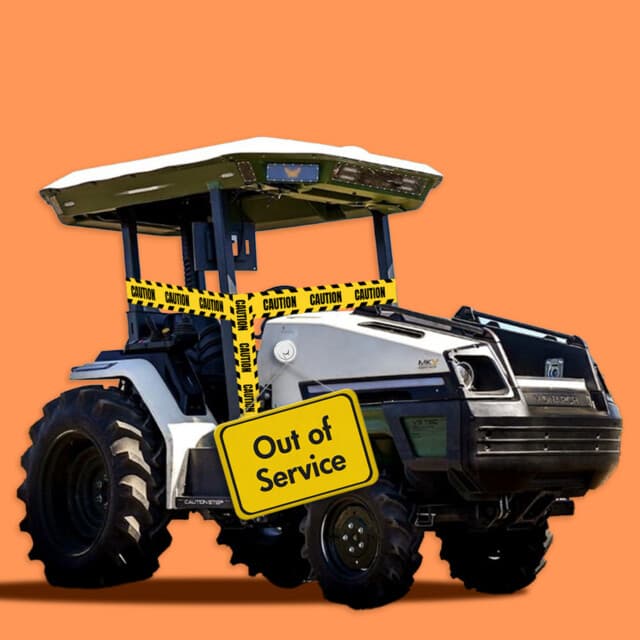
Monarch Tractor, a Silicon Valley startup that raised $200 million to build autonomous electric tractors for vineyards, ceased operations in April 2025 after a cascade of technical failures, lawsuits, and internal conflicts left its equipment inoperable in fields across the country.
Founded in 2018 by Napa winemaker Carlo Mondavi, former Tesla executive Mark Schwager, and robotics expert Praveen Penmetsa, Monarch promised to transform agriculture with fully electric tractors capable of autonomous navigation through vineyards. The company claimed its $90,000 machines would save farmers $18,000 annually in diesel costs while collecting AI-driven data on crop health and performance.
Major wine producers including Jackson Family Wines, Gallo, and Constellation adopted the technology. Forbes valued the company at over $500 million, calling it a future billion-dollar startup. But by September 2024, dealers began filing lawsuits alleging the tractors were defective and failed to operate autonomously as promised.
Why it matters
The Monarch collapse reveals a fundamental mismatch between venture capital timelines and agricultural realities. While American farmers face genuine crises in labor costs and climate pressures, the failure demonstrates that ambitious technology cannot substitute for proven engineering and industry expertise. The shutdown also left early adopters with expensive, cloud-dependent equipment that became unusable overnight—a cautionary tale for farmers considering connected agricultural technology.
Technical Problems and Leadership Conflicts
Burks Tractor, an Idaho dealership, sued Monarch after purchasing 10 tractors for $773,008 that immediately malfunctioned upon delivery. The company acknowledged functionality issues but refused refunds. Another lawsuit followed in November 2024, claiming breach of contract over the tractors' failure to operate autonomously.
Mondavi exited the company after disagreements with CEO Penmetsa over how to address reliability problems. "I wanted to address them through hardware changes, while the CEO believed they could be solved more through software," Mondavi stated on Instagram. "I believed strongly in a different path but was ultimately blocked and pushed out."
Tom Gamble of Gamble Estates purchased several Monarch tractors in 2023. When the company shut down, his cloud-dependent machines stopped working entirely. "We had to crawl under the tractor to unlock the wheels," Gamble said. "That's the only way we could get it back to the shed, where it sits rotting."
Ryan Carr, co-owner of Carr Vineyards & Winery, reported consistent mechanical issues including transmission problems and inability to run implements properly. "We were never able to achieve autonomy, let alone even just proper functionality," Carr said.
Manufacturing and Market Missteps
Production shifted from Livermore, California to Foxconn's Ohio factory—a company known for consumer electronics, not agricultural equipment. When Foxconn sold the plant in August 2024, Monarch lost its manufacturing base.
The company also faced structural challenges. Unlike established tractor manufacturers like John Deere or Kubota, Monarch offered no financing options for its five-figure equipment and maintained only three tractor models compared to competitors' hundreds. A nearly $10,000 annual subscription model and California's requirement for supervised operation of driverless tractors further limited adoption.
"Silicon Valley may think in quarters, but farming thinks in seasons, weather windows, parts availability, and banker conversations," said Patrick McIntosh, a Louisiana farmer who worked with Monarch. "If autonomous tractors cannot prove ROI under those conditions, they stay a showroom conversation instead of becoming field tools."
Construction giant Caterpillar acquired Monarch's assets in April 2025. Other autonomous vineyard technologies from companies like Vitibot, Naïo Technologies, and HammerHead continue operating with more focused approaches.
These details were first reported by VinePair.
This is an original analysis by the Omega editorial team. Source reporting: AI Watch.
Want systems like this working for your business?
Book a Call