Microsoft's Smith: U.S. AI Policy Is 'Regulation Without Rules'
Brad Smith says Washington's ad hoc approach to frontier models leaves companies unable to plan and allies questioning American tech reliability.
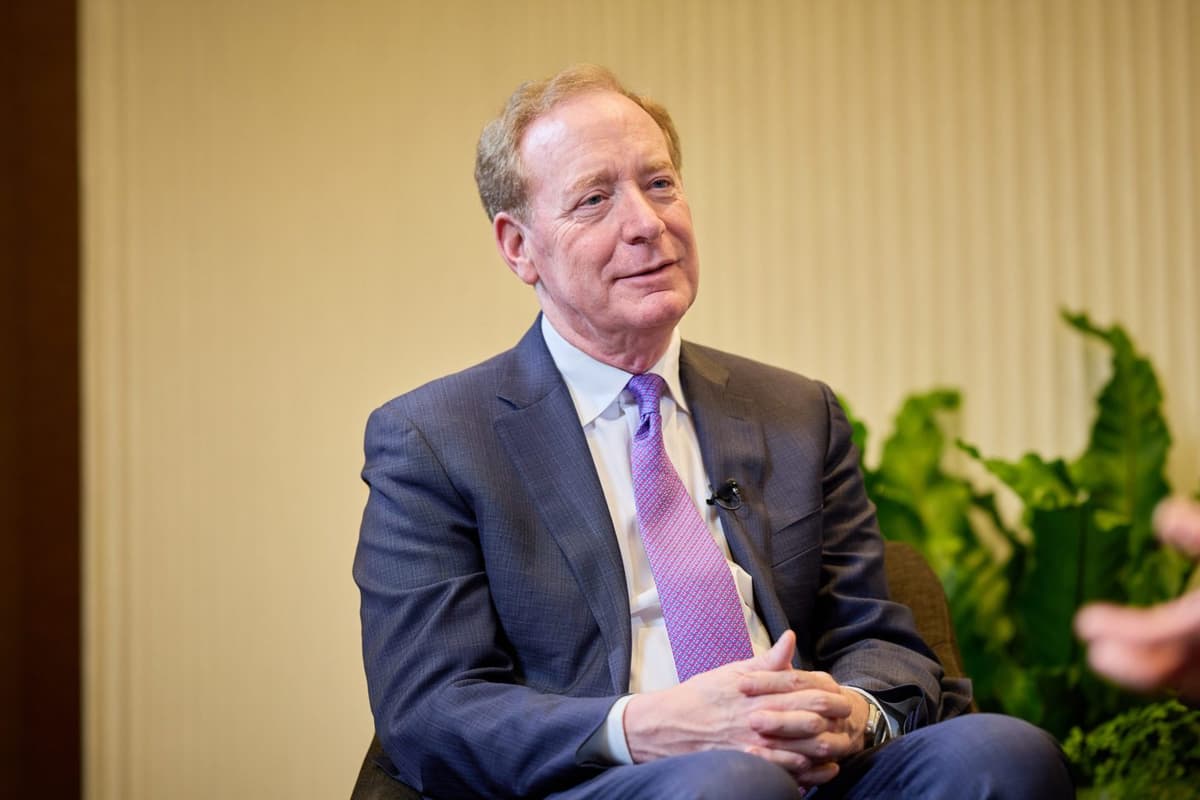
U.S. AI oversight lacks transparency, Microsoft president warns
Microsoft President Brad Smith has criticized the Trump administration's approach to artificial intelligence policy, arguing that Washington is effectively regulating frontier AI systems without establishing clear rules or using appropriate legal tools.
Speaking exclusively to Fortune at the AI for Good Global Summit, Smith described the current situation as "regulation without transparent or complete rules," adding that "without rules, businesses can't plan."
Recent restrictions highlight policy gaps
Smith's comments follow a turbulent period for leading AI developers. Last month, the Commerce Department invoked export-control law to force Anthropic to withdraw its Fable 5 and Mythos 5 models globally, citing cybersecurity risks. Weeks later, officials pressured OpenAI to delay public release of its GPT-5.6 model family, restricting early access to government-vetted partners. Both restrictions have since been lifted—Fable 5 returned earlier this month, and OpenAI announced GPT-5.6 will launch publicly Thursday.
While Smith acknowledged that the government was right to act on legitimate security concerns with Anthropic's Fable model, he emphasized that Washington lacks the regulatory infrastructure to handle frontier AI appropriately. "The U.S. government got information that led it to conclude that there was an urgent cybersecurity risk, and when the government gets that information, I think it's right to act," Smith said. "But, what the government found was that it only had one regulatory tool it could use: an export control tool."
Legal experts have noted that export controls were never designed for widely accessible AI models delivered through APIs, raising questions about whether the government's actions could withstand legal challenges.
No formal framework, inconsistent processes
Critics say the administration's policy resembles an informal licensing regime operating without legislation or published standards. A June executive order established a voluntary pre-release review process but explicitly avoided creating a mandatory licensing system. Yet officials have demonstrated willingness to use export controls when companies decline voluntary cooperation or when they deem releases too risky.
Anthropic and OpenAI faced different processes within weeks of each other, with no published criteria for either. The government has not disclosed which models will require vetting or what qualifies an organization as a "trusted partner."
International fallout and sovereignty concerns
The Anthropic export control triggered political backlash internationally, particularly in Europe, where politicians across the spectrum cited the incident as evidence of dangerous over-reliance on American technology. One French politician compared the shutdown to a blockade of the Strait of Hormuz, while a British lawmaker noted that hospitals and researchers lost access to critical technology overnight. Canadian Prime Minister Mark Carney echoed similar concerns at the G7 summit.
Smith argued that foreign governments have misunderstood the Anthropic action, noting that the intent was to remove the model from all markets, not specifically target international users. "They asked Anthropic to take Fable off the market," he explained. "Anthropic said it would not, so they used an export control lever in a way that caused Anthropic to take it off the market, both domestically and internationally."
Nevertheless, Smith acknowledged that American companies now face a credibility challenge. "We want to sell our services around the world, but people will not buy what we have to sell unless they're confident that there will be certainty of supply, continuity of supply, and we need to address that," he said.
Salesforce CEO Marc Benioff expressed similar views earlier the same day, telling the summit audience he felt "good" about the government's Fable 5 decision and that Europe had misread a legitimate national security response as hostile action.
Why it matters
The absence of clear AI regulation creates planning uncertainty for companies investing billions in frontier models while simultaneously undermining international confidence in American technology infrastructure. As governments worldwide pursue "sovereign AI" strategies to reduce dependence on U.S. providers, Washington's ad hoc approach risks fragmenting the global AI ecosystem and weakening American companies' competitive position in international markets.
These details were first reported by Fortune.
This is an original analysis by the Omega editorial team. Source reporting: AI Watch.
Want systems like this working for your business?
Book a Call
