Microsoft Has 2.2M AI Chips Despite $280B Expansion Push
Internal documents reveal a gap between the tech giant's public capacity claims and actual GPU deployments, raising questions about datacenter readiness.
Microsoft's ambitious artificial intelligence infrastructure expansion may be encountering significant obstacles, according to an investigation by The Guardian that uncovered a substantial gap between the company's public statements about AI capacity and its actual chip deployments.
Internal documents reviewed by The Guardian show Microsoft has 2.2 million AI chips installed in its datacenters as of mid-2026—less than half what some industry experts anticipated given the company's public claims about its infrastructure buildout. The company reportedly targeted 1.8 million AI chips by the end of 2024, meaning deployments have grown more slowly than expected despite a $280 billion capital expansion program.
The power capacity puzzle
Microsoft's own disclosures create a confusing picture. The company states it has added 5 gigawatts of datacenter capacity over the past two years and now operates hundreds of datacenters across five continents. A 2024 investor presentation reportedly claimed 5GW of capacity already installed, suggesting current total capacity could reach 10GW.
Using standard conversion methods, 10GW of AI datacenter capacity should support approximately 6.4 million graphics processing units (GPUs). Even more conservative estimates based on Microsoft's sustainability reports—which Shaolei Ren, a University of California, Riverside professor, considers more credible because they undergo third-party audits—suggest the company should have around 4 million AI chips.
The actual figure of 2.2 million represents a significant shortfall by either measure.
Datacenters on paper versus reality
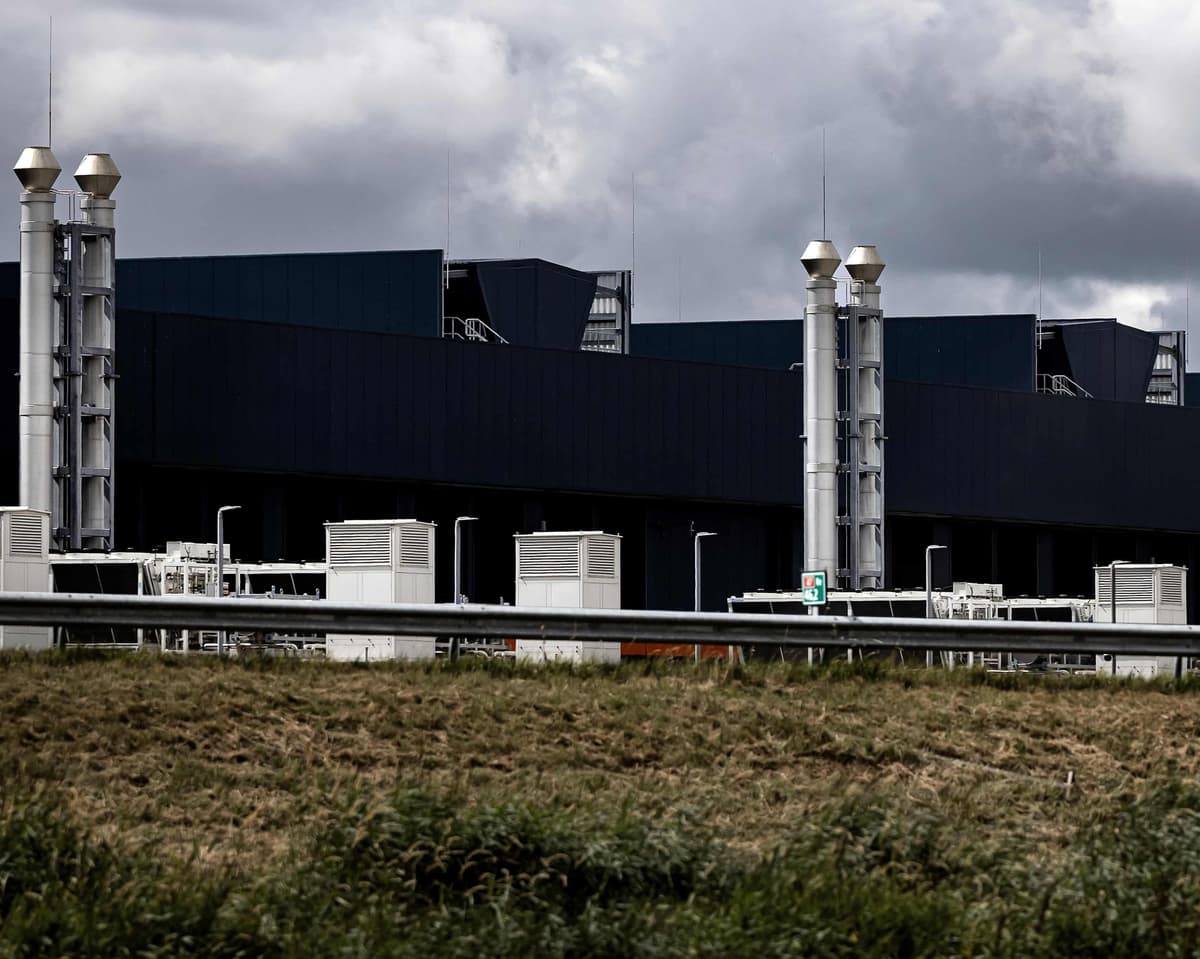
Part of the discrepancy appears to stem from announced projects that remain incomplete. Microsoft's Fairwater development in Wisconsin, which CEO Satya Nadella said was "going live" in April, was not yet operational as of May, according to the company's own admission to local media. Satellite imagery analyzed by Epoch AI indicates only portions of the facility are active.
Nadella himself acknowledged the challenge in a podcast appearance, noting that electrical power availability and datacenter proximity to power sources create bottlenecks. "You may actually have a bunch of chips sitting in inventory that I can't plug in," he said. "In fact, that is my problem today. It's not a supply issue of chips. It's actually the fact that I don't have warm shells to plug into."
The investigation also found Microsoft has fewer of Nvidia's newest Blackwell chips than expected. While Nvidia CEO Jensen Huang announced that orders from the company's top four customers totaled 3.6 million Blackwells, Microsoft has less than half of what its historical purchasing patterns would suggest.
Why it matters
This discrepancy highlights a fundamental opacity problem in the AI industry. Nvidia—one of the world's two most valuable companies—does not disclose chip sales volumes or customer identities. Tech giants purchasing these chips similarly keep deployment numbers confidential. Without transparent metrics, investors, policymakers, and the public cannot accurately assess whether AI infrastructure growth matches the industry's ambitious rhetoric. The gap between Microsoft's announced capacity and actual chip deployments suggests the physical realities of building AI infrastructure—power availability, construction timelines, and operational readiness—may be constraining growth more than companies publicly acknowledge.
Microsoft disputed The Guardian's calculations but declined to specify which figures were incorrect or provide alternative numbers. The company stated that its estimates were "inaccurate, drawing the wrong conclusions from incorrect assumptions," while emphasizing it does not report volumes of specific chips in its infrastructure.
These findings were first reported by The Guardian.
This is an original analysis by the Omega editorial team. Source reporting: AI Watch.
Want systems like this working for your business?
Book a Call