Meta's Muse AI Agent Tops App Store Despite Privacy Questions
The task-oriented assistant has surpassed 2.5 million downloads in two weeks, but trust concerns loom over its access to personal data.
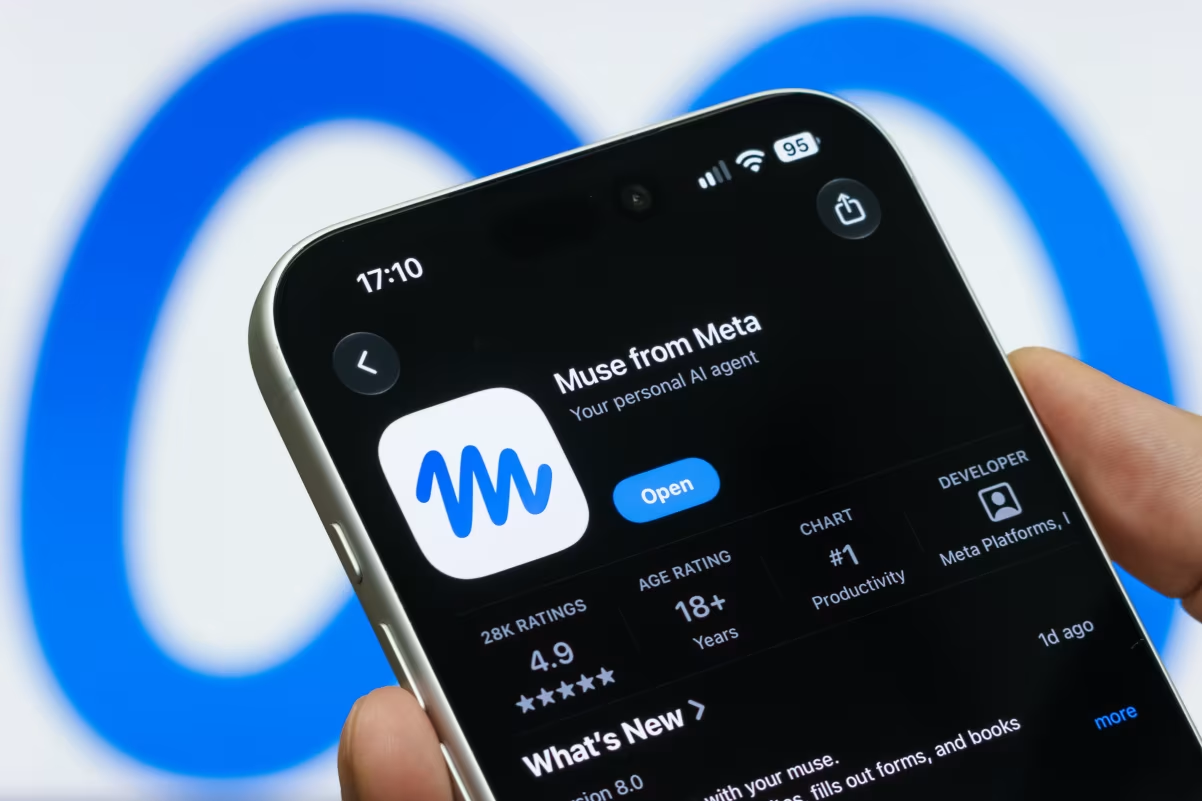
Meta's newest AI assistant, Muse, has become the most downloaded free iPhone app since its September 8 launch, accumulating more than 2.5 million downloads in just over two weeks, according to market intelligence firm Sensor Tower.
Unlike text-based chatbots such as ChatGPT or Google Gemini, Muse positions itself as an AI agent capable of executing multi-step tasks. Users assign broad objectives—planning a trip, organizing a move, booking reservations—and the agent works through the necessary steps, including browsing websites, drafting emails, and creating documents.
The application features five distinct tabs: a main chat interface, a customizable feed of user priorities, an Ideas section with prompt examples, a goals tracker, and a repository for files and media. This structured approach offers more guidance than the open-ended interfaces of competing chatbots.
How the agent performs
Muse operates through a virtual computer in the cloud, allowing users to watch it navigate websites in real time. In testing, the agent successfully created packing schedules for an apartment move, coordinated trip planning via email, and compiled restaurant recommendations into formatted Google Docs.
The agent demonstrated an ability to identify obstacles during task completion. When encountering a purchase failure, it scanned the retailer's website to determine that the store required a professional license number for transactions.
However, performance gaps emerged in several areas. The agent provided outdated local business recommendations, citing establishments that had closed years earlier. Shopping tasks often proved more efficient to complete manually, as major retailers like Amazon block bot access, and Target prevents autonomous checkout clicks. While Muse uses Stripe's Link service to generate one-time-use payment cards, users must still enter personal information at checkout.
In one instance, the app's prompt suggestions overstated capabilities. The Ideas tab claimed Muse could negotiate prices directly on Facebook Marketplace, but the agent acknowledged it could only draft negotiation messages for users to send themselves. A Meta spokesperson maintained the description was accurate and that Muse can negotiate within user-defined parameters.
Why it matters
Meta's investment in AI agents represents a strategic bet on technology that requires unprecedented access to personal data—emails, calendars, payment information, and browsing behavior. The company faces an uphill battle convincing consumers to grant this access. A June Pew Research Center report found two-thirds of American adults believe AI is advancing too quickly, and more predict negative rather than positive societal impacts. A July Gallup poll revealed 41% of Americans have little to no confidence in large technology companies.
Bank of America analysts noted in a Tuesday research note that while early Muse feedback has been positive, "privacy and trust remain key considerations for broader adoption." The timing is particularly sensitive given ongoing concerns about Meta's Ray-Ban smart glasses and the lingering impact of the Cambridge Analytica scandal.
Miranda Bogen, director of the Center for Democracy & Technology's AI Governance Lab, emphasized that AI agents require "an enormous amount of private data to function," and their ability to take autonomous action raises the stakes for security safeguards.
Meta states that Muse runs on a dedicated cloud computer inaccessible to other agents and cannot view user passwords or payment methods. CEO Mark Zuckerberg is expected to detail the company's broader AI vision at the Connect conference on Wednesday.
Despite Muse's App Store performance, an Emarketer survey from July showed ChatGPT leading U.S. AI assistant usage at 33.7%, followed by Gemini at 18.2% and Meta AI at 4.7%. Gartner research found 64% of consumers believe AI shopping agents will benefit corporations more than users.
These details were first reported by CNN.
This is an original analysis by the Omega editorial team. Source reporting: AI Watch.
Want systems like this working for your business?
Book a Call