Meta Tests Military-Grade Face Recognition for Smart Glasses
Software license reveals partnership with Rank One Computing, a surveillance vendor serving police and defense agencies.
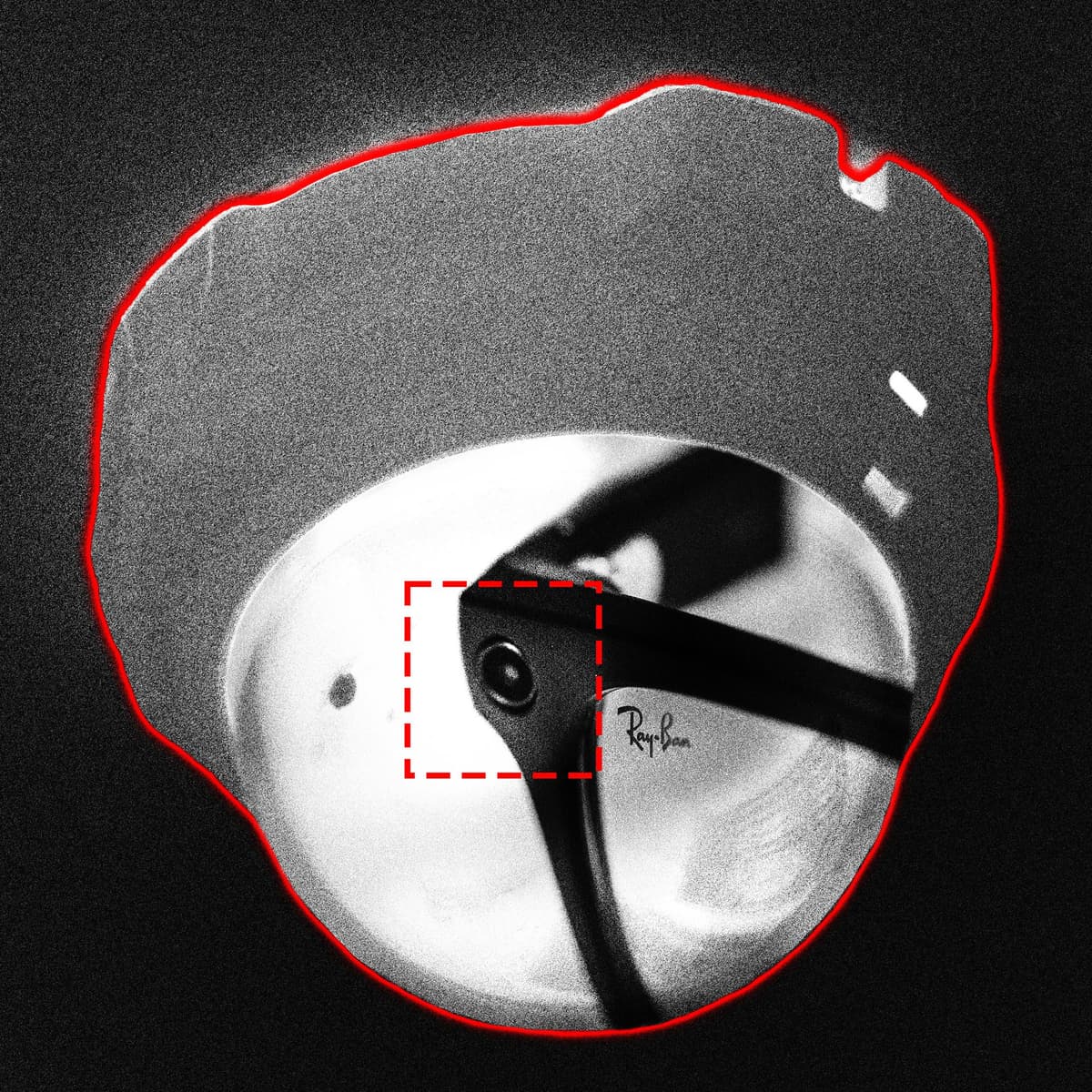
Meta has been testing face recognition software from Rank One Computing, a Denver-based surveillance technology vendor whose primary customers are government agencies, according to documents obtained by WIRED.
A software license issued by Rank One Computing shows the company authorized Meta to use its face recognition algorithms in a test version of the Meta AI app that powers Ray-Ban and Oakley smart glasses. The license supports up to 10 million facial templates and includes liveness detection capabilities designed to distinguish real people from photos or masks.
Rank One derives approximately 80 percent of its revenue from government clients. The US Marshals Service uses its biometric identification systems to verify prisoner identities during transport. The Naval Criminal Investigative Service purchased the company's ROC Watch video tool. Under a government research contract, Rank One developed long-range face recognition for US Special Operations Command, claiming its software could identify faces from up to one kilometer away.
Why it matters
The licensing arrangement illustrates how surveillance technologies developed for military and law enforcement applications are increasingly being evaluated for consumer products. As Meta explores face recognition for mass-market smart glasses, the technical capabilities and algorithmic foundations overlap significantly with tools used by police departments and intelligence agencies. This convergence raises questions about privacy safeguards and the appropriate boundaries between government surveillance infrastructure and consumer technology.
Technical integration and removal
Code reviewed by WIRED shows that integration routines for Rank One's software—functions that load its license and initialize the system—remained dormant in versions of the Meta AI app shipped to more than 50 million users as recently as this month. These routines existed alongside Meta's own face recognition system, internally called NameTag, which WIRED previously reported was built into the app but never activated for users.
Meta removed all face recognition systems from the app entirely on June 5, one day after WIRED's initial reporting on the NameTag system.
Company background and accuracy concerns
Founded in 2015 by engineers who previously built face recognition systems at the nonprofit research institute Noblis, Rank One Computing went public on the Nasdaq in February. The company's leadership includes former senior officials from the FBI, CIA, and Pentagon.
Like other face recognition systems, Rank One's algorithms show demographic performance disparities. Testing by the National Institute of Standards and Technology found the company's algorithm produced false matches at varying rates depending on sex and country of birth, with error rates generally higher for women and lowest for people born in Eastern Europe.
Rank One's technology already operates in multiple contexts. West Virginia schools have used the software to screen faces against the state's sex-offender registry. The algorithm is also embedded in products from DataWorks Plus and LexisNexis's Lumen platform, which enables police officers to search state, regional, and FBI facial databases.
Meta declined to answer questions about when the relationship with Rank One began, why it licensed the software, or whether the partnership continues. Rank One Computing also declined to comment. The details were first reported by WIRED.
This is an original analysis by the Omega editorial team. Source reporting: WIRED.
Want systems like this working for your business?
Book a Call