Meta Releases Open-Source AI Models as Zuckerberg Warns of Concentration Risk
The company launched Muse Glimmer and expanded access to Muse Spark 1.2 while arguing for broader distribution of advanced AI capabilities.
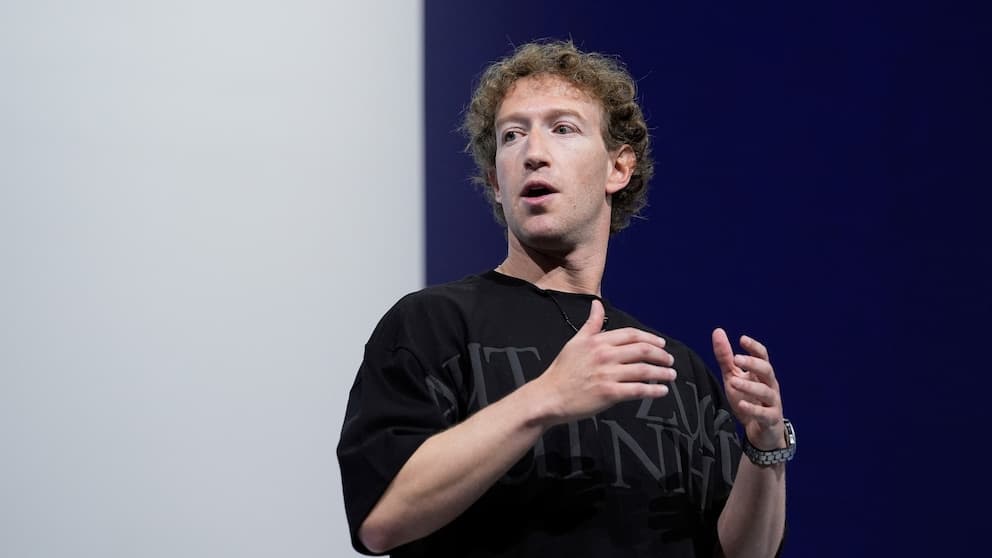
Meta Platforms released two artificial intelligence models on Monday with open licensing terms, accompanied by a lengthy essay from CEO Mark Zuckerberg arguing that concentrated control of advanced AI poses significant risks to society.
The company made available Muse Glimmer, a lightweight AI model designed to run on personal computers, under a permissive open-source license. Meta also announced it would provide developer access to Muse Spark 1.2, a more powerful model in its AI portfolio.
The case for open-source AI
In his published essay, Zuckerberg outlined his vision for AI development and made the case that open-source approaches serve broader societal interests. He warned that if "superintelligence" becomes controlled by a small number of individuals, companies, governments, or autonomous AI systems, "that will naturally lead to outcomes that are less favorable for everyone else."
The Meta chief argued that the key challenge lies in achieving balance—ensuring advanced AI capabilities are "broadly distributed" to empower billions of individual users rather than concentrating power in institutional hands.
Zuckerberg appeared to contrast Meta's approach with competitors, though he avoided naming specific companies. "Most other labs are focused on building AI for companies, governments, or other institutions, so if those labs lead, then the balance of power will favor larger institutions over individuals," he wrote.
Why it matters
This release and accompanying manifesto represent Meta's attempt to differentiate its AI strategy amid intensifying competition. While the company has consistently championed open-source AI development, it has struggled to match the market impact of closed-model competitors like OpenAI, Anthropic, and Google. Zuckerberg's framing positions open source not just as a technical choice but as a governance philosophy with implications for how AI power gets distributed across society.
Policy recommendations for U.S. competitiveness
Zuckerberg's essay included specific policy proposals aimed at maintaining American leadership in AI development. He called for accelerated investment in energy infrastructure and capacity, citing competition with China as a driving concern.
The Meta CEO also weighed in on the contentious practice of "distillation"—training smaller AI models using outputs from more powerful ones. The Trump administration has pledged to restrict Chinese AI companies from using distillation to extract capabilities from U.S. models, and Anthropic accused China's DeepSeek of employing the technique earlier this year.
Zuckerberg pushed back against characterizing distillation as harmful. "I think it is important to protect the principle that you can learn from anything you can observe," he said. "This is how the world works, and the US will not be able to lead if we restrict ourselves on this front."
These details were first reported by ABC News.
This is an original analysis by the Omega editorial team. Source reporting: AI Watch.
Want systems like this working for your business?
Book a Call