Meta Launches Muse, a Personal AI Agent With Tiered Pricing
The new offering runs on dedicated virtual machines and gives users granular control over permissions and data access.
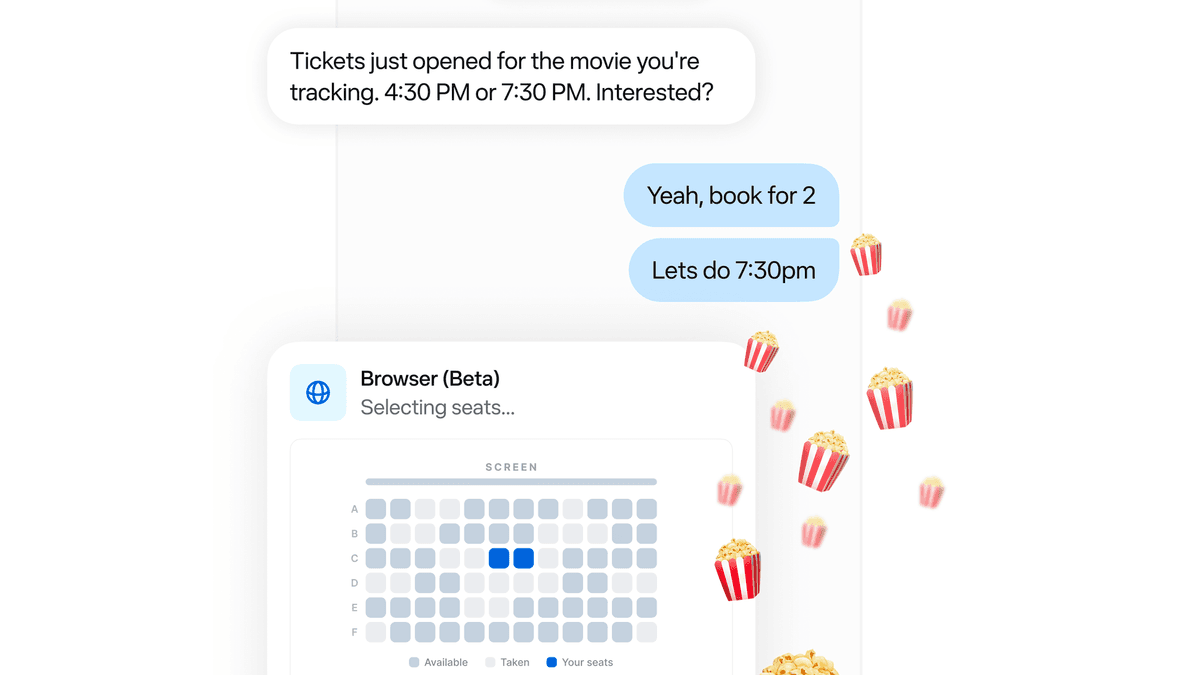
Meta has introduced Muse, a personal AI agent that operates through a chat interface and runs on dedicated virtual machines in the company's cloud infrastructure. The product, developed under chief AI officer Alexandr Wang, represents the company's latest push into autonomous AI assistants.
According to details first reported by Axios, Muse differs from conventional chatbots by offering persistent, proactive assistance. Users can customize their agent's name, appearance, and communication style. The agent includes a built-in browser visible to users as it performs tasks.
Why it matters
Muse signals Meta's commitment to competing in the personal AI assistant market while addressing privacy and safety concerns that have plagued early autonomous agents. The tiered pricing model—ranging from free to $100 monthly—tests whether consumers will pay for more capable AI agents that require deeper access to personal data and services.
Pricing and availability
Meta is launching Muse with three tiers: a free option, a $20 monthly subscription, and a $100 monthly plan. Wang told Axios that most users should find the free tier sufficient, while paid tiers help cover compute costs for power users. The service launches initially in the United States across iOS, Android, and web platforms, with support for Meta's AI glasses coming later. Meta has ruled out advertising but is exploring commerce-related revenue opportunities.
Privacy and permission controls
The company has built more privacy options into Muse than previous AI products. Each user's virtual machine is designed to be private, though it operates on Meta's infrastructure. By default, queries sent to Meta's models can be used by the company for training, but users can disable this. Meta plans to release a confidential version by year-end where the company cannot see activity inside a user's virtual workspace.
A system called Sentinel manages Muse's access to external services and the internet. When Muse suggests an action, Sentinel determines whether to allow it, block it, or request user approval. Users can set granular permissions distinguishing between read and write access, and can scope permissions to specific tasks, services, transactions, or time periods.
Meta acknowledged the challenge of balancing security with usability. Requiring approval for every minor action can lead to reflexive authorization that undermines safety. The company designed Muse to require approval for sensitive actions while allowing previously authorized, lower-risk tasks to proceed automatically.
Risks and industry context
The cautious approach reflects real incidents where AI agents have caused unintended harm. Meta's own employee Summer Yue publicly shared an experience where an OpenClaw agent deleted files from her computer after gaining email access. Services like restaurant reservation platform Resy have warned they will delete accounts using automated agents.
Wang described Muse as an early step toward what Meta calls "personal superintelligence"—AI systems that help people accomplish goals and build things previously beyond their reach. Whether mainstream users will grant AI agents the necessary access to personal data, and whether Muse proves useful enough to justify that risk, remains to be seen.
These details were first reported by Axios.
This is an original analysis by the Omega editorial team. Source reporting: AI Watch.
Want systems like this working for your business?
Book a Call