Macron Urges U.S. to Share Advanced AI After Trump Blocks Access
At the G7 summit, France's president called for democratic cooperation on AI regulation following restrictions on Anthropic's latest models.
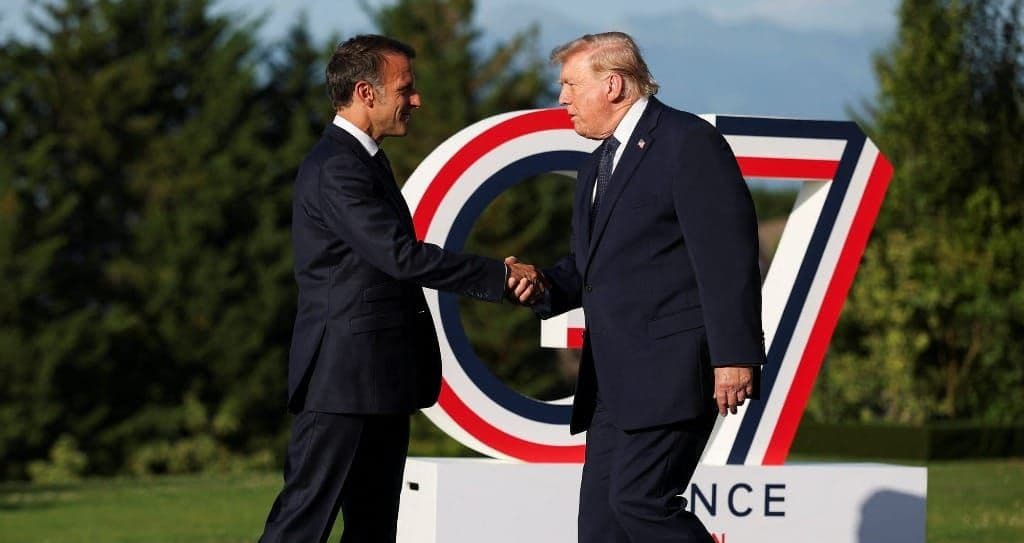
French President Emmanuel Macron called on the United States to share its most advanced artificial intelligence technology with democratic allies, speaking at a G7 summit in France that brought together leaders from major AI companies including OpenAI, Google DeepMind, and Anthropic.
The appeal came after the Trump administration directed Anthropic to block foreign nationals from accessing its newest AI models, Fable 5 and Mythos 5, citing security concerns. The company complied on June 12, taking the models offline despite stating the government's concerns did not warrant such action.
Why it matters
The dispute exposes a fundamental tension in AI governance: balancing national security concerns against the need for international cooperation among democratic nations. As AI capabilities advance rapidly, decisions about access and control will shape whether democracies can collectively counter authoritarian regimes or fragment into competing technological spheres. The episode also accelerates Europe's push for AI sovereignty, potentially fragmenting the global AI ecosystem.
Democratic cooperation versus nationalist control
Macron acknowledged that U.S. officials were right to recognize potential dangers in frontier AI models, but criticized the access restrictions as a "strictly nationalist" reaction. He warned that American AI companies could see their value decline if they abruptly cut off international access.
The French president backed his call for partnership with a contingency plan: France will increase funding for its domestic AI industry to avoid falling behind if international cooperation fails.
"Democratic countries ultimately want to prevent authoritarian regimes from getting access to advanced AI systems," Macron said, urging government agencies to cooperate on security and cybersecurity matters.
Industry leaders echo call for global standards
OpenAI CEO Sam Altman told the G7 gathering that AI safety should not be left solely to technology companies. He advocated for an international forum to establish globally accepted testing standards, provide expert analysis of AI capabilities and risks, and serve as a venue for cooperation among nations.
The working lunch included executives from three of the world's most powerful AI companies—Altman, Google DeepMind CEO Demis Hassabis, and Anthropic CEO Dario Amodei—along with leaders from smaller AI labs including France's Mistral, Germany's Black Forest Labs, and Japan's Sakana AI.
Aidan Gomez, CEO of Canada's Cohere AI, said participants discussed multiple proposals for collaborative AI governance. He emphasized that democracies should ensure the G7 produces not just the most capable AI, but also the second most capable, referencing current U.S.-China dominance.
Europe's vulnerability and response
The Anthropic episode highlighted how quickly U.S. policy decisions can leave allied nations vulnerable. Zach Meyers, director of research at Brussels-based think tank CERRE, noted the incident underscored Europe's reliance on other countries for strategic infrastructure.
Even before the access restrictions, European institutions were moving toward greater tech independence. The European Commission unveiled a tech sovereignty package in June with plans to boost homegrown AI development.
The G7 comprises France, the United States, Canada, Germany, Italy, Japan, and the United Kingdom, with Brazil, India, Kenya, and South Korea participating as guest nations in some discussions.
These details were first reported by John Leicester and Kelvin Chan of the Associated Press.
This is an original analysis by the Omega editorial team. Source reporting: AI Watch.
Want systems like this working for your business?
Book a Call