Loblaw Expands AI Gate Automation Across Canadian Warehouses
The grocery chain's partnership with EAIGLE aims to cut processing times and feed real-time freight data into existing logistics systems.
Loblaw deploys AI checkpoints at distribution gates
Loblaw Companies expanded its partnership with EAIGLE in September 2026 to install AI-powered gate automation across multiple Canadian distribution centers, according to Simply Wall St. The system is designed to reduce processing times, improve driver experience, and capture real-time freight and yard data that flows into the retailer's existing warehouse management, transportation management, yard management, and ERP systems.
The rollout transforms distribution gates into data-rich checkpoints, a move that could influence how investors assess logistics efficiency and operating cost trends at the grocery and pharmacy chain. The initiative sits within Loblaw's broader automation program, which analysts view as a lever for gradual margin improvement rather than a step change in growth.
Why it matters
For a retailer facing intense competition and regulatory scrutiny on pricing, operational efficiency gains matter. Loblaw's revenue is forecast to grow 3.6% annually while earnings expand 4.32% per year—modest figures that make cost control critical. AI-driven yard automation offers a path to trim logistics, inventory, and labor expenses without relying on top-line acceleration. The question for investors is whether these incremental gains can offset pressure from discount formats and supply chain volatility, or whether execution risk in automation projects becomes a drag on capital returns.
Analyst forecasts assume gradual gains
Current consensus models project Loblaw will reach CA$71.4 billion in revenue and CA$2.8 billion in earnings by 2029, up from CA$2.7 billion today. That represents an earnings increase of roughly CA$0.1 billion over three years—a small absolute gain for a business of this scale. Analysts expect profit margins to slip from 4.1% to 3.9% during the same period, suggesting cost pressures or a shift toward lower-margin discount formats even as automation initiatives aim to reduce waste.
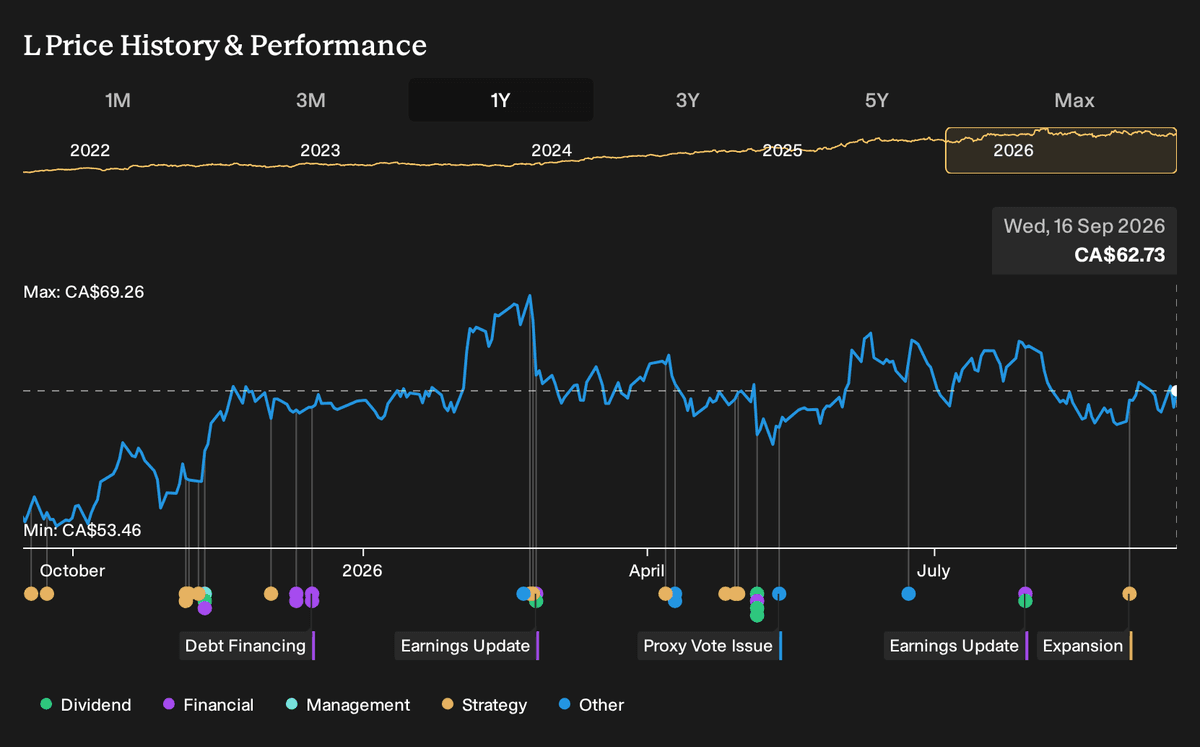
The consensus price target of CA$68.8 per share sits just 4.3% above the current share price of CA$65.81, indicating analysts see the stock as fairly valued. However, individual targets range from CA$43.0 to CA$76.0, reflecting divergent views on how effectively Loblaw can convert automation spending into lower operating costs. The consensus model assigns a 2029 price-to-earnings ratio of 31.3x, above both Loblaw's current 28.5x multiple and the 19.4x average for Canadian consumer retailing peers.
Execution risk remains front and center
Loblaw's valuation premium assumes the company can mesh AI-enabled logistics, pharmacy expansion, and digital distribution into consistent earnings. Bears point to e-commerce disruption risk and the cost of staying competitive online. One bearish cohort forecasts CA$70.6 billion in 2029 revenue and CA$3.5 billion in earnings yet still arrives at a CA$53.58 target—well below consensus.
The EAIGLE yard automation program is one of several operational levers Loblaw is pulling to support modest earnings growth and capital returns. Analysts also expect the company to reduce its share count by 2.8% per year for the next three years, which can support earnings per share even if absolute profit growth remains muted.
Details were first reported by Simply Wall St.
This is an original analysis by the Omega editorial team. Source reporting: Automation Watch.
Want systems like this working for your business?
Book a Call