LinkedIn Retreats on AI Writing Tools Amid Content Quality Crisis
The platform that once pushed one-click AI post generation now adds a 'report AI slop' button as 41% of long-form content becomes machine-generated.
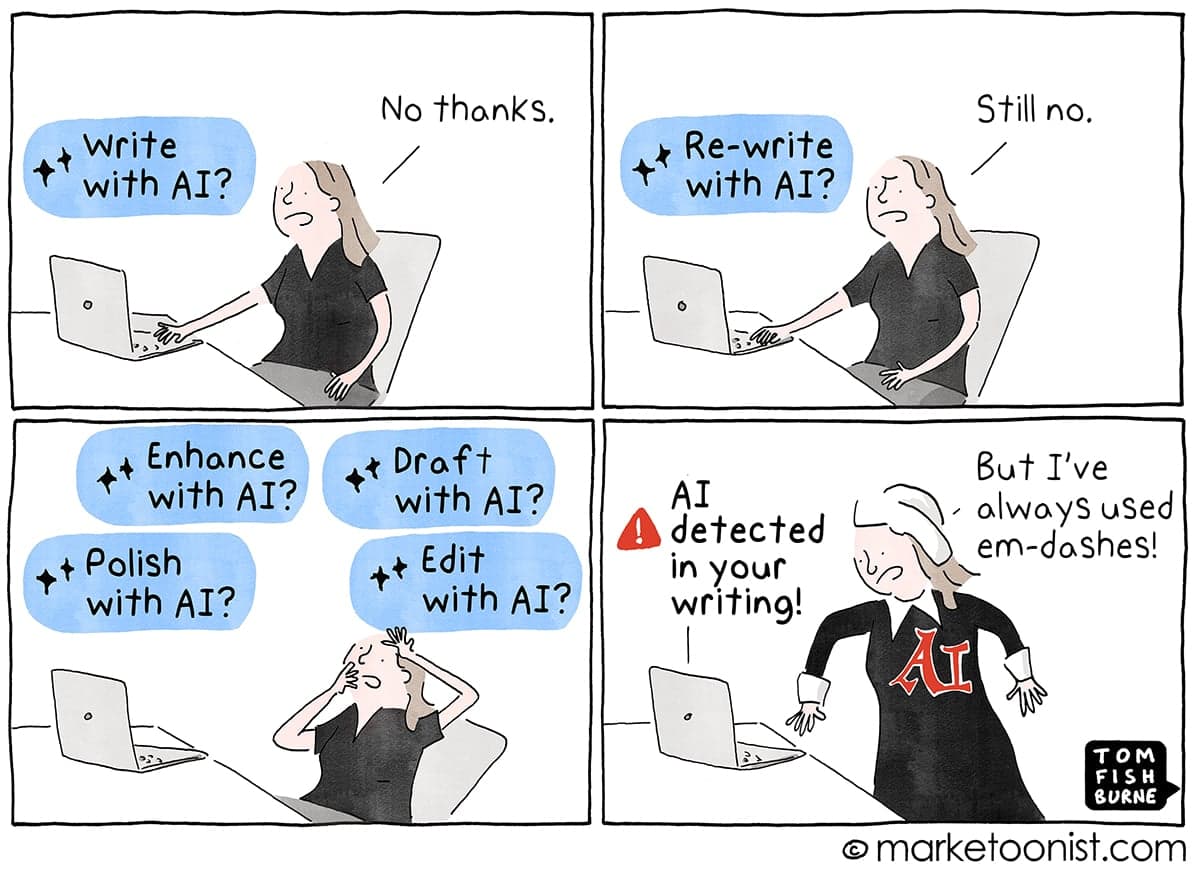
LinkedIn is rapidly backpedaling from its aggressive promotion of AI writing tools after flooding its own platform with machine-generated content, according to reporting by Patrick Coffee in the Wall Street Journal.
Just a few years ago, the professional networking platform offered to draft complete posts after users typed only 30 words. The predictable result: a torrent of what observers now call "AI slop." Research from Pangram Labs found that 41% of long-form posts on LinkedIn are now entirely AI-generated—the highest proportion of any major social network.
The Platform's Course Correction
LinkedIn has since retired its "enhance your post" feature and introduced a new reporting option specifically for flagging AI-generated content that users consider low-quality. The moves represent a stark reversal for a platform that embedded AI writing prompts into nearly every text field.
The shift reflects a broader cultural whiplash around AI-assisted writing. What was recently promoted as a productivity enhancement has become what marketoonist Tom Fishburne calls "a new scarlet letter in writing."
Watermarking and Detection Wars
The backlash is intensifying beyond LinkedIn. Anthropic announced that Claude will begin watermarking AI-generated text in response to new European Union regulations. The watermarks will apply even to content that was merely proofread by AI, not fully written by it.
Technology analyst Shelly Palmer warned the approach amounts to "false positives for everyone," pointing to the difficulty of accurately distinguishing AI assistance from human writing.
Meanwhile, a detection arms race has emerged. Some critics claim to identify AI writing through stylistic markers like frequent em-dashes. In response, writers are deliberately inserting typos into their work or using specialized AI tools designed to make AI-generated text sound more human—creating a circular absurdity where AI is used to disguise AI.
Why It Matters
This reversal signals a maturation point for generative AI in professional contexts. Platforms and users are discovering that indiscriminate automation degrades content quality and user trust faster than it creates value. The emerging norm appears to favor transparency and selective use over wholesale replacement of human writing. For enterprise leaders, the lesson is clear: AI writing tools require thoughtful deployment strategies, not blanket implementation.
The Authenticity Paradox
The situation has created what Fishburne describes as an authenticity paradox: people respond to content that appears genuine and human, so some now include words like "authentic" and "human" in their AI prompts—using machines to fake the very qualities that distinguish human communication.
These details were first reported by Tom Fishburne at Marketoonist, drawing on Patrick Coffee's Wall Street Journal coverage of LinkedIn's policy changes.
This is an original analysis by the Omega editorial team. Source reporting: AI Watch.
Want systems like this working for your business?
Book a Call