Labor Movement Splits Over AI Data Centers and Job Impact
Building trades unions champion construction work while service unions warn of long-term displacement and environmental harm.
Competing visions for AI's role in the workplace
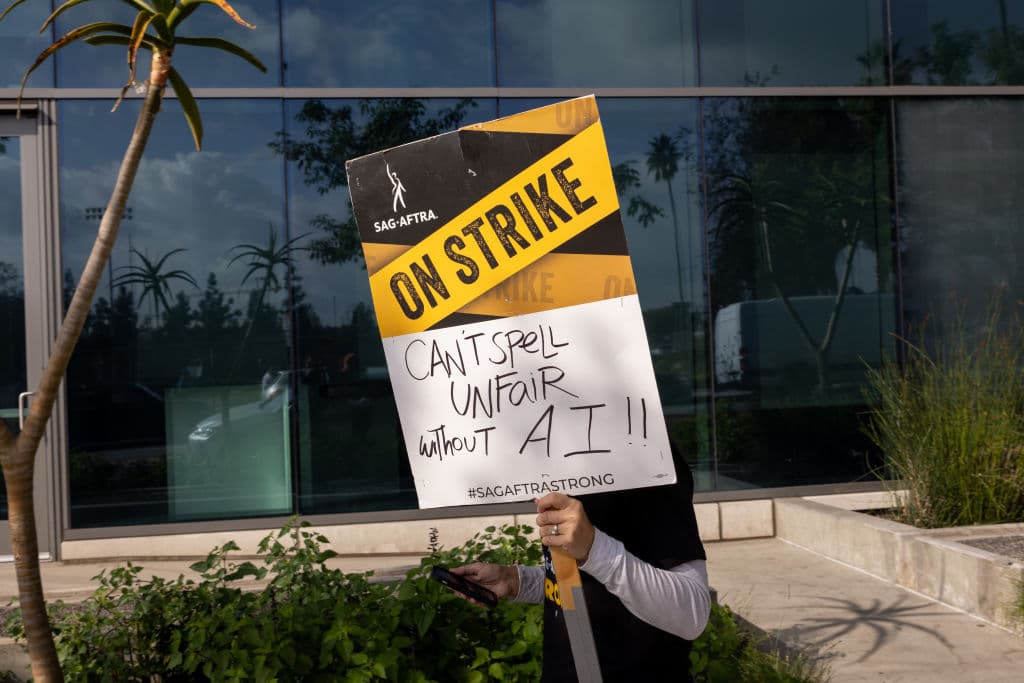
American labor unions are locked in an internal debate over artificial intelligence that reflects deeper tensions about economic development, job quality, and worker power. With one in five U.S. workers now using AI on the job according to a 2025 Pew Research Center poll, organized labor faces pressure to stake out a position—but no consensus has emerged.
The fault lines became visible in March when Senator Bernie Sanders and Representative Alexandria Ocasio-Cortez introduced legislation to pause data center construction until federal safeguards are in place. The Artificial Intelligence Data Center Moratorium Act drew backing from National Nurses United, the American Association of University Professors, and the Association of Flight Attendants, whose leaders framed unchecked data center expansion as a public health and environmental crisis.
Yet the proposal met swift opposition from building trades unions and the AFL-CIO. "We need the guardrails on AI, we just don't think that a moratorium is the way to get there," AFL-CIO President Liz Shuler told reporters in June. The International Brotherhood of Electrical Workers mobilized members to contact Congress in opposition, arguing the construction ban would eliminate union jobs.
Why it matters
This split reveals a strategic dilemma facing labor: whether to secure immediate construction and implementation work from the AI boom, or resist a technology wave that could automate away far more jobs than it creates. The outcome will shape union political strategy and worker protections as AI adoption accelerates across industries.
Data centers become a flashpoint
The conflict played out in Michigan when Governor Gretchen Whitmer attended a June groundbreaking for a 1.4-gigawatt Oracle and OpenAI data center in Saline Township. Standing alongside OpenAI CEO Sam Altman and North America's Building Trades Unions president Sean McGarvey, Whitmer praised the project as a model for "responsible adoption" of AI.
Local residents, environmental advocates, and Representative Rashida Tlaib opposed the facility over concerns about water use, utility costs, and pollution. State Representative Dylan Wegela called it a "complete betrayal of the working class."
Faiz Shakir, Senator Sanders's chief political adviser, told reporters the core issue is job durability. "It doesn't help a lot in our view if you have a short-term infusion of good, union paying jobs at the cost of the decimation of many, many long-term jobs," he said.
Tech funding shapes union AI strategy
AI companies are directly influencing union positions through financial partnerships. In 2024, the American Federation of Teachers announced a $23 million AI training hub in New York City funded by Microsoft, OpenAI, and Anthropic. AFT President Randi Weingarten described the National Academy for AI Instruction as a way to put "teachers in the driver's seat" of the technology.
Yet the venture capitalist who proposed the hub, Roy Bahat of Bloomberg Beta, framed it differently in a LinkedIn post. If the model works for teachers, he wrote, "maybe we can figure it out for other occupations"—suggesting educators serve as a pilot for broader workforce transformation.
Critics within labor argue union leaders are accepting AI's expansion as inevitable rather than organizing resistance. "The labor movement should be contesting the idea that the imposition of AI is inevitable," teacher union activist Lois Weiner said. She added that major decisions were made "without informed debate with union members."
Trevor Griffey, a labor historian and AFT local vice president, argued unions should shift from helping workers adapt to AI toward building power to resist unsafe automation and demanding policies like universal basic income or a four-day workweek. Vishal Reddy, a union negotiator, called for cross-union research to identify which affirmative demands resonate most widely with workers facing AI-related disruption.
These details were first reported by Truthout.
This is an original analysis by the Omega editorial team. Source reporting: AI Watch.
Want systems like this working for your business?
Book a Call