Judges Navigate AI Use While Sanctioning Lawyers for Fake Cases
Federal courts are establishing AI guidelines as attorney errors mount, but judges themselves face steep learning curves with the technology.
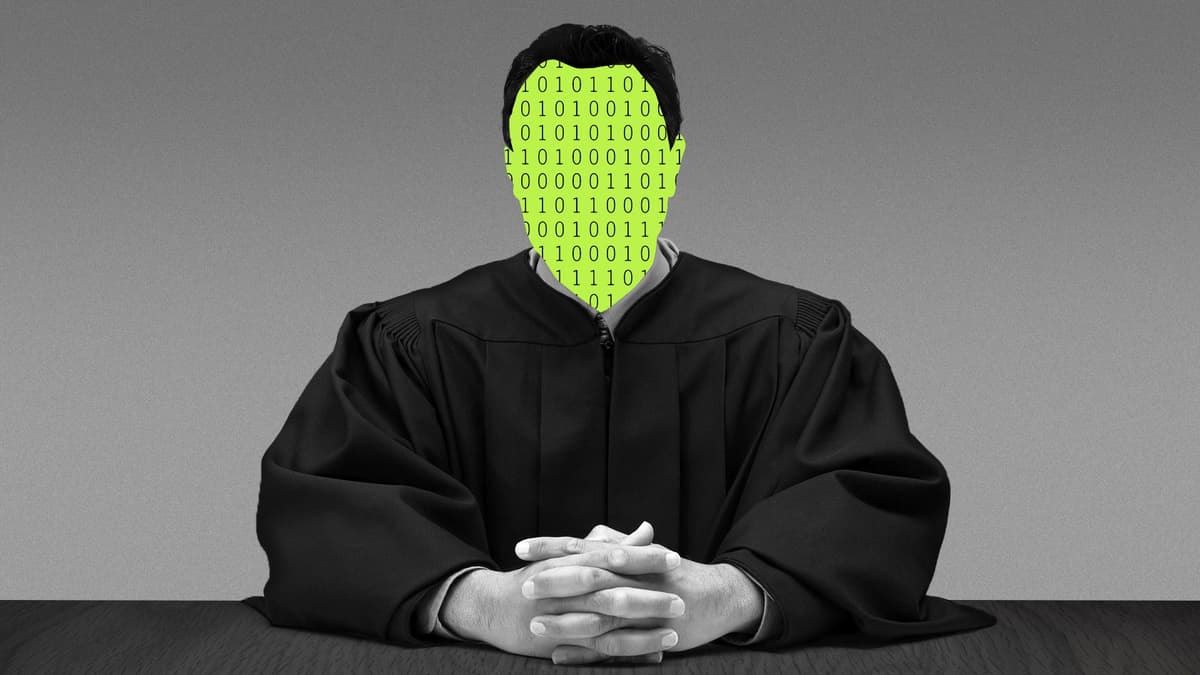
Federal judges are increasingly acting as gatekeepers for artificial intelligence in the courtroom, establishing guidelines for attorneys while simultaneously grappling with how to responsibly adopt the technology in their own chambers.
The dual role has created tension as courts balance innovation against the risk of eroding public trust in the judiciary. More than 1,700 cases involving AI-generated hallucinations have been identified, with sanctions mounting against lawyers who cite fabricated legal precedents.
Why it matters
Judges occupy a unique position where AI errors carry the force of law. When they sign orders containing mistakes, those errors become binding legal decisions—making their adoption decisions far more consequential than in most professional contexts. This dynamic is unfolding as public confidence in the judiciary reaches historic lows.
Adoption Outpaces Training
A Northwestern University survey of 112 judges found that 60% reported using at least one AI tool, with just over 22% using these tools weekly or daily. However, the research revealed a critical gap: AI adoption is significantly outpacing available training.
Amy Cyphert, a West Virginia University College of Law professor, notes that judges worry about both AI hallucinations and privacy implications. "AI has the possibility to be an incredible value adder and force maximizer in the federal judiciary," she says. "But it also has the potential to undermine public confidence in the judiciary at a time where it's already at a historic low."
Sanctions and Cautionary Tales
The consequences of irresponsible AI use are mounting. Last month, a federal judge in Mississippi punished four lawyers and canceled a civil trial after both sides cited fake, AI-generated cases. More recently, a federal judge in Michigan accused the government of likely citing an AI-generated case in an immigration filing, though sanctions were not imposed.
Chief Judge Hala Jarbou, a Trump appointee, wrote that "the Government must ensure its future filings with this Court do not include nonexistent case law."
Retired U.S. District Judge Liam O'Grady of the Eastern District of Virginia recalls that before his 2023 retirement, judges were fascinated by AI but "had pretty grave doubts about its reliability." He observed that lawyers had begun using the tools and "it was clear that mistakes were being made right away."
Education as the Path Forward
To address the knowledge gap, Magistrate Judge Maritza Braswell of the U.S. District Court of Colorado founded the Judicial AI Consortium (JAIC) alongside Judge Scott Schlegel and U.S. District Judge Xavier Rodriguez. The organization focuses on education rather than prohibition.
"We didn't shut down Zoom court because one lawyer showed up as a cat," Schlegel notes, referencing the viral 2021 incident. Rodriguez adds that responsible AI use is "a work in progress by everybody—lawyers and judges alike."
Judges distinguish between attorneys' use of AI and their own adoption in chambers. "We need to be much more thoughtful in the way that we use these tools," Schlegel says. "When we sign an order, if there's something wrong in it, that's the law."
Braswell also cautions against focusing exclusively on hallucinations at the expense of other ethical considerations, including bias and access to justice.
O'Grady, who started practicing law in the 1970s with a typewriter, describes the challenge facing many on the bench: "It's like learning a new language when you're 60 or 70 years old—It's not easy. We've got a whole generation of judges who this is just completely new to, and they're cautious and skeptical."
These details were first reported by Axios.
This is an original analysis by the Omega editorial team. Source reporting: AI Watch.
Want systems like this working for your business?
Book a Call
