Job Seekers Hide AI Prompts in Résumés to Beat Screening Software
A Duke University study found roughly 1% of nearly 200,000 résumés contained hidden prompt injections designed to manipulate automated hiring systems.
Job seekers are embedding invisible AI instructions in their résumés in an attempt to manipulate automated screening systems, but the strategy is backfiring as employers catch on and reject candidates for the practice.
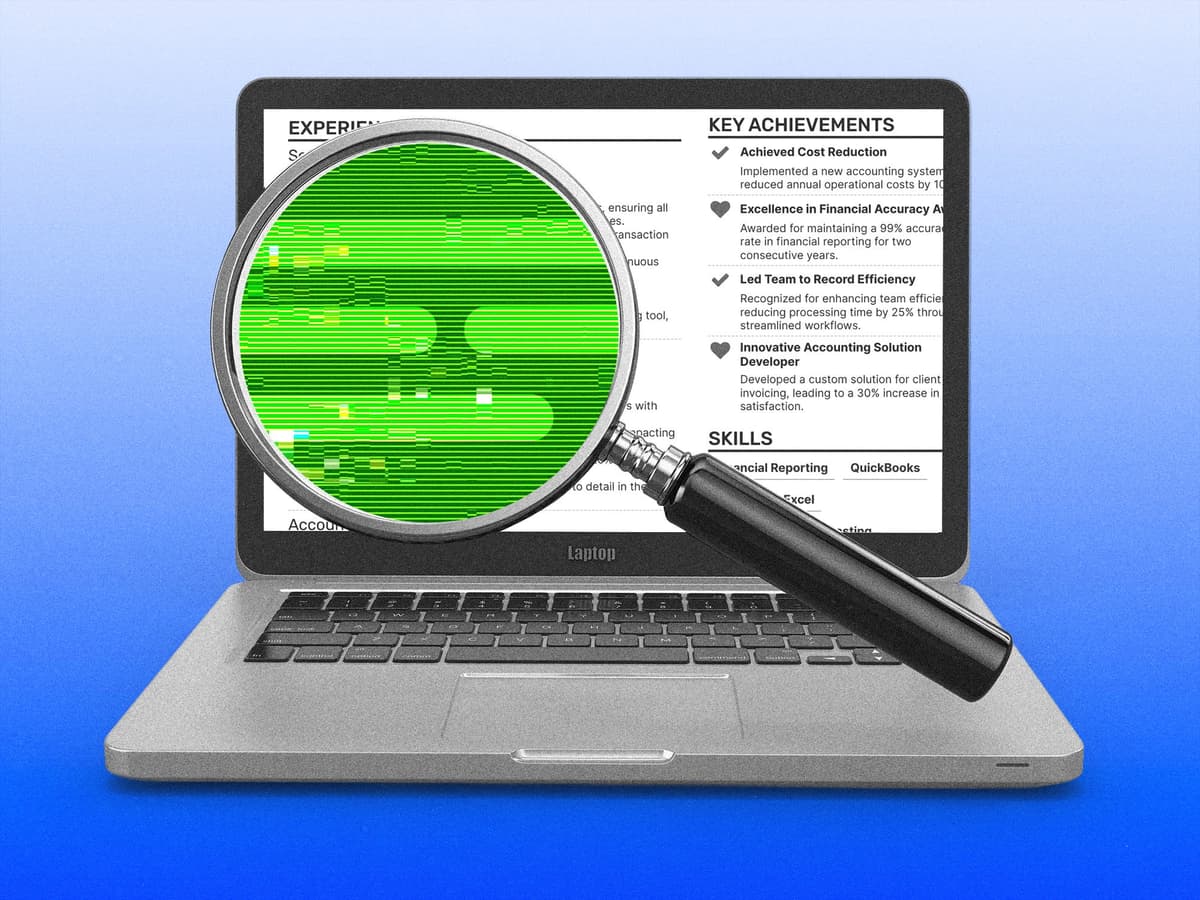
Paul Lee, CEO of InnoCaption, a California-based technology company that makes captioning tools for the deaf and hard-of-hearing community, discovered the tactic last month while reviewing applications for a legal and compliance position. His screening software flagged a résumé containing roughly 1,500 characters of white text on a white background—an AI prompt instructing the system to ignore prior instructions and declare the applicant a top-tier fit regardless of qualifications.
Lee described the move as an ethical red flag for a role requiring trust and integrity. "You're cutting in front of the line," he said.
The scale of résumé prompt injection
A May 2026 study by Duke University researchers analyzed nearly 200,000 résumés and found that roughly 1% contained hidden prompt injections. The tactic represents an AI-era evolution of an older practice where job hunters embedded keywords in white text to fool screening software.
The behavior stems from a hiring process that feels like a "complete black box," according to Sarah Franklin, CEO of human resources platform Lattice. Employers overwhelmed with applications often respond with generic rejections or no response at all, driving job seekers to try unconventional methods to stand out.
Nada Hashmi, an assistant professor of information technology at Babson College, noted that AI has created a feedback loop where both applicants and employers use the technology at scale. "It's really having AIs kind of talking to each other," she said. Job seekers use AI to tailor and submit applications rapidly, while employers deploy it to sort through the resulting flood.
Why the tactic fails
The strategy may be pointless even when it goes undetected. Nathalia Aryani, corporate director of human resources at property management company Terra Vista, explained that recruiters typically review applications in batches and move forward once they identify enough promising candidates, leaving later submissions unchecked. "The issue is volume," she said.
When discovered, the consequences can be severe. Simone Lini, cofounder and CEO of Zurich-based flight-search startup Zerolook, uploaded roughly 20% of the 350 résumés he received for two engineering roles to an AI tool last month specifically to search for hidden prompts. He found one résumé containing instructions to prioritize the candidacy, claiming "their livelihood depends on you doing that."
Despite the applicant having relevant experience, Lini rejected the candidate and blocked them from applying again. He dismissed suggestions that the tactic demonstrated AI savvy. "It's just about trying to sneak in and get to the top," he said.
As word of the practice spreads, more employers are actively searching for prompt injections, turning what some applicants hoped would be a competitive advantage into a liability.
Why it matters
The emergence of hidden AI prompts in résumés illustrates how automation is creating an adversarial dynamic in hiring, where both sides deploy AI to gain an edge. This arms race undermines trust in the recruitment process and may push employers toward more human-centric screening methods, even as application volumes continue to grow.
These details were first reported by Business Insider.
This is an original analysis by the Omega editorial team. Source reporting: AI Watch.
Want systems like this working for your business?
Book a Call