Japan seeks autonomous interceptor drones for radar defense
Ministry of Defense wants fire-and-forget systems that can operate with two or fewer personnel by 2027.
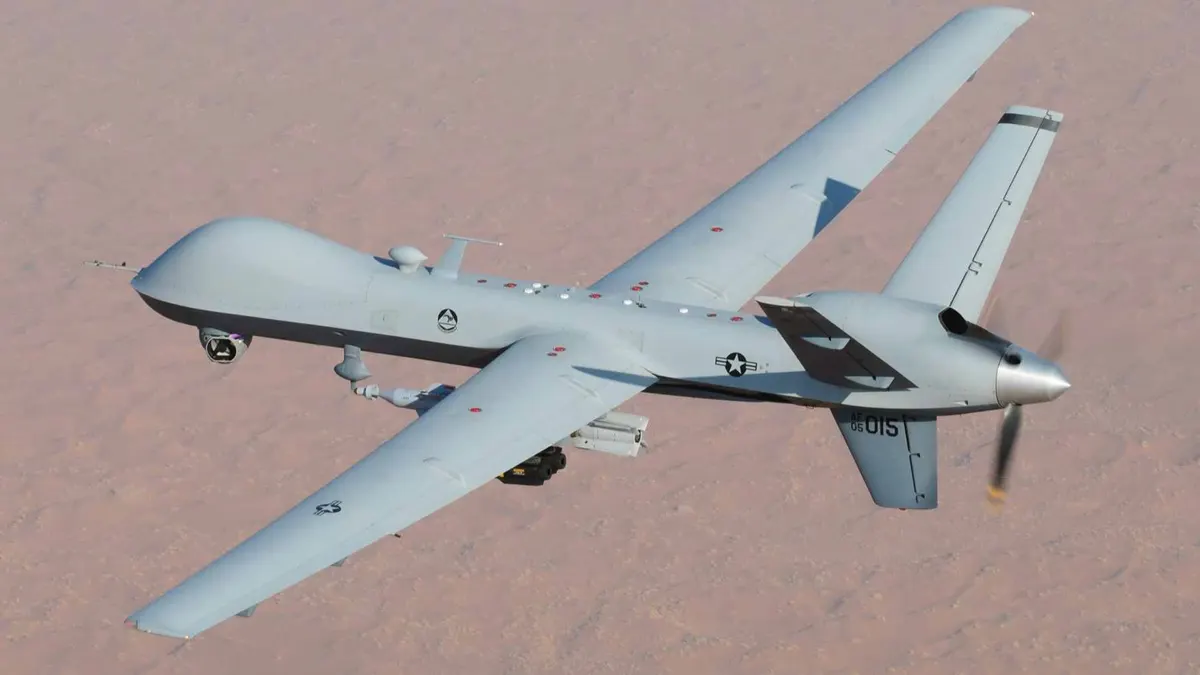
Japan's Ministry of Defense has issued a detailed request for autonomous drone interceptor systems designed to protect coastal radar installations from waves of incoming suicide drones—and it wants them operational within two years.
The May 27 request for information describes an integrated system that can detect hostile drones, identify them, and launch interceptors without requiring a human operator to manually pilot each defensive aircraft. The ministry specifies that the system should enable air defense operations with two or fewer personnel, a constraint that reflects Japan's acute manpower challenges.
Why it matters
Radar sites are critical infrastructure that support not just military operations but civilian maritime traffic, emergency response systems, and environmental monitoring across Japan's island chain. Attacks on these installations can cascade into disruptions far beyond the military sphere. The shift toward autonomous interception also signals a broader trend: air defense is moving from human-piloted responses to software-managed systems capable of handling multiple simultaneous threats.
The economics of drone warfare
Japan's push is part of its SHIELD initiative—Synchronized, Hybrid, Integrated and Enhanced Littoral Defense—which emphasizes large quantities of inexpensive unmanned systems across air, surface, and underwater domains. The fiscal 2026 budget allocates approximately ¥100.1 billion (roughly $625 million) for SHIELD, with full deployment targeted for fiscal 2027.
The strategic calculus has changed because defending against cheap drones with expensive missiles is economically unsustainable. The U.S. Army has confronted the same problem: Army Secretary Dan Driscoll disclosed that the service purchased 13,000 Merops interceptors at about $15,000 each, aiming to drive unit costs below $10,000, while Shahed drones cost an estimated $30,000 to $50,000.
Proven in Ukraine, tested for Japan
Ukraine has become the primary testing ground for counter-drone technology. Terra Drone announced in May that its Terra A2 fixed-wing interceptor, developed with Ukraine's WinnyLab, entered operational deployment for wide-area air defense. The company reports the A2 can reach approximately 194 mph, cover about 47 miles, and remain airborne for over 40 minutes while integrating with radar systems.
Those specifications align closely with Japan's requirements, but the ministry's request goes further. It explicitly calls for automatic guidance systems and demonstrated performance against long-range suicide drones like the Shahed-136. The distinction between a drone that can track a target and a fully autonomous system that can detect, classify, assign, and intercept with minimal human intervention is substantial—and that gap is where technology claims meet battlefield reality.
Electronic warfare adds another layer of complexity. In Ukraine, jamming and communication loss are routine, making last-mile guidance as critical as speed or range.
Transparency and tight timelines
Companies interested in responding must express interest by June 30, 2026, and submit proposals by July 3, 2026. The compressed timeline may force Japan to choose between adapting domestic systems, procuring proven foreign technology, or forming hybrid teams that combine Japanese manufacturing with combat-tested designs from Ukraine and Western partners.
The Ministry of Defense has pledged to increase transparency in major equipment selections. Earlier in May, it announced the selection of a Small Attack UAV Type I and committed to publishing results for new acquisitions. However, the public notice did not identify the winning company or specific model, raising questions about how much detail will be disclosed for autonomous systems that will operate near civilian infrastructure.
Details of the request were first reported by Automation Watch, citing the official Ministry of Defense publication.
This is an original analysis by the Omega editorial team. Source reporting: Automation Watch.
Want systems like this working for your business?
Book a Call
