Japan Launches National AI Infrastructure for Physical AI
NVIDIA and Noetra will build a 140-megawatt AI factory to train multimodal foundation models for robotics, manufacturing, and industrial applications.
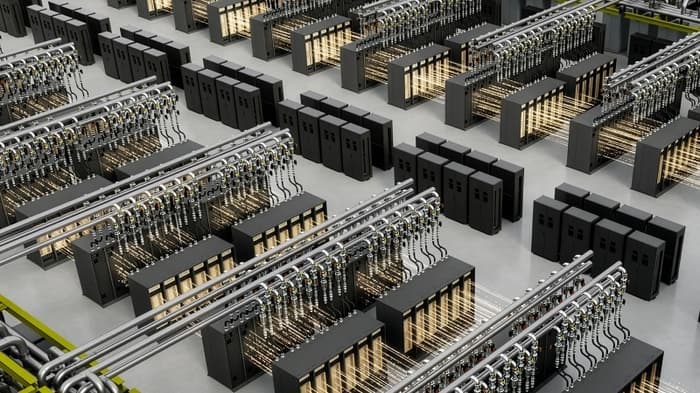
Japan is building what officials describe as the world's first national AI infrastructure dedicated to physical AI applications, partnering with NVIDIA and domestic AI company Noetra Corp. to create a massive computing facility designed to train foundation models for robotics, manufacturing, and industrial automation.
The initiative centers on an NVIDIA Vera Rubin AI factory equipped with 13,750 Vera CPUs and 27,500 Rubin GPUs, delivering 140 megawatts of data center capacity. The facility will use NVIDIA's DSX platform architecture and Spectrum-X Ethernet networking to support training of trillion-parameter-scale AI models, according to details first reported by NVIDIA.
Government backing and strategic goals
Japan's Ministry of Economy, Trade and Industry (METI) is supporting the project as the computing foundation for the FRONTia Project—formally titled "Development of Multimodal Foundation Models with a View to AI Robotics and Physical AI." The effort aligns with Japan's AI Robotics Strategy released in March, which sets an ambitious target: capturing more than 30 percent of the global AI robotics market by 2040, representing an estimated $133 billion opportunity.
"Japan has launched the FRONTia Project, which will serve as the core of the country's physical AI ecosystem," said Ryosei Akazawa, Japan's Minister of Economy, Trade and Industry. "By fostering collaboration between Japan and leading global innovators—including NVIDIA—and leveraging Japan's strengths, such as its onsite expertise and manufacturing technology infrastructure, we will build highly reliable multimodal foundation models."
Why it matters
Nation-states are increasingly treating AI infrastructure as strategic assets comparable to energy or transportation networks. Japan's approach—building sovereign computing capacity specifically for industrial and physical AI rather than general-purpose models—signals how countries with manufacturing strength plan to compete in the AI era. The decision to make pretrained model weights broadly available to domestic developers could accelerate Japan's position in robotics and industrial automation, sectors where it already holds significant expertise.
Open models and industrial applications
Noetra will develop open multimodal foundation models designed to power AI agents, digital twins, robotics systems, and other physical AI applications across manufacturing, logistics, healthcare, and telecommunications. The pretrained weights will be made available to domestic model developers and enterprises, alongside NVIDIA software tools including Nemotron, Cosmos, Isaac GR00T open models, and NeMo libraries.
Hironobu Tamba, CEO of Noetra, emphasized the collaborative nature of the effort: "Bringing physical AI into the real world requires enormous computing, data and foundational technologies—challenges no single company can solve alone. Together with partners across Japan and around the world, Noetra will advance Japan-developed multimodal foundation models and accelerate the deployment of physical AI across Japanese industries."
The AI factory will be built using NVIDIA Vera Rubin NVL72 racks, incorporating BlueField DPUs and codesigned silicon, systems, and software intended to deliver what NVIDIA describes as breakthrough AI performance and lower token costs for frontier AI training. As the facility scales, it will provide Japanese organizations access to one of the world's most advanced AI training environments.
Details of the partnership were announced by NVIDIA.
This is an original analysis by the Omega editorial team. Source reporting: AI Watch.
Want systems like this working for your business?
Book a Call