Japan Bets on AI to Counter Workforce Decline and Aging Crisis
From Tokyo's underground energy networks to emerging startups, the world's oldest society is testing whether automation can preserve expertise as experienced workers retire.
Japan turns demographic challenge into AI testing ground
Japan is deploying artificial intelligence across critical infrastructure and emerging companies as it confronts what may be the developed world's most acute demographic crisis: a rapidly aging population and shrinking workforce.
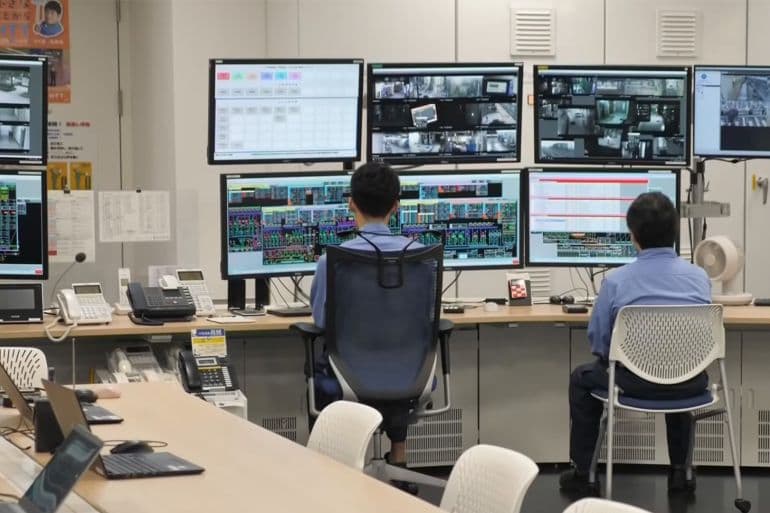
Beneath Tokyo's Otemachi business district, Marunouchi Heat Supply Company operates a 30-kilometer network of heating and cooling pipelines serving major offices and transport facilities. The company now uses an AI system called PlantPilot, developed by Tokyo-based Preferred Networks, to manage this infrastructure with plans to move toward more automated operations by 2027.
The system analyzes sensor data and predicts future conditions while drawing on historical operating information and the expertise of veteran engineers. The goal is to preserve decades of accumulated technical knowledge as experienced workers retire.
"Our biggest challenge is securing skilled personnel," said Hidetaka Yagi, assistant general manager of Marunouchi's Development and Engineering Department. "As experienced workers retire, we face the risk of losing valuable operational knowledge. AI can help preserve that expertise and pass it on to the next generation."
Why it matters
Unlike Western economies where automation anxiety centers on job displacement, Japan faces the opposite problem: not enough workers to fill essential roles. This creates a natural laboratory for testing whether AI can genuinely augment human capabilities rather than replace them—a question with implications far beyond Japan as other developed nations face similar demographic trajectories in coming decades.
Rebuilding tech credibility through practical applications
Japan's AI push extends beyond addressing immediate labor shortages. The country is also attempting to rebuild its position in global technology competition after falling behind the United States and China in the digital economy.
The gap is stark: the US has approximately 690 unicorn startups valued above $1 billion, China has around 160, while Japan has only eight such companies.
Sakana AI, one of Japan's most closely watched AI startups, has grown from 50 to 150 employees within a year and launched commercial products including Sakana Chat, Sakana Marlin, and Sakana Fugu. But chairman Ren Ito argues Japan shouldn't try to replicate Silicon Valley's approach.
"If we try to compete with American companies in exactly the same way, we will not succeed," Ito said. "The goal is not to recreate OpenAI in Japan. The goal is to use AI to solve real problems."
This strategy plays to traditional Japanese strengths: adapting technology into practical solutions rather than pursuing pure research scale. Instead of competing to build the largest AI models—which requires enormous computing resources dominated by US companies like OpenAI, Google, and Anthropic—Japan aims to integrate AI into sectors where it already has deep expertise: energy, manufacturing, and healthcare.
Massive investment meets structural challenges
The Japanese government plans to mobilize approximately 370 trillion yen ($2.3 trillion) in public and private investment by 2040, targeting artificial intelligence, semiconductors, and advanced research.
Yet investment alone may not restore Japan's technological influence. The country's research position has weakened in recent years due to funding pressures, competition for talent, and the need to strengthen universities and research institutions.
Japan's approach represents both necessity and ambition: using technology to respond to demographic decline while creating an innovation model suited to its specific circumstances. Whether AI can offset the economic costs of an aging society remains uncertain, but Japan is positioning itself as the world's primary test case.
These details were first reported by Al Jazeera.
This is an original analysis by the Omega editorial team. Source reporting: AI Watch.
Want systems like this working for your business?
Book a Call
