Jamf AI Governance Integrates Amazon Bedrock for Mac Fleets
New partnership enables centralized configuration and deployment of AI applications like Claude Code across managed Apple devices at enterprise scale.
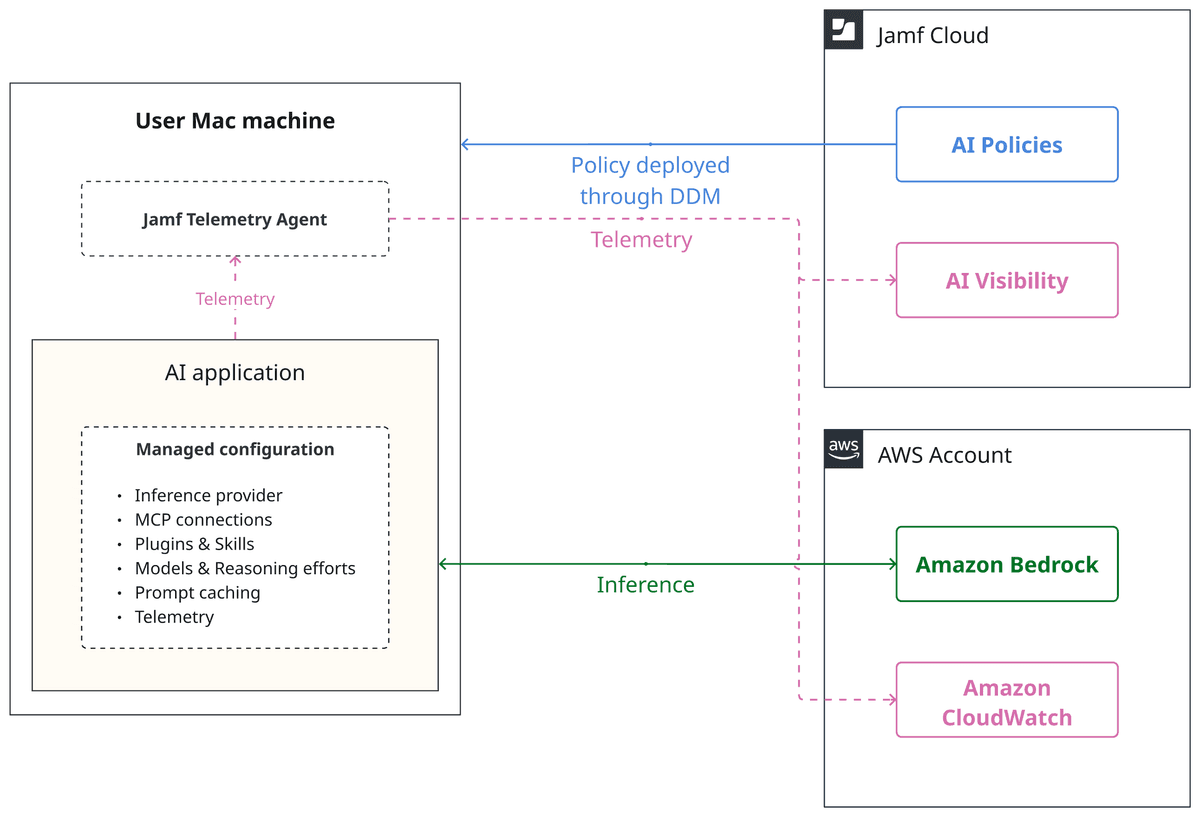
Enterprise AI management comes to macOS
IT administrators managing AI application deployments across Mac fleets now have a centralized governance option. Jamf, which manages Apple devices for more than 78,000 organizations, has integrated Amazon Bedrock support into its AI Governance platform, enabling enterprises to configure and control AI applications like Claude Code, Claude Desktop, and OpenAI Codex at scale.
The integration addresses a practical challenge: AI applications run locally on user devices and rely on local configuration files for authentication, model connections, and observability settings. Without centralized management, each user must manually configure these applications, creating security gaps and deployment friction.
Why it matters
As AI coding assistants and desktop applications become standard productivity tools, enterprises need governance frameworks that balance user access with security and cost controls. This integration lets organizations maintain inference within their AWS security perimeter while eliminating manual configuration steps that slow adoption and create compliance risks.
How the integration works
Jamf's AI Governance delivers application configurations to managed Macs through Apple's Declarative Device Management (DDM) framework. IT teams define settings in Jamf's console—including AWS authentication methods, regional endpoints, and model access parameters—then deploy them via Jamf Blueprints to target device groups.
Amazon Bedrock handles model inference from the AWS regions administrators specify, keeping AI workloads within the organization's cloud security boundary. The managed configuration arrives on devices before users launch applications, so employees can start working immediately without editing local files.
For Claude Code specifically, administrators can enable Amazon Bedrock prompt caching, which can reduce costs by up to 90 percent and latency by up to 85 percent in iterative coding workflows. Policies can also control effort levels, Model Context Protocol server access, local folder permissions, sandbox settings, and telemetry collection.
Deployment and monitoring
After deploying policies through Jamf Blueprints, administrators can track coverage and compliance through Jamf's AI Governance dashboard. The platform's AI Visibility feature provides fleet-wide reporting on AI application usage and generates audit evidence for governance reviews.
Because DDM delivers configurations as managed settings, they resist local tampering—a critical requirement for enterprises with strict compliance obligations or data handling policies.
Getting started
Organizations interested in the integration can access Jamf's AI Governance through AWS Marketplace. Prerequisites include a Jamf account with appropriate permissions and Amazon Bedrock access configured in the target AWS regions.
The same configuration and deployment pattern that works for Claude Code applies to other supported applications, including Claude Desktop and OpenAI Codex, giving IT teams a consistent governance model across their AI application portfolio.
These details were first reported by AWS in a Machine Learning blog post authored by Cami Persson, Arun Chandapillai, Sofian Hamiti, Antonio Rodriguez, and Jamf executives Matt Vlasach, Josh Stein, and Jen Kaplan.
This is an original analysis by the Omega editorial team. Source reporting: AI Watch.
Want systems like this working for your business?
Book a Call