Inside Trump's Fractured AI Policy Team on China Restrictions
A White House official describes the internal debate as 'an argument with ten sides' as key figures clash over how to counter Chinese AI advances.
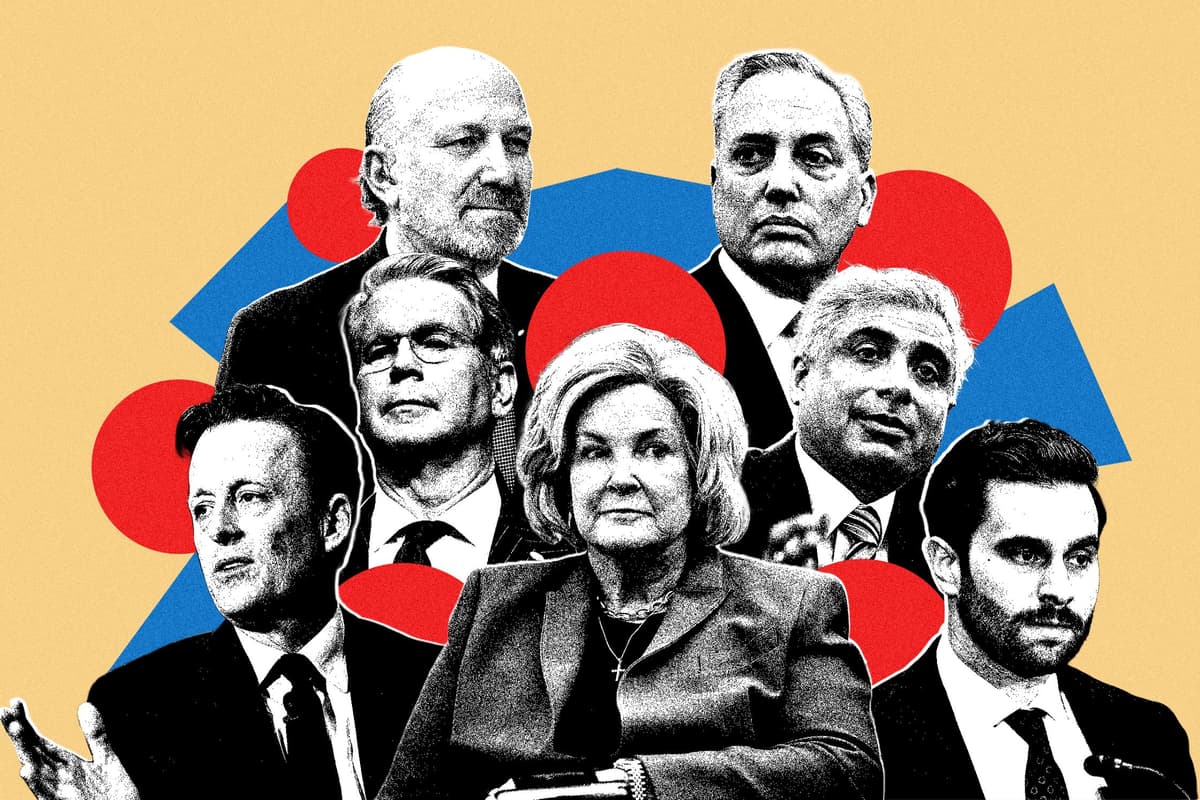
Competing visions for AI regulation
The Trump administration's approach to regulating artificial intelligence—particularly Chinese AI models—is being shaped by a fractured group of officials with sharply divergent views, according to a senior White House official who characterized the internal debate as "an argument with ten sides."
With China's open-weight AI models growing more capable, the administration faces mounting pressure to decide whether and how to impose restrictions. But the decision-making process lacks clear interagency coordination, meaning policy outcomes will likely be determined by whoever has the most direct influence with President Trump.
The key players and their positions
Commerce Secretary Howard Lutnick has emerged as a central figure because his department controls AI export restrictions through the Bureau of Industry and Security. Lutnick has explored creating incentives for U.S. labs to develop their own open-weight models as a counterbalance to China, and recently downplayed the capabilities of Chinese startup Moonshot AI's Kimi K3 model, claiming it underperformed American frontier models in benchmark tests.
Treasury Secretary Scott Bessent has taken the most aggressive stance, publicly calling distillation—the practice of training models using outputs from more advanced systems—"IP theft" and threatening Chinese labs with sanctions. Bessent has been working directly with White House Chief of Staff Susie Wiles, who serves as the final gatekeeper for policy proposals reaching Trump's desk. Treasury's concerns extend beyond competition to systemic risk: officials worry that AI systems with access to sensitive banking information could inadvertently trigger economic disruption.
National Cyber Director Sean Cairncross, a former campaign lawyer with no prior tech experience, has focused on curbing Chinese labs from using distillation techniques to train models based on leading U.S. systems. He helped craft Trump's June 2 executive order establishing a framework for assessing powerful AI models.
Former AI czar David Sacks, who left his official role in March, continues to advise Trump directly and has consistently advocated for minimal regulation. Sacks successfully intervened to weaken regulatory provisions in the June executive order and has used his 1.6 million-follower X account to push for a hands-off approach, arguing that American models remain ahead and will stay that way "as long as we keep releasing."
Why it matters
The lack of unified AI policy within the Trump administration creates uncertainty for both U.S. technology companies and international partners at a critical juncture in AI development. With Chinese President Xi Jinping scheduled to visit the White House in September and an APEC summit in November, the administration's internal divisions could complicate efforts to coordinate with allies on AI governance. The outcome of these internal debates will shape whether the U.S. pursues aggressive export controls, incentivizes domestic open-weight model development, or adopts a more permissive regulatory stance—each with distinct implications for American AI competitiveness.
These details were first reported by WIRED, which spoke with multiple current and former administration officials about the policy deliberations.
This is an original analysis by the Omega editorial team. Source reporting: WIRED.
Want systems like this working for your business?
Book a Call
