Industrial Automation in 2026: AI, Humanoids, and the Readiness Gap
Robotics capacity is outpacing deployment as manufacturers confront infrastructure and data challenges alongside rapid technology advances.

Industrial automation advances unevenly across sectors
Industrial automation is moving forward on multiple fronts in 2026, but the pace is uneven. AI-enabled robots are entering traditionally difficult sectors like apparel manufacturing, autonomous mobile robots have become standard in automotive plants, and billions in facility investments are reshoring critical supply chains. Yet the industry faces a paradox: in some segments, manufacturing capacity for automation technology is outstripping actual demand from end users.
The humanoid robot sector illustrates this tension most clearly. Morgan Stanley projects the global humanoid robot market could eventually reach $5 trillion in value, but industry observers report that current demand from industrial buyers lags behind the production capacity manufacturers are building. This supply-demand inversion is unusual in hardware markets and reflects both aggressive venture-backed factory construction and the slower pace at which companies identify and validate use cases at scale.
China's LY iTech, whose Beijing Super Factory for Embodied Artificial Intelligence launched in May 2026, represents the kind of high-capacity buildout that experts say is running ahead of current order books. The central question is not whether humanoids will find industrial applications, but how quickly commercial deployments can absorb the machines being produced.
AI and humanoids target apparel manufacturing
One emerging answer comes from the apparel sector. Jack Technology, a sewing machine and industrial equipment manufacturer, has partnered with Siemens to deploy AI capabilities and humanoid robot integration for intelligent apparel manufacturing. This collaboration targets a sector historically resistant to automation due to the flexible, unpredictable nature of fabric handling.
Apparel assembly has long defied robotic substitution precisely because soft materials behave inconsistently. The Jack Technology-Siemens partnership represents a significant test of how far current AI and robotics can extend into labor-intensive production environments that require delicate material manipulation.
AMRs become standard in automotive production
While humanoids remain largely aspirational at scale, autonomous mobile robots are already embedded in major manufacturing operations. Geekplus has deployed its Moving-Type AMRs across multiple Toyota plants, specifically designed to reduce collision risks at intersections where forklifts and towing vehicles converge.
The safety rationale is straightforward: high-traffic internal logistics zones in large automotive plants create consistent exposure to vehicle-on-vehicle and vehicle-on-worker incidents. AMRs with real-time spatial awareness can navigate these intersections with greater predictability than mixed human-machine traffic allows. The Toyota deployment reflects a broader pattern in automotive manufacturing, where AMR adoption has evolved from discrete pilots to multi-site rollouts.
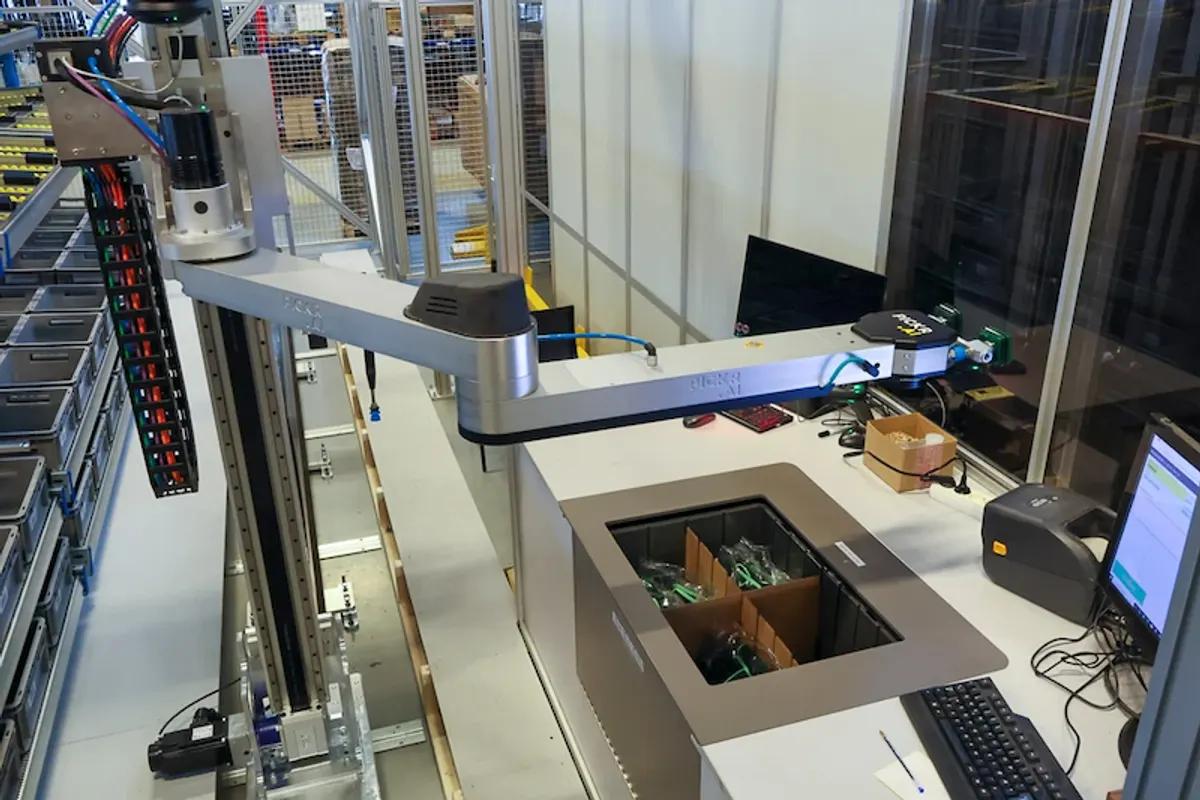
Automation-as-a-service provider Formic is also targeting automotive manufacturers, recently opening its largest facility to expand machine tending capabilities aimed at auto suppliers. Machine tending—loading and unloading CNC machines and similar equipment—remains one of the most consistent entry points for robotics in discrete manufacturing, offering repeatable tasks with measurable returns.
Why it matters
The gap between automation ambition and operational readiness is becoming the industry's defining challenge. Analysis from the Control System Integrators Association, reported by Automation World, emphasizes that successful industrial AI implementation depends on establishing strong foundations in data quality, process understanding, and cybersecurity before any AI layer is deployed. Facilities with fragmented sensor data, undocumented processes, or weak operational technology security face compounding risk when AI systems are introduced without proper groundwork. This infrastructure deficit, not technology availability, may determine which manufacturers can capitalize on automation advances.
Meanwhile, physical infrastructure investment continues at a significant pace. FTI is building an $80 million facility in Louisiana focused on electrical solutions, expected to create more than 500 jobs. Power electronics maker Deutronic USA has more than tripled its footprint in South Carolina to get closer to North American manufacturers. These investments reflect a broader reshoring dynamic in which automation and electronics suppliers are building domestic capacity to reduce exposure to extended international supply chains.
These developments were first reported by MarketScale's Industrial Equipment News and Automation World.
This is an original analysis by the Omega editorial team. Source reporting: Automation Watch.
Want systems like this working for your business?
Book a Call