Indian Activists Challenge AI Surveillance at Political Protest
Student organizer petitions Delhi High Court to declare mass facial recognition monitoring unconstitutional as India lacks governing laws.
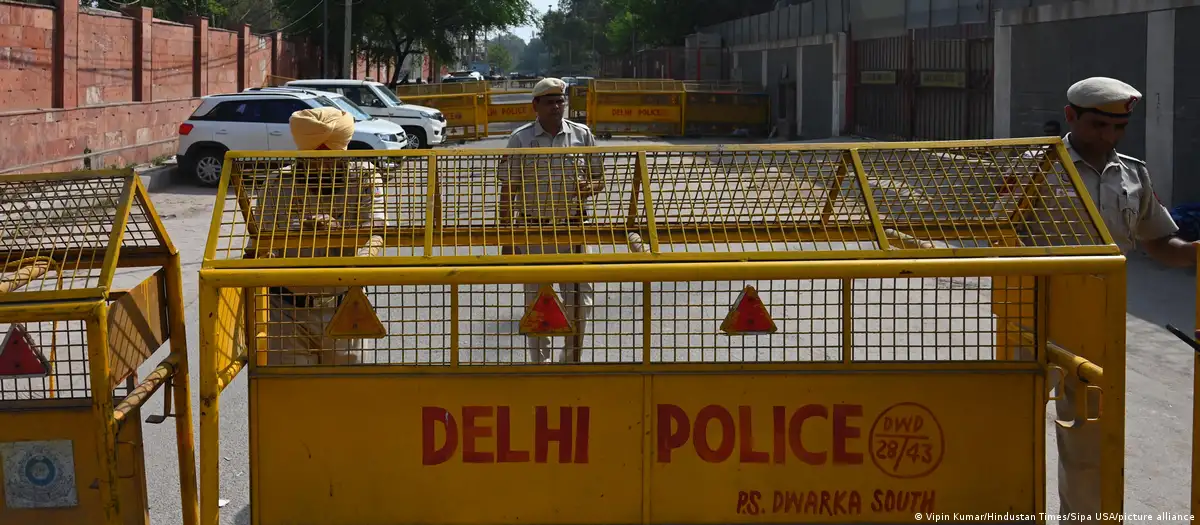
Legal challenge targets police surveillance technology
Student activist Aishe Ghosh has filed a petition with the Delhi High Court challenging the Indian government's deployment of AI-powered surveillance equipment during a recent Cockroach Janta Party (CJP) protest in New Delhi, according to DW.
The legal action seeks a court declaration that mass surveillance of protesters violates constitutional protections. Ghosh is also requesting that authorities destroy all personal data collected during the demonstration.
The controversy centers on police use of a surveillance van equipped with cameras mounted on a telescopic mast, which provided 360-degree monitoring of the gathering. Protesters and media observers documented the equipment at the scene.
Regulatory vacuum creates legal uncertainty
Activists argue the surveillance operations occurred in a legal gray zone. India currently has no legislation specifically governing law enforcement's use of facial recognition technology, leaving police practices largely unregulated.
During court proceedings, Solicitor General Tushar Mehta defended the surveillance measures. He characterized privacy concerns at public gatherings as "ironical" and argued the monitoring was "absolutely necessary" and served "legitimate state interest."
The government's position suggests authorities view public protest spaces as areas where privacy expectations are diminished, a stance that civil liberties advocates contest.
Why it matters
This case could establish important precedent for surveillance limits in the world's largest democracy. As governments worldwide deploy AI-powered monitoring tools, India's legal framework lags behind its technological capabilities. The court's decision may determine whether protesters can be subjected to mass biometric data collection without explicit legal authorization—a question with implications for democratic assembly rights across emerging markets adopting similar technologies.
Broader implications for digital rights
The Delhi High Court case arrives as India continues expanding its digital surveillance infrastructure without corresponding privacy protections. The absence of specific legislation governing facial recognition creates uncertainty for both law enforcement agencies and citizens exercising constitutional rights to peaceful assembly.
The outcome could influence how Indian authorities balance security concerns against privacy protections in public spaces, particularly during political demonstrations.
These details were first reported by DW.
This is an original analysis by the Omega editorial team. Source reporting: AI Watch.
Want systems like this working for your business?
Book a Call
