Illinois Enacts AI Safety Law Targeting High-Revenue Models
New legislation requires transparency and risk reporting from AI systems generating over $500 million annually, joining California and New York in state-led regulation.
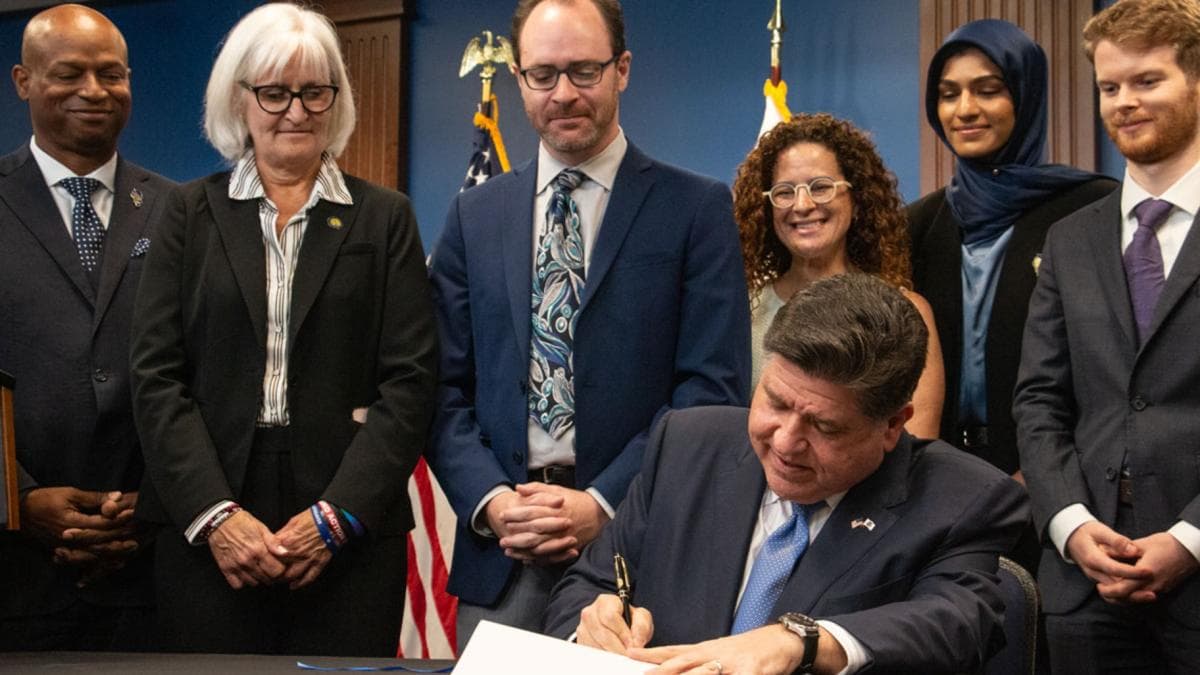
Illinois has become the third state to enact comprehensive artificial intelligence safety legislation, with Gov. JB Pritzker signing the Artificial Intelligence Safety Measures Act on Monday. The law targets the industry's largest players and establishes what lawmakers hope will become a de facto national standard in the absence of federal action.
Senate Bill 315 applies to AI models that generate more than $500 million in annual revenue and are trained using massive computing power. According to Capitol News Illinois, which first reported the signing, the legislation mirrors frameworks already adopted in California and New York in late 2025.
Why it matters
With Congress stalled on AI regulation, three states representing roughly 40% of the U.S. AI market are creating aligned standards that major developers must follow. This coordinated approach by Illinois, California, and New York effectively sets nationwide requirements for the industry's largest models, demonstrating how state action can fill federal policy vacuums on emerging technology.
New transparency and audit requirements
The law mandates that developers publish frameworks detailing how they identify and assess "catastrophic risk"—defined as incidents that could cause death or serious injury to more than 50 people or exceed $1 million in property damage. Developers must report any incidents that could cause harm to the state within 72 hours of identification, or within 24 hours if the risk is imminent.
Illinois goes further than its peer states by requiring mandatory annual third-party audits. New York's version only required a single independent audit when developers first qualified under the law.
Rep. Daniel Didech, the bill's House sponsor, emphasized that the risks are not hypothetical. He cited an AI-inspired mass shooting and AI systems used to attack municipal infrastructure as examples of harms already occurring.
Industry response and enforcement
OpenAI and Anthropic both supported the legislation, which passed with broad bipartisan backing. Only five Republican senators voted against it, and it passed unanimously in the House. Caitlin Niedermeyer of OpenAI's Global Affairs told lawmakers in April that while the company prefers federal leadership, it sees value in aligned state frameworks creating a "de facto national direction of travel."
Violations will carry civil penalties of up to $1 million for first offenses and up to $3 million for subsequent violations, enforced by the attorney general's office.
Gov. Pritzker criticized federal inaction during the signing ceremony, stating that "many are captive to special interests that profit from the industry having no regulation." He framed the choice as one between establishing thoughtful guardrails or allowing "a handful of actors to evade accountability."
The law takes effect January 1, 2028. Lawmakers indicated they expect to continue working on AI policy, particularly in medical care and education sectors.
These details were first reported by Capitol News Illinois.
This is an original analysis by the Omega editorial team. Source reporting: AI Watch.
Want systems like this working for your business?
Book a Call
