IBM Bob adds multi-agent architecture, cost controls for AI coding
New premium packages target mainframe, IBM i, and Java modernization with pre-built workflows designed for enterprise scale.
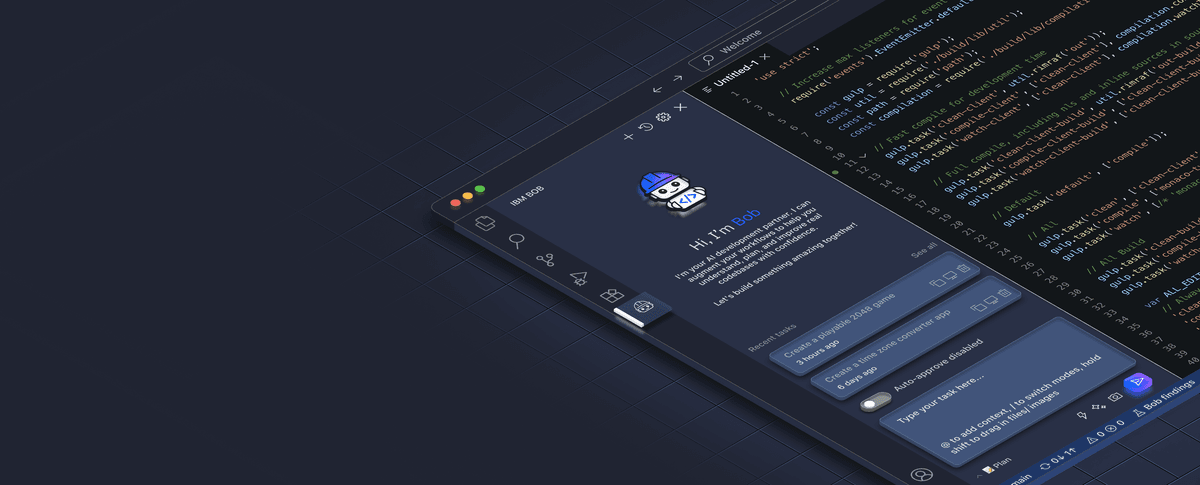
IBM has released a major update to Bob, its agentic software development platform, introducing multi-agent capabilities, built-in cost analytics, and pre-configured workflows for modernizing legacy enterprise systems.
The enhancements address a shift in how organizations experience AI-assisted development. According to GitLab's 2026 AI Accountability Report, 85% of DevSecOps professionals now agree that AI has moved the bottleneck from writing code to reviewing and validating it. IBM designed Bob to operate across the entire software development lifecycle rather than confining AI assistance to a single interface.
Why it matters
As enterprises generate massive volumes of AI-written code, the challenge has evolved from creation to governance. Organizations need visibility into AI costs, consistent quality across large-scale projects, and specialized workflows for mission-critical legacy systems that general-purpose coding assistants weren't built to handle. IBM's approach positions Bob as infrastructure for coordinating AI across development teams, not just another code completion tool.
Multi-agent coordination and cost optimization
The updated platform now uses subagents to manage complex tasks in isolated contexts, preventing context window bloat that drives up costs. Bob also implements parallel, model-native tool calling, allowing models to request and execute multiple tools simultaneously.
A new feature called Bobalytics provides organizations with visibility into productivity, quality, performance, and cost metrics. The system optimizes across the entire execution environment, matching models to specific tasks and coordinating AI execution across agents rather than leaving engineers to manually balance cost versus performance.
"The bar for enterprise AI is no longer a better coding assistant," said Neel Sundaresan, GM of Automation and AI at IBM. "It's an end-to-end agentic development partner that works inside any system development teams already use, with the governance, security, and cost controls enterprises require."
Premium packages for legacy modernization
IBM has launched three premium packages that translate decades of domain expertise into structured, repeatable workflows:
IBM Z: Brings AI-native application modernization to mainframe environments for the first time, with support for COBOL and PL/I modernization plus JCL analysis.
IBM i: Delivers remote file system integration, IBM i-specific modes and tools, and workflows built around operational patterns unique to these environments.
Java Modernization: Provides AI-guided workflows for migrating to Java 25, large-scale refactoring, and dependency analysis at enterprise scale.
Blue Pearl, a cloud solutions and consulting company, reported completing a legacy modernization project in three days using IBM Bob—a project originally estimated to require 14 engineers over nine months. "The most powerful outcome wasn't the speed," said Saireshan Govender, Group CEO of Blue Pearl. "It was the combination of operational efficiency, cost optimization, and real-world results we could trust and build on."
Jack Henry, a financial services technology provider, has used Bob to accelerate RPG development workflows and improve code quality while maintaining a large, complex codebase.
The latest version of IBM Bob is available for download at bob.ibm.com/download. These details were first reported by IBM in a company announcement.
This is an original analysis by the Omega editorial team. Source reporting: AI Watch.
Want systems like this working for your business?
Book a Call