Huawei Takes Half of China's AI Chip Market as Nvidia Drops to 8%
U.S. export controls and Beijing's push for self-sufficiency have reshaped the competitive landscape for advanced semiconductors in the world's second-largest economy.
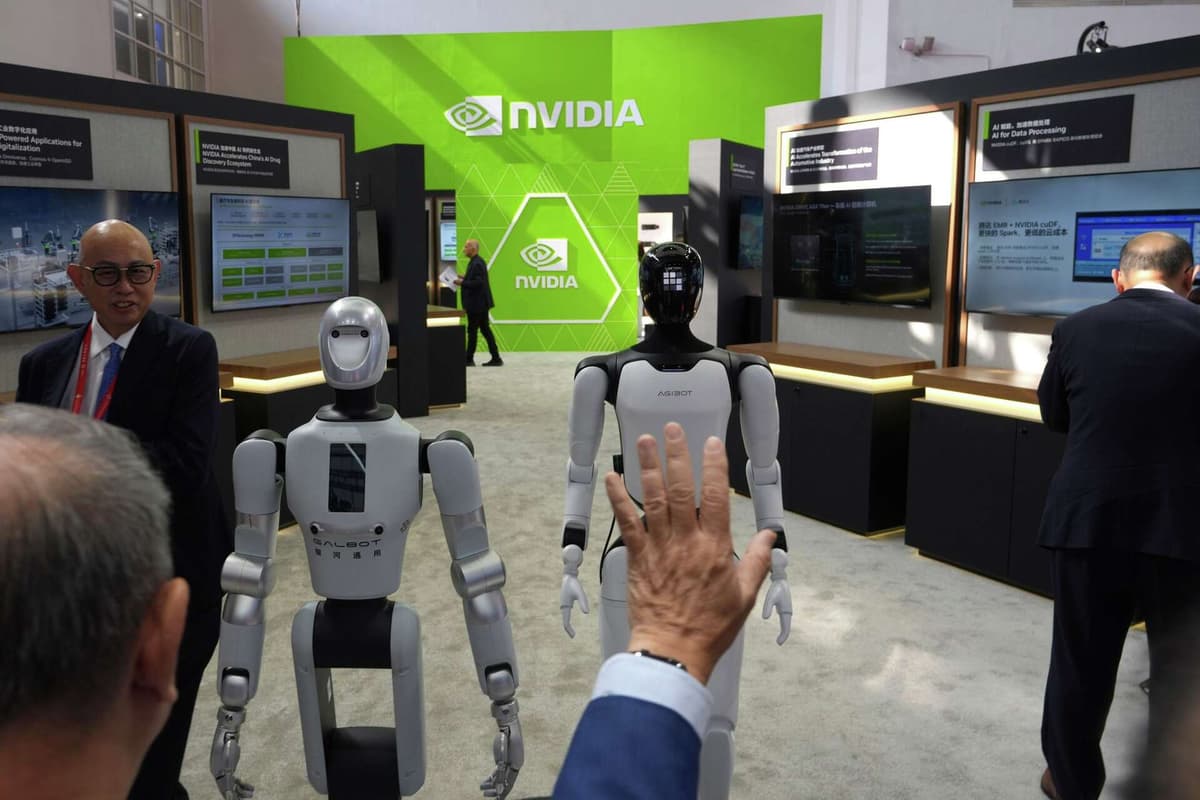
Nvidia's China dominance evaporates
Nvidia held roughly 95% of China's advanced AI chip market before U.S. export controls took effect. By 2025, that share had fallen to approximately 40%, according to research from Bernstein. The firm now projects Nvidia will command just 8% of the Chinese market this year, while Huawei's share is expected to climb to 50%.
The reversal stems from Washington's restrictions on selling cutting-edge semiconductor technology to China, initially imposed in 2019 on Huawei and later expanded. When President Trump temporarily allowed sales of Nvidia's H200 chips during a May summit with Chinese leader Xi Jinping, Beijing had already pivoted to promoting domestically designed alternatives.
"We were in China for 30 years, and before the export control banned Nvidia out of China we had about 95% market share," Nvidia CEO Jensen Huang told the Associated Press. He acknowledged that Chinese competitors have become "giants" and that the U.S. has lost its edge in China's advanced AI chip market.
Huawei's Ascend chips gain ground
Huawei's Ascend 950 series chips are now considered roughly comparable to Nvidia's H200 by some industry measures, according to analysts cited in reporting by the Associated Press. The Chinese telecommunications equipment maker announced last September it was deploying some of the world's most powerful AI computing clusters, combining thousands of chips despite relying entirely on Chinese-made semiconductors.
DeepSeek, the fast-growing Chinese AI company, adapted its latest V4 model released in April to run on Huawei's Ascend chips. Paul Triolo of DGA-Albright Stonebridge Group told the AP there is likely "significant effort going into collaboration between DeepSeek and Huawei" to train future models on domestic hardware.
"China now believes in its own self-sufficiency and supply capabilities," said He Hui, director of semiconductor research at Omdia.
Nvidia still holds technical advantages
Despite Huawei's gains, Nvidia's most advanced chips remain superior in many technical areas. Chinese universities and tech companies continue seeking Nvidia's H200 chips for research and development. Training cutting-edge AI models in China still relies heavily on Nvidia technology, analysts say.
Several recent smuggling cases involving Nvidia chips demonstrate persistent demand for the company's products in China. Nvidia engineered a stripped-down H20 chip to comply with U.S. restrictions, which it sold in China until last year, though shipments gradually declined.
Globally, Nvidia's business continues expanding. The company expects roughly $91 billion in revenue for May through July, up from nearly $82 billion the previous quarter, excluding China data center revenue. Nvidia's latest annual revenue reached almost $216 billion, compared to Huawei's $126 billion for a comparable period.
Why it matters
The shift in China's AI chip market illustrates how export controls can accelerate rather than prevent technological competition. Beijing's push for semiconductor self-sufficiency is creating a bifurcated global market where Chinese companies develop parallel ecosystems. As China's manufacturing capacity grows and costs become more competitive, these domestically developed chips could gain traction in Southeast Asia and other regions, potentially reshaping the global semiconductor landscape beyond China's borders.
Details in this report were first published by the Associated Press.
This is an original analysis by the Omega editorial team. Source reporting: AI Watch.
Want systems like this working for your business?
Book a Call
