House Draft Bill Proposes Federal AI Governance Framework
Bipartisan legislation would codify Commerce Department standards center and preempt state-level AI model regulation.
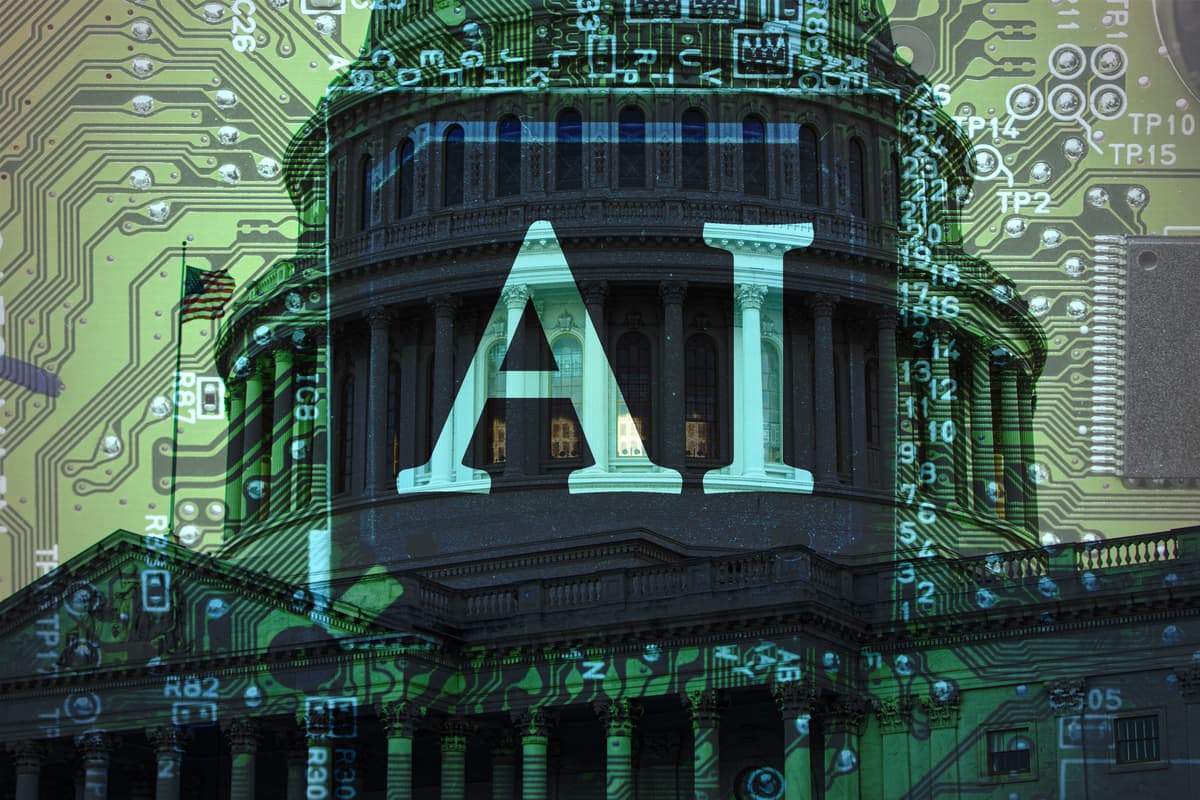
A bipartisan House discussion draft released Thursday outlines a comprehensive federal framework for artificial intelligence governance, addressing standards development, government adoption oversight, and the contentious question of federal versus state regulatory authority.
The draft legislation, led by Representatives Lori Trahan (D-Mass.) and Jay Obernolte (R-Calif.), arrives as Congress grapples with how to regulate AI without stifling American innovation. The bill follows a White House executive order issued earlier this week focused on AI model oversight.
Why it matters
The draft tackles one of the most divisive issues in AI policy: whether states can establish their own AI regulations. By proposing federal preemption of state laws governing frontier AI model development while allowing general-applicability AI laws, the bill attempts to balance innovation concerns with consumer protection—a compromise that will likely face scrutiny from both industry and state regulators.
Codifying the Standards Center
The legislation would formally establish the Center for AI Standards and Innovation within the Commerce Department, authorizing $100 million annually from fiscal years 2027 through 2029. The center, which Commerce Secretary Howard Lutnick rebranded from the U.S. AI Safety Institute last June, currently operates without congressional authorization.
The center would develop voluntary guidelines and best practices for AI security, evaluate AI systems, and monitor technological progress. This codification would provide statutory grounding for an organization that has existed only through executive action since late 2024.
Federal Preemption and State Authority
A central provision would prevent states from enacting their own laws regulating frontier AI model development, though states could still pass laws of "general applicability" related to AI and regulate models after deployment. This approach reflects industry concerns about navigating conflicting state requirements while attempting to preserve some state regulatory flexibility.
Accountability and Reporting Requirements
The nearly 270-page draft includes several accountability mechanisms. Large frontier AI developers would be required to report critical safety incidents to the government. The bill would also criminalize using AI to impersonate government officials.
The Government Accountability Office would evaluate federal AI adoption progress and identify statutes and regulations that either affect AI innovation or burden AI infrastructure, including energy requirements. The Census Bureau and Bureau of Labor Statistics would be directed to incorporate AI use and adoption questions into federal surveys.
International Standards and Open Source
The Energy Department and the National Institute of Standards and Technology would jointly lead international AI standards development, forming coalitions with allied governments while explicitly excluding China. The bill aims to promote private sector-led standards adoption and counter foreign adversary influence.
The Cybersecurity and Infrastructure Security Agency would receive authority to award grants to maintainers of widely used open-source software for security improvements, including patching and security audits.
Research and Workforce Development
NIST and the National Science Foundation would establish grants and prizes to broaden participation in AI research, education, and workforce development. The National Artificial Intelligence Research Resource, currently a Biden administration initiative, would be formally codified to provide data, training, and resources for public and private sector AI development.
The draft also calls for establishing a testbed program where public and private sector labs can collaborate on evaluating AI systems.
The lawmakers are soliciting feedback before formally introducing the bill, with no timeline yet announced for congressional action. Details were first reported by FedScoop.
This is an original analysis by the Omega editorial team. Source reporting: AI Watch.
Want systems like this working for your business?
Book a Call
