Honeywell to Spin Off Aerospace, Refocus on Industrial Automation
The conglomerate will separate its aviation business into a standalone company while concentrating on sensors, controls, and automation technologies.
Honeywell Restructures Around Automation Core
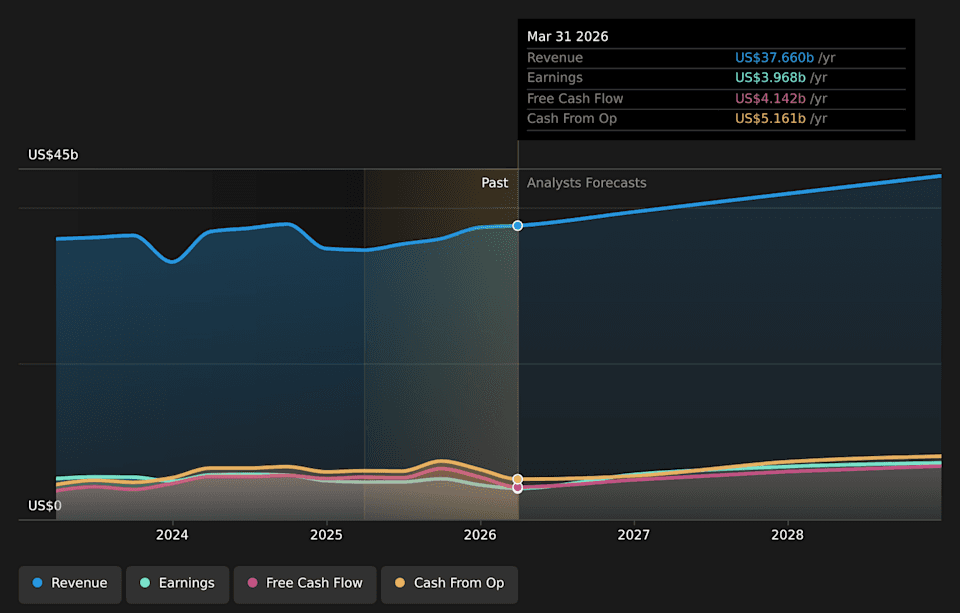
Honeywell International (NasdaqGS:HON) is splitting its aerospace business into a separate publicly traded company, leaving the parent organization focused squarely on industrial automation and related technologies. The restructuring aims to give investors clearer visibility into two distinct businesses with different growth drivers and risk profiles, according to details first reported by Automation Watch.
The move comes as factories, warehouses, and commercial buildings accelerate adoption of sensors, controls, and data-driven systems—the core of Honeywell's automation portfolio. By shedding aerospace, management is betting that a concentrated automation play will command stronger investor attention than the current diversified conglomerate structure.
Financial Targets and Acquisition Strategy
Alongside the spin-off announcement, Honeywell outlined new three-year financial targets and a more disciplined approach to mergers and acquisitions. The company reaffirmed its 2026 sales guidance of $38.8 billion to $39.8 billion, signaling that the separation is being executed without revising near-term expectations.
Management has set an acquisition budget of $2 billion to $4 billion, targeting bolt-on deals in a roughly $35 billion industrial automation market. This range suggests a preference for smaller transactions that fill product or technology gaps rather than transformational megadeals. The strategy reflects lessons from recent operational challenges: commentary cited in the report noted disappointing organic revenue growth, rising costs, and margin pressure in core operations.
To support this capital allocation discipline, Honeywell's board appointed Jillian Evanko, who brings direct experience with M&A and capital deployment in industrial sectors. Her addition signals the company is aligning governance expertise with its sharpened strategic focus.
Why It Matters
The spin-off represents a fundamental shift in how Honeywell positions itself in the market. For technology buyers and partners, a streamlined automation-focused Honeywell may move faster on product integration and industry-specific solutions without the complexity of managing aerospace priorities. For investors, the separation creates two pure-play equities: one tied to aviation cycles, the other to the secular trend of industrial digitization. The reaffirmed guidance suggests management believes it can execute the split without disrupting near-term performance—a critical test given the operational headwinds already visible in the business.
The details were first reported by Automation Watch.
This is an original analysis by the Omega editorial team. Source reporting: Automation Watch.
Want systems like this working for your business?
Book a Call