HII Tests Robotic Welding at Mississippi Shipyard
Huntington Ingalls and HD Hyundai are piloting intelligent welding systems at Ingalls Shipbuilding as U.S. naval yards face workforce shortages and schedule delays.
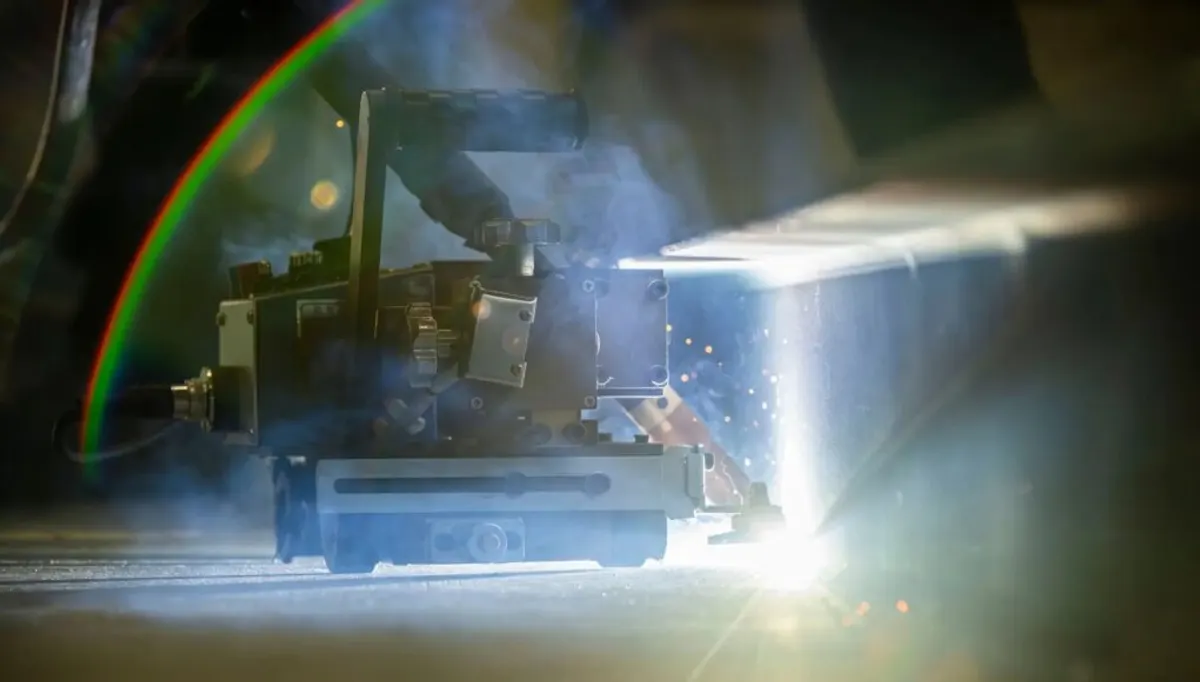
Automation pilot targets manual welding operations
Huntington Ingalls Industries and HD Hyundai Heavy Industries have launched a pilot program installing intelligent mechanized welding equipment at the Ingalls Shipbuilding facility in Pascagoula, Mississippi. The initiative extends automation into warship construction areas that currently depend on manual welding labor, according to HII.
The equipment deployed in unit-fabrication areas can recognize workpieces and welding conditions automatically, adjust welding positions in real time, and capture process data for quality control and traceability purposes. Ingalls has verified the systems against existing U.S. Navy fabrication standards, and the pilot will identify opportunities for efficiency improvements.
The collaboration stems from a memorandum of understanding the two companies signed in 2025 and follows a three-day technical exchange at Ingalls where teams evaluated technologies and automation opportunities. During that visit, Ingalls demonstrated its hybrid laser welding process, robotics integration, and facility layout to the Korean delegation.
Why it matters
American naval shipbuilding faces documented workforce shortages and schedule delays across submarine, frigate, and amphibious programs. Skilled welders rank among the most difficult positions to fill and retain, with yards competing against each other and commercial industry for limited labor. Automation offers a potential path to reduce dependence on scarce manual welders while maintaining production quality and meeting Navy standards. The Congressional Budget Office has repeatedly questioned whether the U.S. industrial base can deliver planned fleet targets under current constraints.
Broader automation push at HII yards
Brian Blanchette, president of Ingalls Shipbuilding, said the yard "operates one of the most advanced automated production lines in the U.S. shipbuilding industrial base," citing existing investments in automated panel lines, material handling, and robotic bulkhead fabrication. The welding pilot extends that automation footprint further into the production process.
HII is pursuing multiple automation initiatives across Ingalls and Newport News Shipbuilding, including robotic and collaborative robot fabrication cells, additive manufacturing, automated steel processing, and integrated production control software. The company recently announced a High-Yield Production Robotics initiative with physical AI firms and signed production agreements with Path Robotics and GrayMatter Robotics on August 6.
Korean shipbuilders expand U.S. presence
Dr. Won-ho Joo, chief executive of the naval and special ship business unit at HHI, characterized the program as reflecting a strengthening partnership and the benefits of open technical collaboration. HD Hyundai and Hanwha, South Korea's two largest shipbuilders, have delivered naval vessels on schedules and at costs that American yards have struggled to match.
Both Korean firms have moved to establish operations in the United States. Hanwha purchased the Philly Shipyard in 2024, and Korean firms have performed maintenance and repair work on U.S. Navy vessels under the Master Ship Repair Agreement framework. Legislation restricting construction of U.S. warships in foreign yards means cooperation has focused on technology transfer, repair work, and investment on American soil rather than direct construction.
Ingalls builds amphibious warfare ships, Arleigh Burke-class destroyers, and National Security Cutters for the Coast Guard. The facility is the sole builder of the Navy's large-deck amphibious assault ships.
These details were first reported by UK Defence Journal.
This is an original analysis by the Omega editorial team. Source reporting: Automation Watch.
Want systems like this working for your business?
Book a Call