GXO to Deploy 20,000 Robots by 2026—Zero Will Be Humanoids
After 45 humanoid pilots, the logistics giant says the technology still can't meet the speed and ROI bar for production warehouses.
The pilot-production gap in humanoid robotics
GXO Logistics will deploy nearly 20,000 robots across its warehouse network by the end of 2026. None of them will be humanoids.
That stark contrast comes directly from CEO Patrick Kelleher, who told analysts during the company's second-quarter earnings call that GXO expects zero humanoid robots in production this year despite completing 45 separate humanoid pilots. The contract logistics provider has tested humanoids from multiple robotics companies and continues to see progress, but Kelleher estimates production deployment remains roughly two years away.
The reason is straightforward: humanoids haven't yet cleared GXO's return-on-investment threshold.
Why it matters
GXO's experience offers rare visibility into the commercial reality behind humanoid robotics hype. The company isn't skeptical—it's actively testing the technology across regions. But 45 pilots without a single production deployment reveals the gap between controlled demonstrations and economically viable warehouse operations. For technology buyers evaluating humanoid vendors, GXO's timeline suggests patience remains necessary regardless of what promotional videos show.
Speed and dexterity remain the bottlenecks
At the Jefferies Global Industrials Conference in September, Kelleher identified hand dexterity and task speed as the two biggest obstacles preventing humanoid deployment. He offered a concrete example: picking lipstick from warehouse inventory.
Watching a humanoid perform that task can still be "painfully slow," Kelleher said. While dexterity has improved significantly, GXO needs productivity approaching human worker levels before the economics justify deployment. That benchmark differs fundamentally from whether a humanoid can walk, carry a tote, or complete a scripted demonstration.
In production warehouses, robots must perform tasks reliably, repeatedly, and fast enough to generate returns. Maintenance requirements, intervention rates, cycle times, and operating costs all factor into commercial viability—variables that only emerge after thousands of operating cycles in real environments.
GXO isn't waiting to automate
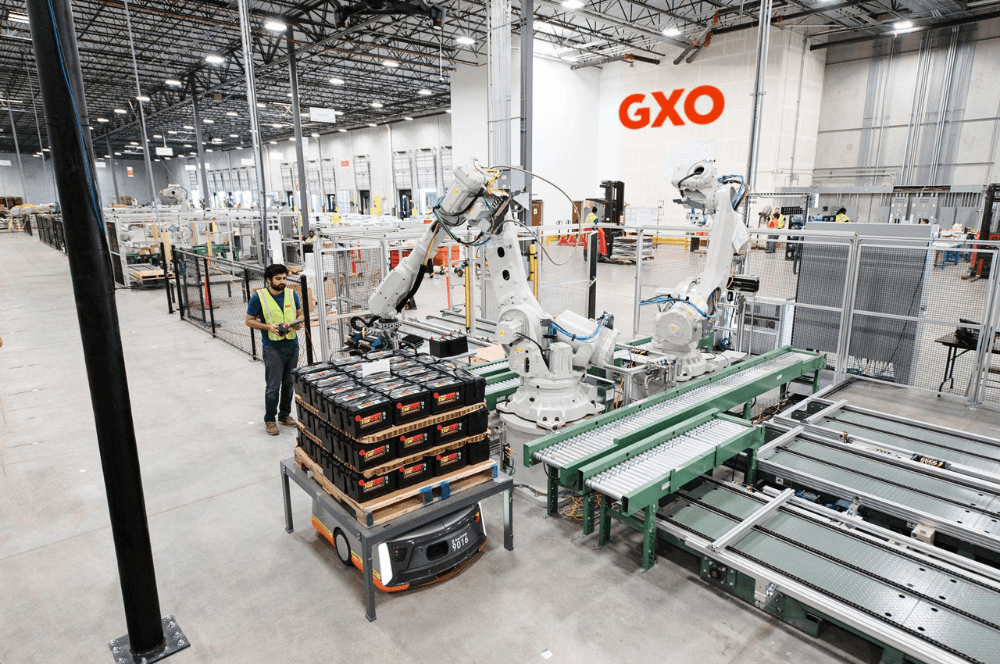
The contrast with GXO's broader automation strategy underscores the humanoid timeline. The company is deploying 20,000 robots this year using technologies that already deliver ROI at scale. GXO's robot count includes autonomous mobile robots and other warehouse automation systems—technologies Kelleher described as proven and deployable today.
GXO continues testing humanoids while scaling automation with established solutions. That dual approach reflects where humanoids currently sit on the adoption curve: promising for the future, not ready for production economics now.
What production deployment actually means
Robotics demonstrations are plentiful. The harder transition comes after the video ends, when systems must survive real operating conditions, integrate with existing workflows, and recover from failures without constant human intervention.
GXO's 45 pilots demonstrate serious interest and investment in understanding humanoid capabilities. Zero production deployments show where the technology stands against the company's commercial requirements. Both numbers matter.
Kelleher expects improvements in dexterity, speed, and cost could change humanoid economics over the next several years, and GXO anticipates humanoids eventually joining its automation portfolio. The useful signal will come when companies move from testing humanoids once to deploying them repeatedly—when they buy the technology a second time.
These details were first reported by Automation Watch, which covers the gap between robotics pilots and production-scale deployment.
This is an original analysis by the Omega editorial team. Source reporting: Automation Watch.
Want systems like this working for your business?
Book a Call