Grid Capacity Becomes Critical Bottleneck for AI Data Centers
Interconnection delays and transmission constraints are now determining where hyperscale facilities can locate, forcing utilities to rethink decades-old planning models.
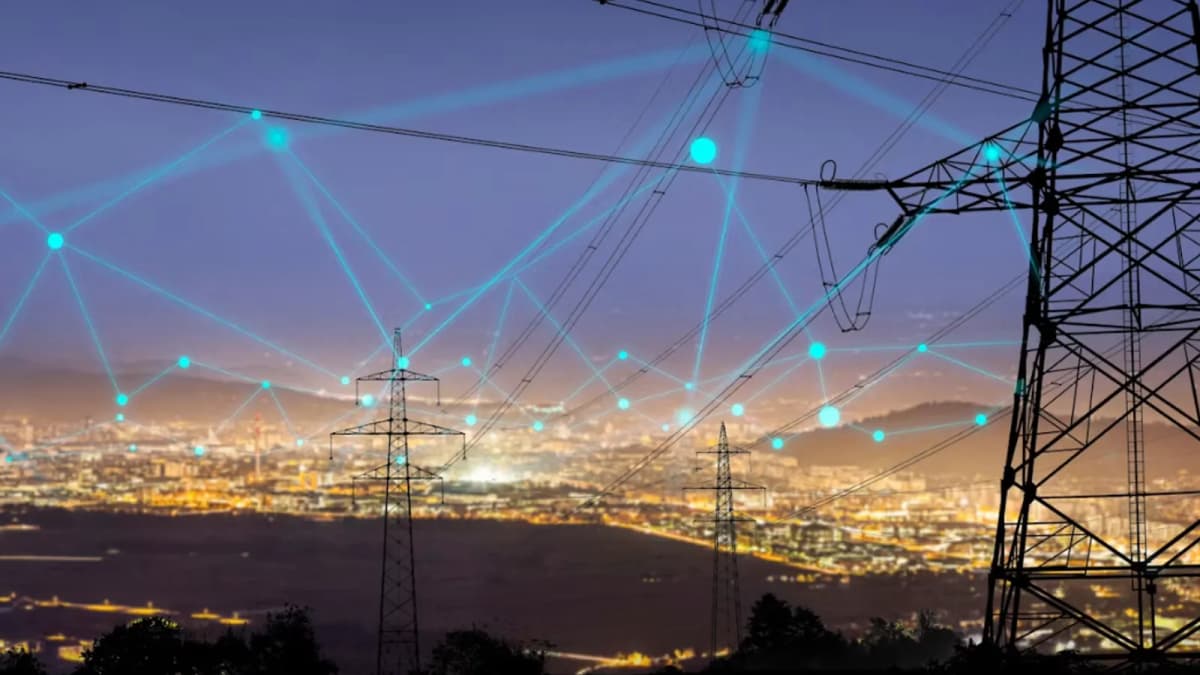
The artificial intelligence boom has created an unexpected infrastructure crisis: North American utilities cannot connect new data centers to the grid fast enough to meet demand.
Technology companies are investing billions in hyperscale data centers while manufacturers expand domestic production and electrification accelerates across multiple sectors. The North American Electric Reliability Corporation projects 224 GW of summer peak demand growth over the next decade, with data centers and large industrial customers driving much of that increase.
But transmission capacity and interconnection timelines—not electricity generation—have emerged as the primary constraints determining where and when new investments can proceed.
Why it matters
Grid readiness is becoming a competitive economic factor. Regions that can accelerate interconnection and transmission upgrades will attract AI infrastructure investment; those that cannot will lose out to competitors. For utilities, the challenge is making multi-year infrastructure commitments without knowing exactly where or when hundreds of megawatts of new load will materialize.
Interconnection queues create economic consequences
Utilities and grid operators are processing unprecedented volumes of interconnection requests from generation developers, storage providers, data center operators, and industrial customers. Transmission systems built decades ago were never designed to accommodate the concentration and scale of load growth now arriving.
For hyperscale data center operators, interconnection timelines have become as critical as land availability or access to capital. A single data center campus can add hundreds of megawatts in one location. Multiple projects in the same region can fundamentally reshape infrastructure priorities.
The challenge for planners: these decisions must be made years before demand materializes, creating significant execution risk.
Uncertainty compounds the planning problem
Analysis from Lawrence Berkeley National Laboratory estimates U.S. data center electricity consumption could grow from approximately 176 terawatt-hours in 2023 to between 325 and 580 TWh by 2028—a range that reflects deep uncertainty about AI adoption rates and deployment patterns.
Traditional utility planning assumed relatively predictable demand growth. Today's environment requires evaluating multiple plausible futures simultaneously as AI, electrification, manufacturing reshoring, and policy changes reshape load profiles in ways that are difficult to forecast with precision.
The question is no longer whether demand will grow, but where, when, and how quickly.
Advanced analytics and flexible approaches
Utilities are responding by combining advanced analytics, digital workflows, high-performance computing, and AI-enabled planning tools to evaluate more scenarios and identify transmission constraints earlier in the process.
Beyond traditional infrastructure expansion, some utilities are exploring phased interconnection strategies, demand response programs, flexible service agreements, and large-customer load management to provide additional pathways for managing uncertainty.
The organizations best positioned for the future will be those that can evaluate uncertainty faster, assess more scenarios, and make confident infrastructure decisions despite incomplete information.
These details were first reported by Utility Dive in a sponsored analysis examining the intersection of AI growth and grid planning challenges.
This is an original analysis by the Omega editorial team. Source reporting: AI Watch.
Want systems like this working for your business?
Book a Call
