Google's $15B Finland AI Investment Includes First European Nuclear Deal
The tech giant's largest European AI commitment pairs data centers with a 22-year nuclear power agreement running through 2050.
Google Anchors European AI Expansion with Nuclear Power
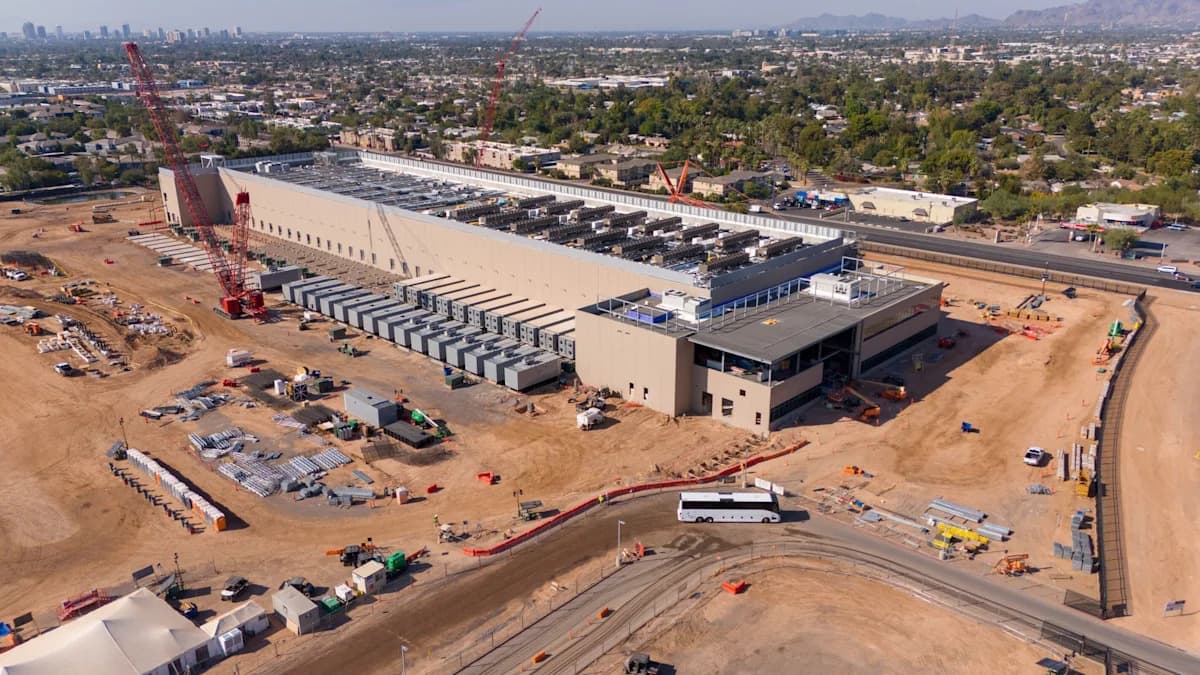
Google is deploying at least €13 billion ($15.1 billion) in AI infrastructure across Finland in 2027 and 2028, marking the company's largest single AI investment in Europe. The commitment centers on data center construction supported by a 94MW battery system, new wind energy contracts, and a 22-year nuclear power purchase agreement—Google's first nuclear deal outside the United States.
The nuclear component covers up to 50 percent of the energy output from Fortum's Loviisa nuclear plant through 2050, according to details first reported by AI Watch. The arrangement provides long-term economic stability for the facility while securing low-carbon baseload power for Google's AI operations, including Gemini, Search, Maps, and YouTube infrastructure.
Why it matters
This investment signals how hyperscalers are locking in decades-long energy commitments to support AI compute demands. By pairing nuclear baseload power with renewable sources in a cold climate, Google addresses two critical infrastructure constraints: energy availability and cooling efficiency. The structure also demonstrates how AI capital expenditure is reshaping regional economies—Finland expects €3.6 billion in GDP contribution during construction and approximately 7,000 annual jobs once operational.
Strategic Geography and Infrastructure Economics
Finland offers Google two advantages that directly reduce operational costs: ambient cooling from its Arctic climate and access to low-carbon electricity. Cold air reduces the energy required for data center cooling systems, while Finland's grid composition aligns with Google's climate commitments without requiring carbon offsets or renewable energy credits at the same scale as warmer, fossil-dependent regions.
The Finland deployment fits within Alphabet's broader capital allocation framework. The company has guided full-year 2026 capital expenditures between $175 billion and $185 billion. In Q2 alone, Alphabet spent $44.9 billion on capital expenditures, up 100 percent year-over-year, with roughly 60 percent allocated to servers and 40 percent to data centers and networking equipment.
Cloud Revenue Momentum
Google Cloud revenue reached $25 billion in the most recent reporting period, surging 82 percent year-over-year, with operating margin expanding to 36 percent. The business unit's backlog now stands at $514 billion, reflecting long-term customer commitments that justify the infrastructure investments underway in Finland and elsewhere.
The nuclear purchase agreement extends through 2050, creating a 22-year energy cost structure that insulates a portion of Google's European AI operations from spot electricity market volatility. This approach mirrors strategies other hyperscalers are pursuing as AI training and inference workloads drive unprecedented power demands.
Details of the investment were first reported by AI Watch.
This is an original analysis by the Omega editorial team. Source reporting: AI Watch.
Want systems like this working for your business?
Book a Call