Google Pics Brings AI Image Generation to Workspace
The new prompt-based design tool powered by Nano Banana will compete with Canva and Adobe Express in business creative workflows.
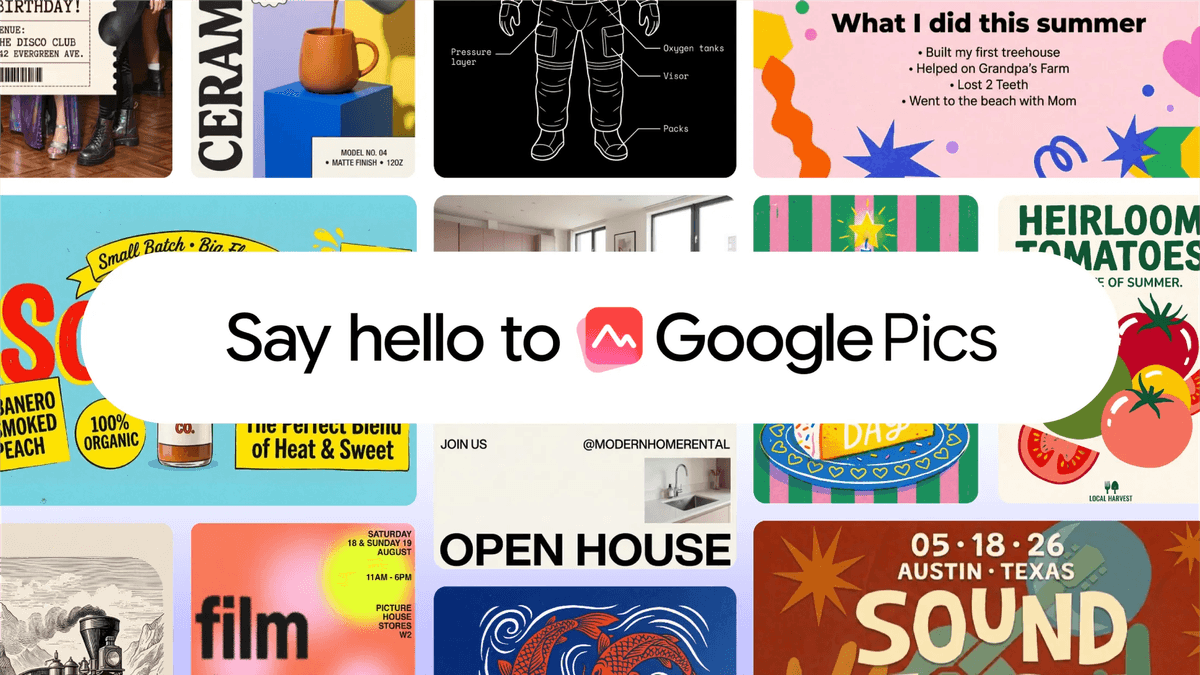
Google enters the design tool market with AI-first approach
Google is launching Pics, a new AI-powered image creation and editing tool that will integrate directly into Google Workspace for business customers and premium Google AI subscribers. The product represents Google's entry into a creative design market currently dominated by platforms like Canva and Adobe Express.
According to details first reported by TechCrunch, Google Pics will roll out over the coming weeks to most Workspace customers and those subscribed to Google AI Pro or Ultra tiers. The tool is powered by Google's Nano Banana image generation model and targets everyday design tasks common in business environments—creating posters, social media graphics, and other visual content.
How Google Pics differs from existing design platforms
The fundamental distinction between Google Pics and established competitors lies in its creation methodology. While Canva operates a marketplace where artists, illustrators, and photographers publish templates and graphics in exchange for royalties, Google Pics generates content entirely through AI trained on existing artwork. Users create images by writing prompts rather than selecting from human-created templates or building designs from scratch.
This approach also sets it apart from Adobe Express, which creators frequently use to design original work. Google Pics positions itself as a prompt-to-image tool rather than a traditional design application.
The software includes editing capabilities beyond initial generation, such as object isolation and transformation, text modification and translation within images, and other manipulation features. It supports collaborative editing and produces multiple variations of requested images, allowing users to select their preferred result.
Integration with existing Google products
Google Pics will embed directly into the Workspace ecosystem. The initial rollout begins today with integration into Google Docs and Slides, with Google Drive support planned for a later date. This native integration positions the tool as a seamless addition to workflows already centered on Google's productivity suite.
Why it matters
Google's entry into AI-generated design tools signals a significant shift in how businesses may approach visual content creation. By embedding prompt-based image generation directly into Workspace, Google is betting that convenience and AI capabilities will outweigh the template-based approaches that have made Canva a multi-billion dollar company. However, the reliance on AI trained on artists' work—without the marketplace model that compensates creators—raises questions about how this technology will impact creative professionals and the broader design ecosystem. For enterprise customers already invested in Workspace, the integrated tool could reduce reliance on third-party design platforms.
These details were first reported by TechCrunch.
This is an original analysis by the Omega editorial team. Source reporting: AI Watch.
Want systems like this working for your business?
Book a Call