Google invests €13bn in Finland data centers, nuclear power
The tech giant's largest European investment will fund AI infrastructure and secure half the output from a Finnish nuclear plant.
Google has committed €13 billion ($15 billion) to Finland in what the company describes as its largest single investment in Europe, combining data center expansion with a major nuclear energy purchase to power its growing AI operations.
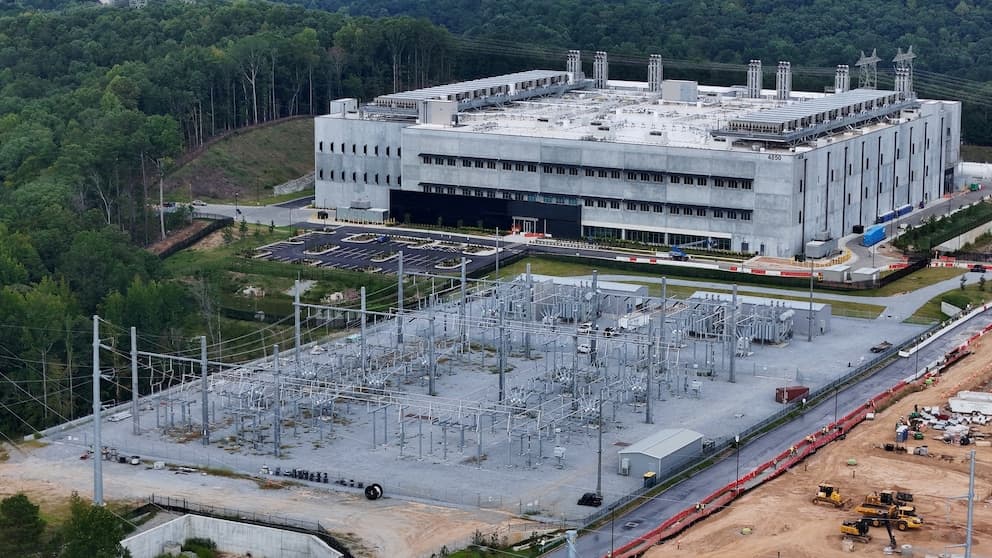
The package includes three new data centers in Kajaani, Muhos, and Vaala, plus an expansion of Google's existing Hamina facility—a converted paper mill the company has operated since 2009. The infrastructure will support AI products including the Gemini chatbot alongside core services like Search, Maps, and YouTube.
Nuclear power anchors the deal
At the heart of the investment sits a 22-year power purchase agreement with Finnish utility Fortum. Google will buy up to 50 percent of the electricity generated by the Loviisa nuclear power plant, which currently supplies roughly 10 percent of Finland's total electricity.
The long-term contract provides Fortum with financial certainty to fund upgrades that will extend the plant's operational life and increase its generating capacity. For Google, it secures stable, low-carbon baseload power—a critical resource as AI workloads drive exponential growth in data center energy consumption.
Why it matters
This investment signals how AI infrastructure competition is reshaping energy markets and national economies. Tech companies are moving beyond traditional power purchase agreements to lock in decades-long supply contracts, effectively underwriting nuclear plant operations. For countries like Finland with cold climates, clean energy grids, and available capacity, this creates an opportunity to attract massive capital investments that generate construction jobs and ongoing economic activity—Google estimates more than 37,000 jobs during construction and a €3.6 billion annual GDP boost.
Finland's data center advantage
Finland has emerged as a preferred European location for hyperscale data centers. The country offers naturally cool temperatures that reduce cooling costs, abundant low-carbon electricity from nuclear and renewable sources, a relatively uncongested power grid, and strong data governance frameworks.
Earlier this week, TikTok announced a $1 billion investment to build a data center in Kouvola, citing similar factors. Finnish Prime Minister Petteri Orpo called Google's decision "a clear testament to our strengths" and noted that "the value of the data economy extends far beyond direct investment into spurring innovation, research and development."
Ruth Porat, president and chief investment officer of Alphabet and Google, said the investment "underscores Google's commitment to grow our presence responsibly, pairing the expansion of our technical infrastructure with new energy capacity, grid enhancements, and energy affordability initiatives."
Construction is scheduled for 2027 and 2028. Google said the investment also covers clean energy projects and dedicated funds for local biodiversity, education, research, and workforce development.
The commitment reflects broader industry trends. Earlier this year, Alphabet raised its global spending plans to as much as $205 billion to expand computing capacity for AI services.
These details were first reported by the BBC.
This is an original analysis by the Omega editorial team. Source reporting: AI Watch.
Want systems like this working for your business?
Book a Call