Google DeepMind Leads All Hurricane Models in 2026 Accuracy
The AI system is outperforming even the National Hurricane Center's forecasts by up to 30% at five-day horizons, though consistency remains a challenge.
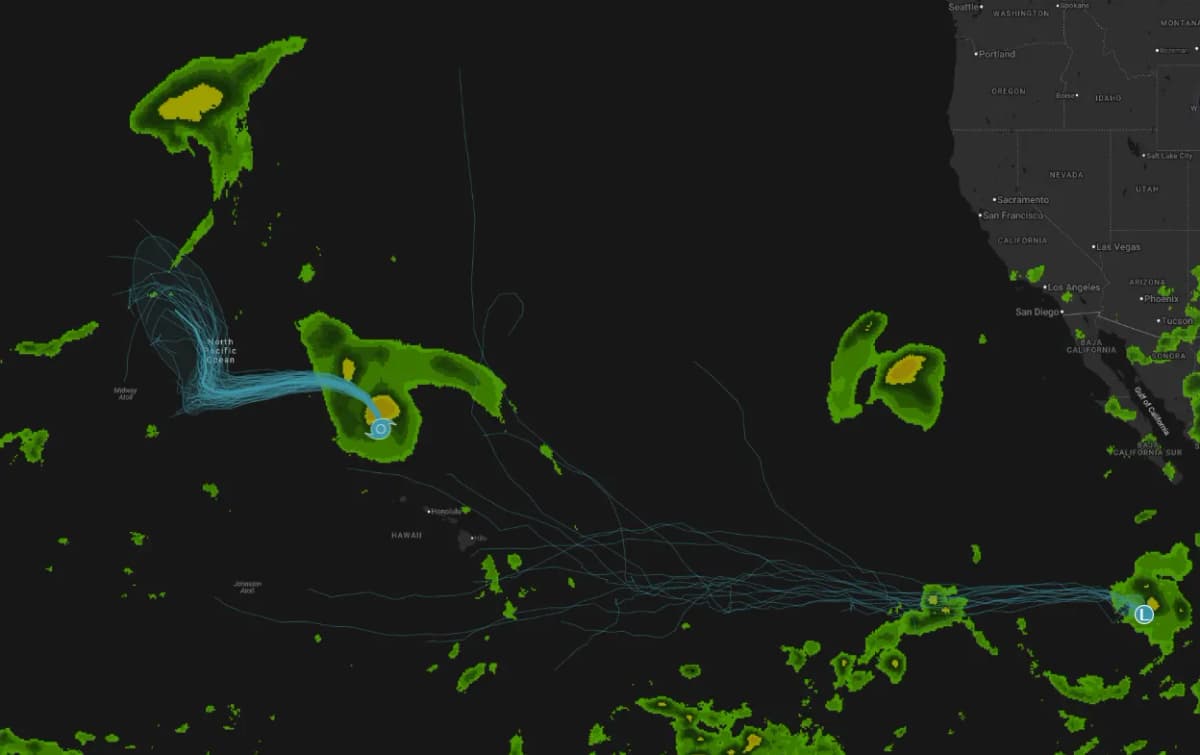
DeepMind dominates hurricane track forecasting
Google DeepMind has emerged as the most accurate hurricane forecasting model in 2026, surpassing all publicly available guidance systems and even the National Hurricane Center's official predictions across the Atlantic, eastern Pacific, and central Pacific basins.
Verification data compiled by James Franklin, former branch chief at the National Hurricane Center, shows DeepMind outpacing NHC's human-refined forecasts by as much as 30% at the critical five-day forecast horizon. This marks the second consecutive year the AI model has topped NHC predictions at most lead times.
The performance gap widens at longer time horizons. DeepMind demonstrates particular strength at four- and five-day forecasts compared to both NHC and the Hurricane Forecast Improvement Project Corrected Consensus Approach, previously considered the gold standard for hurricane track prediction.
Why it matters
Hurricane forecasting directly influences evacuation decisions affecting millions of people and billions in economic activity. A 30% improvement in five-day accuracy translates to substantially better preparation time for coastal communities. However, the technology's inconsistency between forecast runs highlights why human expertise remains essential for operational decision-making, especially when forecast stability matters as much as raw accuracy.
Intensity forecasting shows mixed results
While DeepMind excels at track prediction, its intensity forecasting performance is less dominant. The AI model matches NHC's official intensity forecasts but hasn't demonstrated the same breakthrough performance seen in track prediction. The HCCA consensus aid, which adapts by correcting model biases in real time, currently leads intensity forecasting accuracy in 2026.
The European Centre's AI model, which showed promise last season, continues to struggle with intensity prediction. Developers introduced a post-processing correction in August that reduced intensity errors by a factor of three in back-testing, but the fix applies only to single-run forecasts, not the ensemble predictions that forecasters rely on operationally.
The consistency problem
Hurricane Lowell, which threatened Hawaii earlier this week, exposed a key limitation of AI forecasting: run-to-run consistency. While DeepMind produced the most accurate overall track forecast for Lowell, its predictions shifted erratically in the 72 hours before the storm's closest approach. NHC's official forecast, though slightly less accurate, adjusted gradually and predictably.
This consistency matters for emergency management. Large-scale evacuations and other costly decisions require stable forecasts that change incrementally as new information arrives, not models that swing dramatically every six hours. Franklin noted that NHC deliberately sacrifices some accuracy for consistency, knowing that forecast reliability influences decision-making as much as precision.
Forecast models produce "raw" output that human forecasters must interpret and refine based on operational needs. The goal isn't simply the most accurate single forecast, but the most useful guidance for protecting lives and property.
These findings were first reported by Michael Lowry in AI Watch, based on verification data and analysis from James Franklin.
This is an original analysis by the Omega editorial team. Source reporting: AI Watch.
Want systems like this working for your business?
Book a Call