Generalist AI Raises $400M at $2B Valuation for Robotics
The startup led by DeepMind and Boston Dynamics veterans is building foundation models that enable robots to perform dexterous tasks across varied hardware.
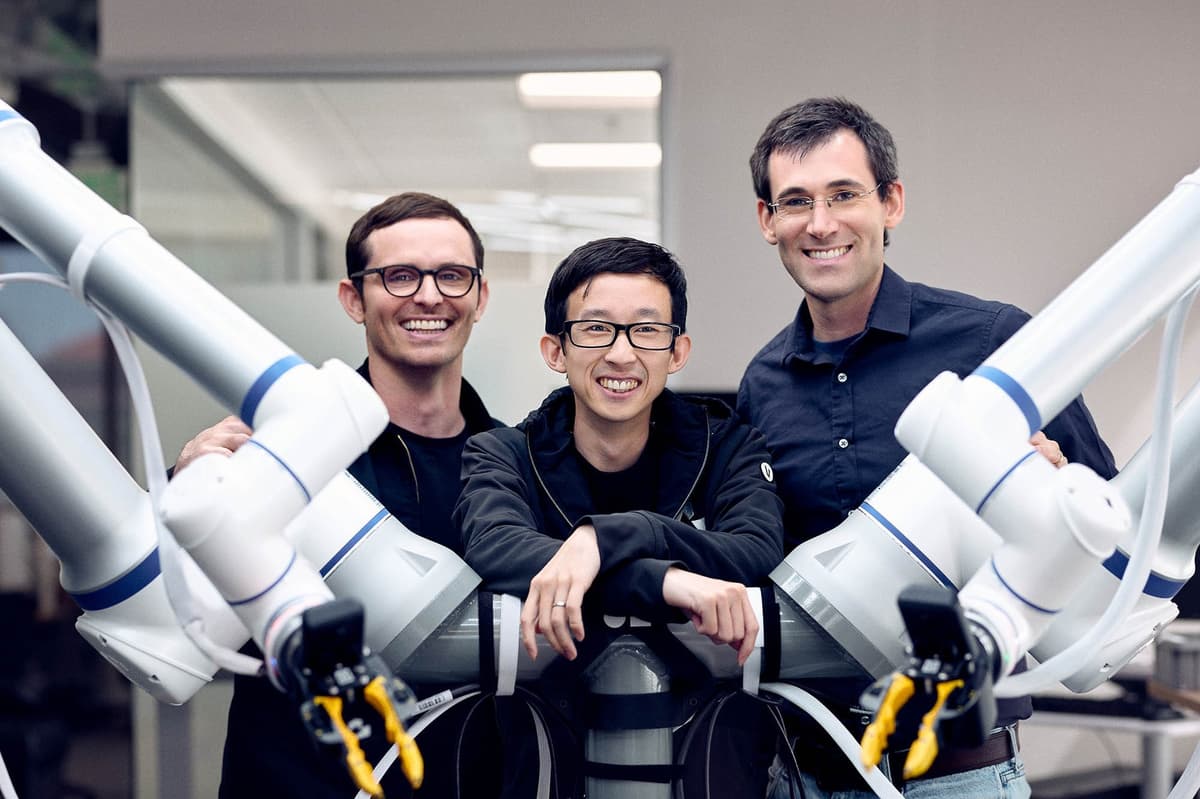
Generalist AI secures major funding round
Generalist AI closed a $400 million funding round on Thursday, valuing the robotics startup at $2 billion and bringing its total capital raised to more than $500 million. Radical Ventures led the investment, with participation from new institutional backers including 8VC, Union Square Ventures, Norwest, and Hanabi Capital.
Existing investors Nvidia and Bezos Expeditions, the investment vehicle tied to Amazon founder Jeff Bezos, also joined the round. Notable angel investors include Xiaomi co-founder Lin Bin, AI researcher Fei-Fei Li, Naval Ravikant, and Zoom Communications CEO Eric Yuan, according to details first reported by Bloomberg.
Building foundation models for physical tasks
Founded in 2024 by veterans from Google DeepMind and Boston Dynamics, Generalist AI develops AI models designed to control robots across different environments and hardware platforms. CEO Pete Florence previously served as a senior scientist at DeepMind, where he contributed to RT-2, an early vision-and-language robotics model. CTO Andrew Barry came from Boston Dynamics, as reported by SiliconAngle.
The company's latest model, GEN-1, launched in April and targets dexterous physical operations with claimed 99% reliability across diverse tasks. The system operates at speeds up to three times faster than previous benchmarks and can recover from unexpected physical situations such as a gripper losing its hold or materials behaving unpredictably.
Florence characterized GEN-1 as suited for short assignments, typically under one minute, with limited variable conditions. The company has customers deploying the model but has not publicly identified them.
Addressing the robotics data shortage
A fundamental challenge for robotics AI is the scarcity of training data. Unlike large language models that can draw from vast internet text archives, no comparable repository exists for robotic activity. To address this gap, Generalist AI developed hand-mimicking gripper devices and distributed them to contributors worldwide, accumulating a dataset exceeding 500,000 hours of real-world robotic activity.
"There's no internet of robotic data the way there's an internet for LLM data," Radical Ventures partner Rob Toews noted.
Why it matters
The investment signals growing confidence that foundation models can translate to physical robotics at commercial scale. While AI has transformed digital domains, applying these techniques to the physical world remains technically difficult due to data scarcity, hardware variability, and the need for real-time adaptation. Success in this domain could unlock automation in manufacturing, logistics, and service industries where tasks require dexterity and environmental awareness rather than just repetitive motion.
Generalist AI plans to deploy the new capital toward developing its next generation of models, expanding data collection infrastructure, and scaling computing resources. The funding arrives amid broader momentum in physical AI, with OpenAI CEO Sam Altman recently backing robotics software startup Alfred and Meta acquiring Assured Robot Intelligence to advance its humanoid robotics program.
Bloomberg first reported the funding details.
This is an original analysis by the Omega editorial team. Source reporting: AI Watch.
Want systems like this working for your business?
Book a Call