GE Vernova's electrification unit outpaces turbines in AI growth
The company's grid infrastructure business booked $2.4 billion in Q1 data center orders, exceeding all of 2025, as hyperscalers race to connect facilities.
GE Vernova's electrification unit outpaces turbines in AI growth
While GE Vernova's gas turbines have captured Wall Street's attention as essential AI infrastructure, the company's electrification division has quietly become its fastest-growing business segment, according to details first reported by CNBC.
The electrification unit, which manufactures transformers, switchgear, and grid software needed to connect data centers to the electrical grid, booked $2.4 billion in data center equipment orders during the first quarter of 2026. That figure exceeds the division's total orders for all of fiscal year 2025.
Electrification now accounts for nearly 32% of GE Vernova's overall revenue, compared to the power division's 53%. The segment's backlog has ballooned to $42 billion from just $9 billion at the end of 2022. GE Vernova's total backlog stood at $163 billion at the end of March 2026, with management projecting it will reach $200 billion by the end of 2027.
Why it matters
The explosive growth in electrification reveals a critical bottleneck in AI infrastructure that extends beyond raw power generation. Hyperscalers including Meta, Alphabet, Amazon, and Microsoft are discovering that connecting massive data centers to the grid requires specialized equipment with lead times stretching years. This creates a parallel revenue stream for GE Vernova that may prove more sustainable than turbine sales, which are already sold out through 2028.
Transformers emerge as critical constraint
GE Vernova strengthened its position in February 2026 by acquiring the remaining stake in transformer manufacturer Prolec for $5 billion. The move gives the company full control over production capacity and supply chains for large power transformers, currently among the most sought-after pieces of electrical equipment.
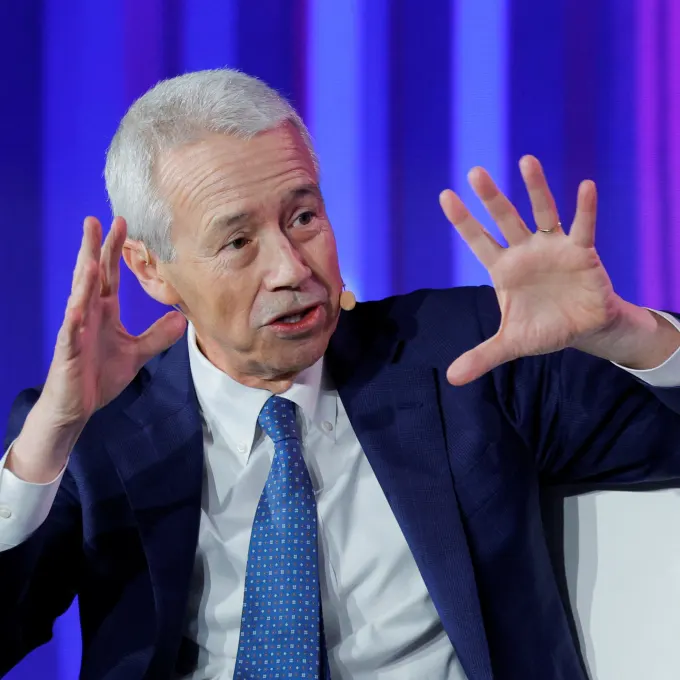
Philippe Piron, CEO of GE Vernova's electrification business, told CNBC that hyperscalers face intense pressure to connect facilities faster than utilities can accommodate. Since the Prolec acquisition announcement, the transformer manufacturer's backlog has elevated rapidly, according to Piron.
The acquisition positions GE Vernova to compete more effectively with Siemens and Hitachi in a market experiencing unprecedented demand. Consulting firm ICF forecasts U.S. electricity demand will jump nearly 39% by 2035, driven primarily by AI data center construction.
Scaling beyond traditional data centers
As AI workloads intensify, individual data centers are reaching capacities of 1 gigawatt or more—enough to power roughly 750,000 to 1 million households. Meta announced in March that its El Paso facility will expand to 1 gigawatt capacity.
Piron said GE Vernova is developing solutions specifically for these massive installations. The company launched GridOS for Transmission in early June, software designed to help operators transmit more power over existing lines without building new physical infrastructure.
Mizuho analyst Maheep Mandloi noted that while turbines remain the primary draw for most investors, electrification has potential upside beyond current company guidance and analyst estimates. The power division's turbine sales are essentially sold out through 2028, leaving limited room for revenue surprises through 2030.
GE Vernova shares have surged more than 694% since the company spun off from General Electric in April 2024, gaining almost 70% in 2026 alone. Following the company's April earnings beat, multiple firms including Barclays, Goldman Sachs, and Guggenheim raised price targets on the stock.
Details of GE Vernova's electrification growth were reported by CNBC.
This is an original analysis by the Omega editorial team. Source reporting: AI Watch.
Want systems like this working for your business?
Book a Call