G7 Summit Tackles U.S. AI Export Controls as Europe Protests
Leaders meet with OpenAI, Anthropic CEOs as Washington's national security directive forces model withdrawals from foreign markets.
U.S. AI restrictions dominate G7 agenda
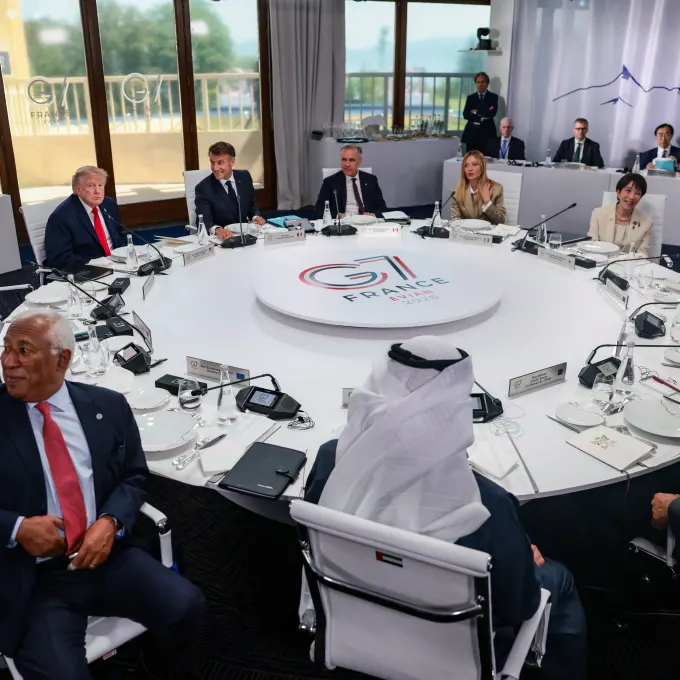
Access to artificial intelligence models has emerged as a new flashpoint at the G7 summit in Evian-les-Bains, France, where leaders are meeting with executives from major AI companies including OpenAI, Anthropic, and MistralAI.
The controversy centers on a U.S. Commerce Department directive that suspends certain AI models for foreign nationals on national security grounds. The policy forced Anthropic to withdraw its Fable 5 and Mythos 5 models from international markets, according to reporting by CNBC.
U.S. Commerce Secretary Howard Lutnick held sidebar discussions with European officials during the summit's first day to address mounting concerns about the restrictions. Today's formal session will include CEOs from 13 AI companies, along with representatives from Meta and Google DeepMind.
Europe pushes back on "discriminatory" policy
European Commission tech chief Henna Virkkunen warned Washington against what she termed "discriminatory" action around AI access, arguing that Europe should be treated as a "trusted partner" rather than a potential security threat.
The Financial Times first reported details of the U.S.-Europe negotiations taking place at the summit.
The AI access dispute marks a significant shift in transatlantic technology relations, introducing export controls to a sector that has largely operated across borders with minimal government interference.
Why it matters
The U.S. move to restrict AI model access represents a fundamental change in how advanced technology is governed globally. If sustained, these controls could fragment the AI ecosystem into regional spheres, forcing companies to maintain separate model versions for different markets and potentially slowing innovation. For businesses building on frontier AI capabilities, the uncertainty around which models will remain accessible in which jurisdictions introduces new planning complexity. The outcome of these G7 discussions will signal whether AI follows the relatively open path of previous software platforms or the more restricted trajectory of semiconductor technology.
Markets and Fed decision in focus
While geopolitical tensions dominated the summit's opening, global stock markets continued their upward trajectory. The Dow Jones Industrial Average reached a new intraday high, and Japan's Nikkei similarly hit fresh peaks.
Investor attention now turns to the Federal Reserve's rate decision, which will mark new Chairman Kevin Warsh's first public statement in the role. The latest CNBC Fed Survey anticipates rates will hold steady, with Warsh expected to remove previous easing language from the policy statement.
In corporate developments, SpaceX options trading on its first day reflected high volatility expectations, with strategy firm Susquehanna calculating a 15% probability the stock could either gain or lose 50% of its value within three months. Investor Michael Burry, known for predicting the 2008 financial crisis, said he has no position in SpaceX despite questioning its nearly $3 trillion valuation, calling short bets "too expensive."
CNBC's Leonie Kidd reported these details from the G7 summit and related market developments.
This is an original analysis by the Omega editorial team. Source reporting: AI Watch.
Want systems like this working for your business?
Book a Call