G7 Faces Twin Dependencies on U.S. AI and Chinese Supply Chains
Export controls on Anthropic models and critical mineral reliance expose Europe's strategic vulnerability between rival superpowers.
Competing Dependencies Define G7 Technology Agenda
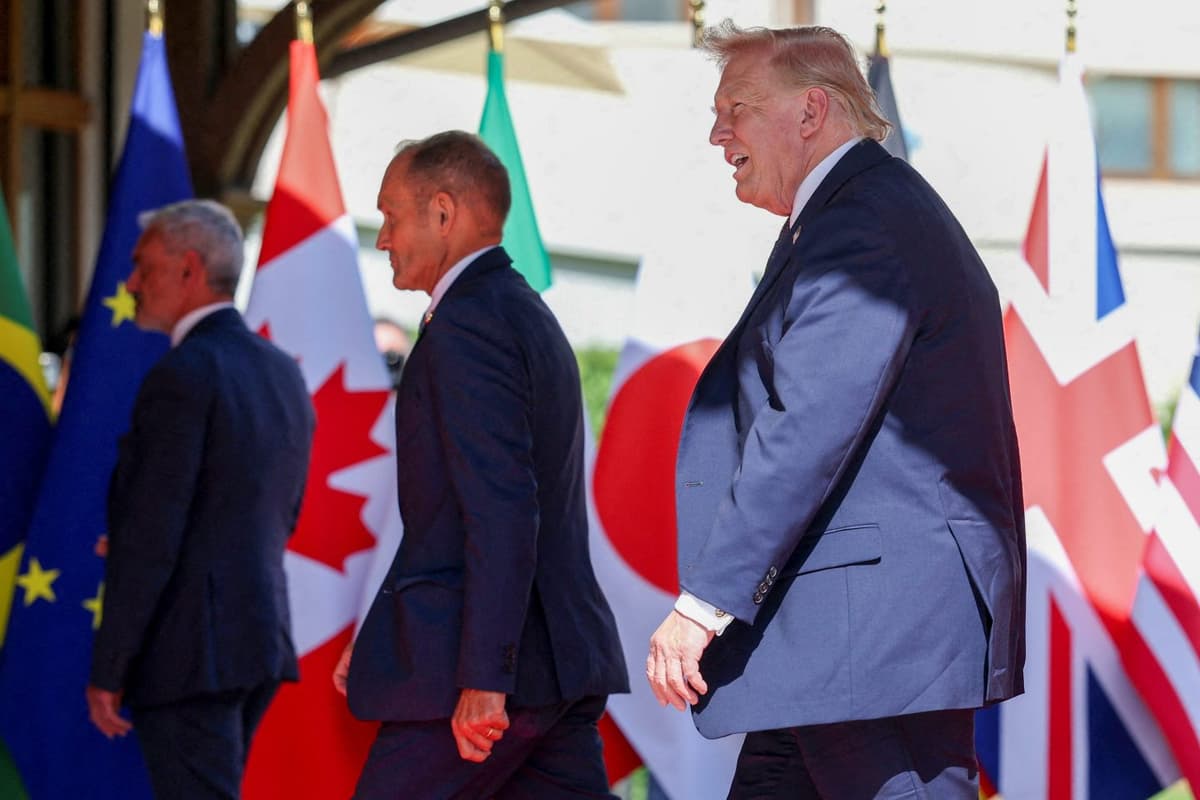
The Group of Seven nations gathering at their summit in Evian confront a strategic dilemma that cuts to the heart of technological sovereignty: simultaneous reliance on the United States for artificial intelligence and China for the physical infrastructure underpinning both AI and clean energy transitions.
The Trump administration's export controls on Anthropic's Fable 5 and Mythos 5 frontier models have become a flashpoint, according to Andrea Renda, research director at the Centre for European Policy Studies. The restrictions, which limit non-U.S. access to these Claude models, signal what Renda described to Fortune as "inaugurating an era" of weaponizing American AI against traditional allies. The other six G7 members are "quite annoyed and upset" by the differential treatment.
Why It Matters
This dual dependency exposes a fundamental weakness in the strategic position of European and allied economies. Unlike traditional trade relationships, both AI software and critical mineral supply chains represent infrastructure-level dependencies that cannot be quickly replaced. The inability to secure alternatives in either domain leaves G7 nations vulnerable to policy decisions made in Washington and Beijing, constraining their ability to pursue independent technology and climate strategies.
China's Absent Presence Shapes Summit Dynamics
China is not attending the G7 summit, yet its influence pervades the agenda. French President Emmanuel Macron participated in what the Atlantic Council's Alisha Chhangani called an "unprecedented" call with Xi Jinping ahead of the gathering, underscoring China's centrality to G7 discussions despite its absence.
Matt Pearl, director of the Strategic Technologies Program at the Center for Strategic and International Studies, characterized Macron's outreach as strategic positioning. "It's really Macron making China the elephant in the room in an effort to show the U.S. that there are other countries that they can work with," Pearl told Fortune. The move represents an attempt to leverage U.S.-China rivalry to create negotiating space for European interests.
The numbers underscore the challenge: the U.S. and China control 90% of global computing power and attract the majority of AI investment, according to Stanford's 2026 AI Index report. Nearly eight in ten AI companies launched last year within G7 nations were based in the United States.
Critical Minerals Create Parallel Vulnerability
The summit agenda's theme of "reducing global imbalances" diplomatically addresses G7 dependence on Chinese manufacturing, particularly for critical minerals essential to green energy technologies. Chhangani noted that "the focus of the imbalances has been the China question, the industrial overcapacity question, and trade deficits."
A memo prepared by leading economists for the G7 warned that China's control of critical minerals can "fuel protectionist policies" and "heighten national security concerns" among U.S. allies. Pearl acknowledged the difficulty of prioritizing between the two dependencies: "If they suddenly lacked critical minerals from China or suddenly had their supply chains for the environmental transition interrupted, that would be pretty catastrophic, and I think similarly on AI models."
Limited Room for Independent Action
Despite attendance by eleven AI CEOs including OpenAI's Sam Altman, Anthropic's Dario Amodei, and Meta's Alex Wang, prospects for meaningful G7 alignment appear constrained. Agathe Demerais, senior policy fellow at the European Council on Foreign Relations, told Fortune that G7 pledges toward more inclusive AI approaches "are unlikely to garner much (if any) interest from the U.S.," reflecting the reality that "the two leading AI powers are the U.S. and China, with not much space for other G7 economies to play a driving role here."
These details were first reported by Fortune.
This is an original analysis by the Omega editorial team. Source reporting: AI Watch.
Want systems like this working for your business?
Book a Call