France Tests Arcadia AI Command System as European Maven Alternative
French military will demonstrate locally developed battlefield AI during NATO exercise in Poland, citing digital sovereignty concerns.
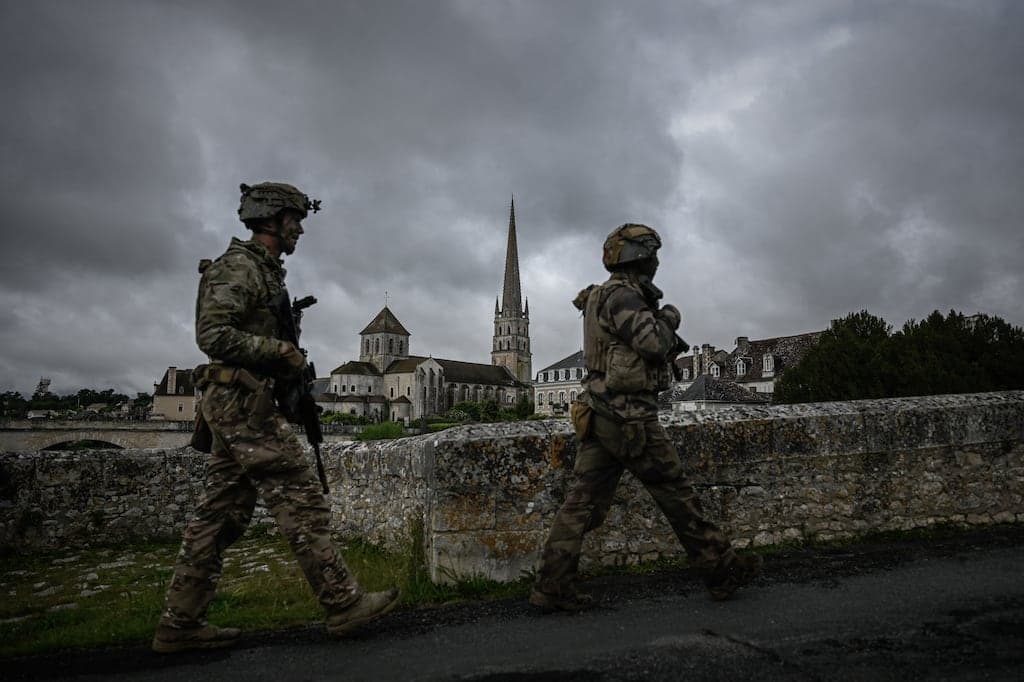
France will demonstrate its domestically developed AI-powered battlefield command system during a NATO interoperability exercise this month, positioning the platform as a European alternative to Palantir Technologies' Maven Smart System.
Gen. Patrick Justel, deputy chief of the French Army staff, confirmed that France will deploy its Arcadia system during NATO's Coalition Warrior Interoperability Exercise in Poland from June 8-26. The French military has developed Arcadia in partnership with local technology firms including Mistral AI, Safran.AI, Thales, and Airbus.
Why it matters
The development of Arcadia reflects growing European concerns about digital sovereignty and dependence on U.S. technology platforms for critical military infrastructure. As NATO adopts AI-enabled command systems, France's alternative approach could reshape how allied forces share battlefield data and make tactical decisions, potentially fragmenting or diversifying the alliance's technology ecosystem.
Digital sovereignty drives development
"Arcadia is our response to Maven," Justel stated, according to Defense News, which first reported the details. He noted that NATO's adoption of the Palantir system raises digital sovereignty questions for European members. "So the question arises whether should we adopt Maven blindly, or should we look for other solutions."
NATO military personnel began training with Palantir's Maven Smart System in August 2025, marking the alliance's first deployment of AI-enabled command and control software. The platform processes massive amounts of battlefield data to help commanders identify targets and accelerate decision-making.
France has already tested Arcadia in exercises including Dacian Fall in Romania and Orion 26 domestically. Several NATO countries have expressed interest in the French system, with some indicating they adopted Maven primarily due to lack of alternatives.
Technical architecture differences
The French system employs a fundamentally different architecture than Maven. Arcadia uses a highly decentralized mesh-network design with field-deployed servers at command posts, rather than relying on centralized cloud infrastructure. Justel argued this approach offers greater resilience, maintaining operational autonomy even if connections are lost or nodes destroyed.
Justel also emphasized Arcadia's open architecture philosophy, contrasting it with proprietary systems. "We don't want to enter into the logic that we've known for years, where we give a manufacturer the system and then everything goes via them, everything is closed, they own all the data," he explained. The French approach allows any manufacturer to integrate components and ensures data sharing without exclusive ownership.
Interoperability questions remain
France has designed Arcadia to comply with NATO's Federated Mission Networking standards, which govern how allied systems exchange information. Justel suggested Maven has not fully integrated these requirements, though Palantir responded that its system is "compliant with the principles of FMN" and working toward official certification.
U.S. Army Col. Arnel David, director of Task Force Maven at NATO's Supreme Headquarters Allied Powers Europe, confirmed the Palantir system has integrated with more than 10 NATO systems and expects full operational capability declaration soon.
The French military has also developed Berthier, a large-language model named after Napoleon's chief of staff, to help staff officers synthesize information and draft operational plans while leaving final decisions to commanders.
The United Kingdom is developing its own AI-enabled command system and discussing Maven integration, though French officials indicated the British concept lacks some technological components.
These details were first reported by Defense News.
This is an original analysis by the Omega editorial team. Source reporting: AI Watch.
Want systems like this working for your business?
Book a Call
